
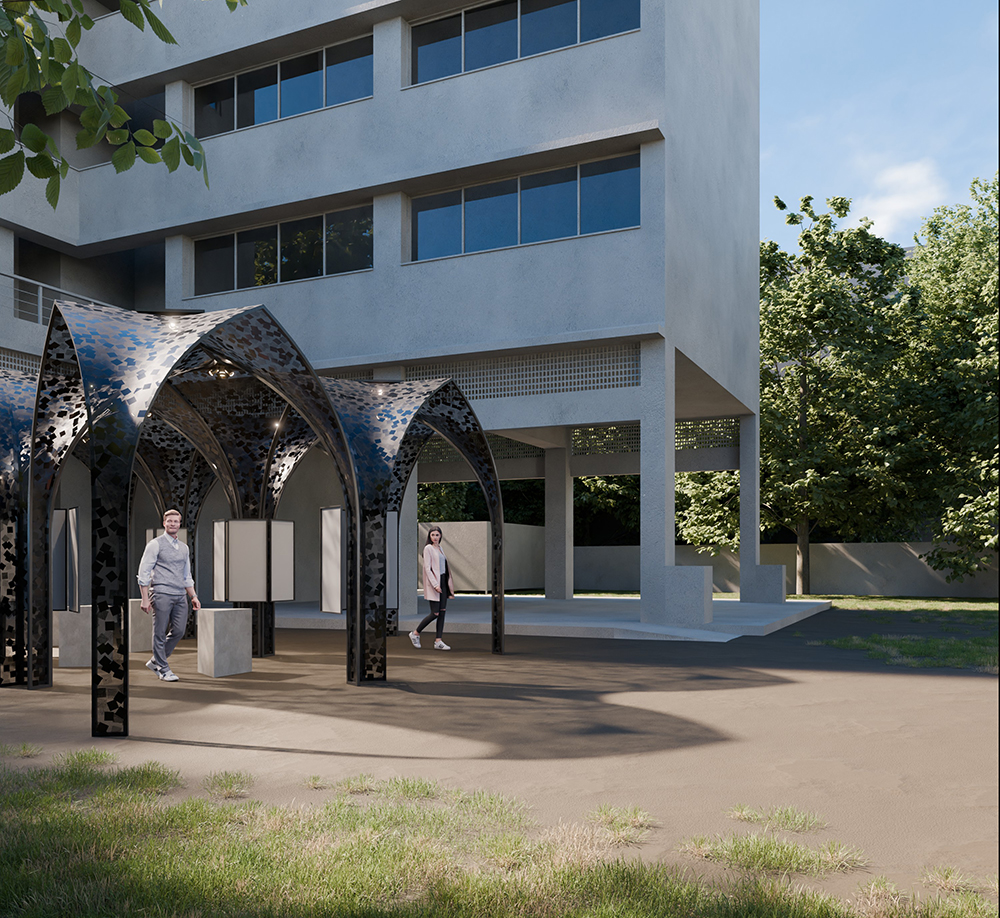
Designed for three identified sites on the SEA campus, the pavilion was imagined as a space for exhibitions, group discussions, and creative exchange — a collaborative environment that could offer shelter while also provoking thought about material use, waste, and climate resilience. The concept draws from the idea of nature’s primordial protector, trees. Before built shelters, they offered refuge through sprawling canopies that protected people from downpours, filtered light, cooled the air, and channelled rainwater deep into the earth, sustaining ecological balance while offering comfort and protection. Arboreal Wrap takes inspiration from this role of trees, imagining the pavilion as a contemporary canopy that shelters, gathers, and responds to rain. The form is further informed by the idea of the Portable Canopy, the umbrella. With dwindling tree cover and increasing urban impatience, the umbrella has become a familiar symbol of quick refuge and personal space during the rains. Its simple geometry, modularity, portability, and efficiency inform the pavilion’s design, translating the idea of a lightweight, repeatable, and space-efficient shelter into an architectural enclosure.
Name
Arboreal Wrap
Year
2024
Typology
Location
Designed for three identified sites on the SEA campus, the pavilion was imagined as a space for exhibitions, group discussions, and creative exchange — a collaborative environment that could offer shelter while also provoking thought about material use, waste, and climate resilience. The concept draws from the idea of nature’s primordial protector, trees. Before built shelters, they offered refuge through sprawling canopies that protected people from downpours, filtered light, cooled the air, and channelled rainwater deep into the earth, sustaining ecological balance while offering comfort and protection. Arboreal Wrap takes inspiration from this role of trees, imagining the pavilion as a contemporary canopy that shelters, gathers, and responds to rain. The form is further informed by the idea of the Portable Canopy, the umbrella. With dwindling tree cover and increasing urban impatience, the umbrella has become a familiar symbol of quick refuge and personal space during the rains. Its simple geometry, modularity, portability, and efficiency inform the pavilion’s design, translating the idea of a lightweight, repeatable, and space-efficient shelter into an architectural enclosure.
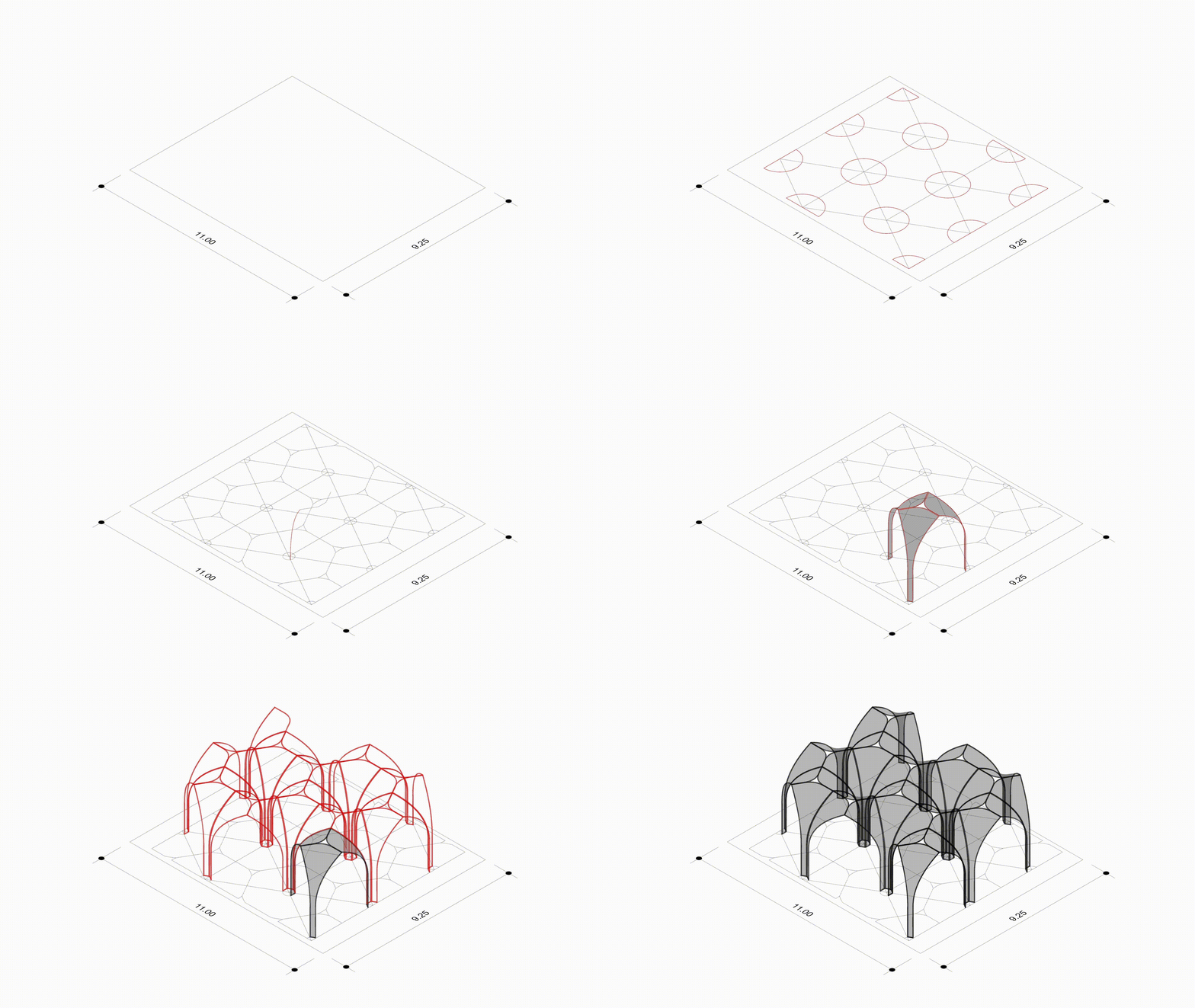
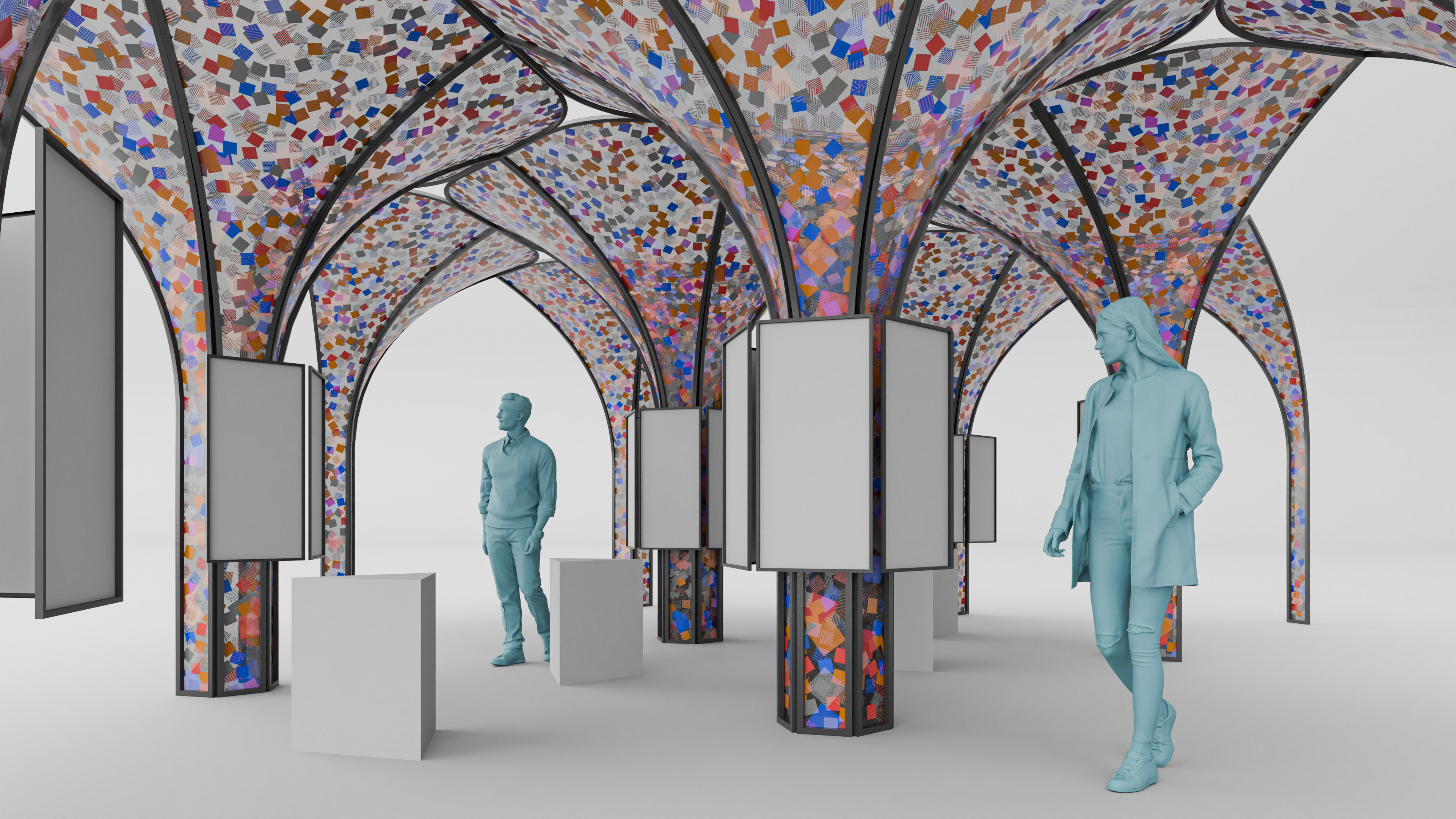
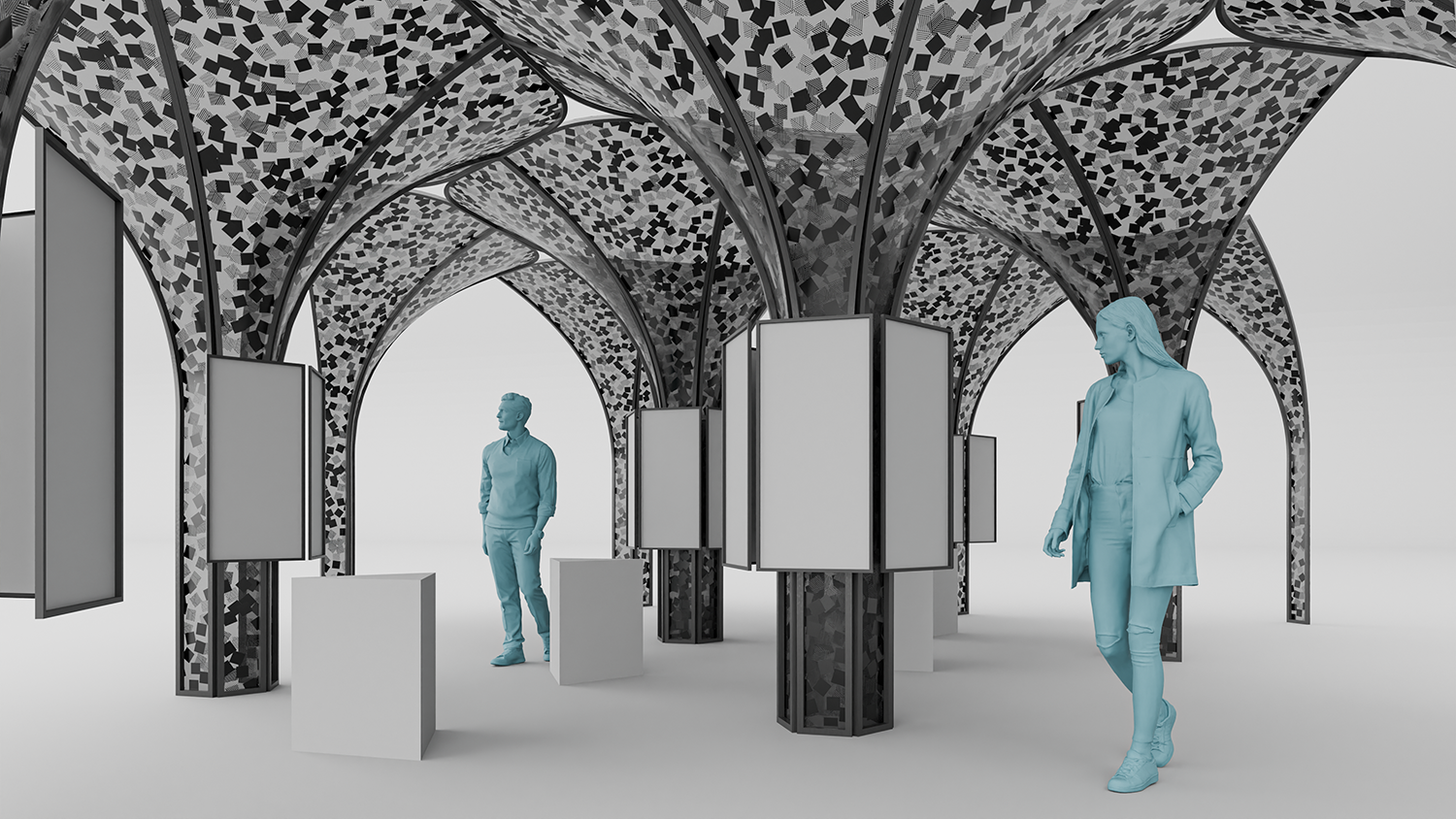
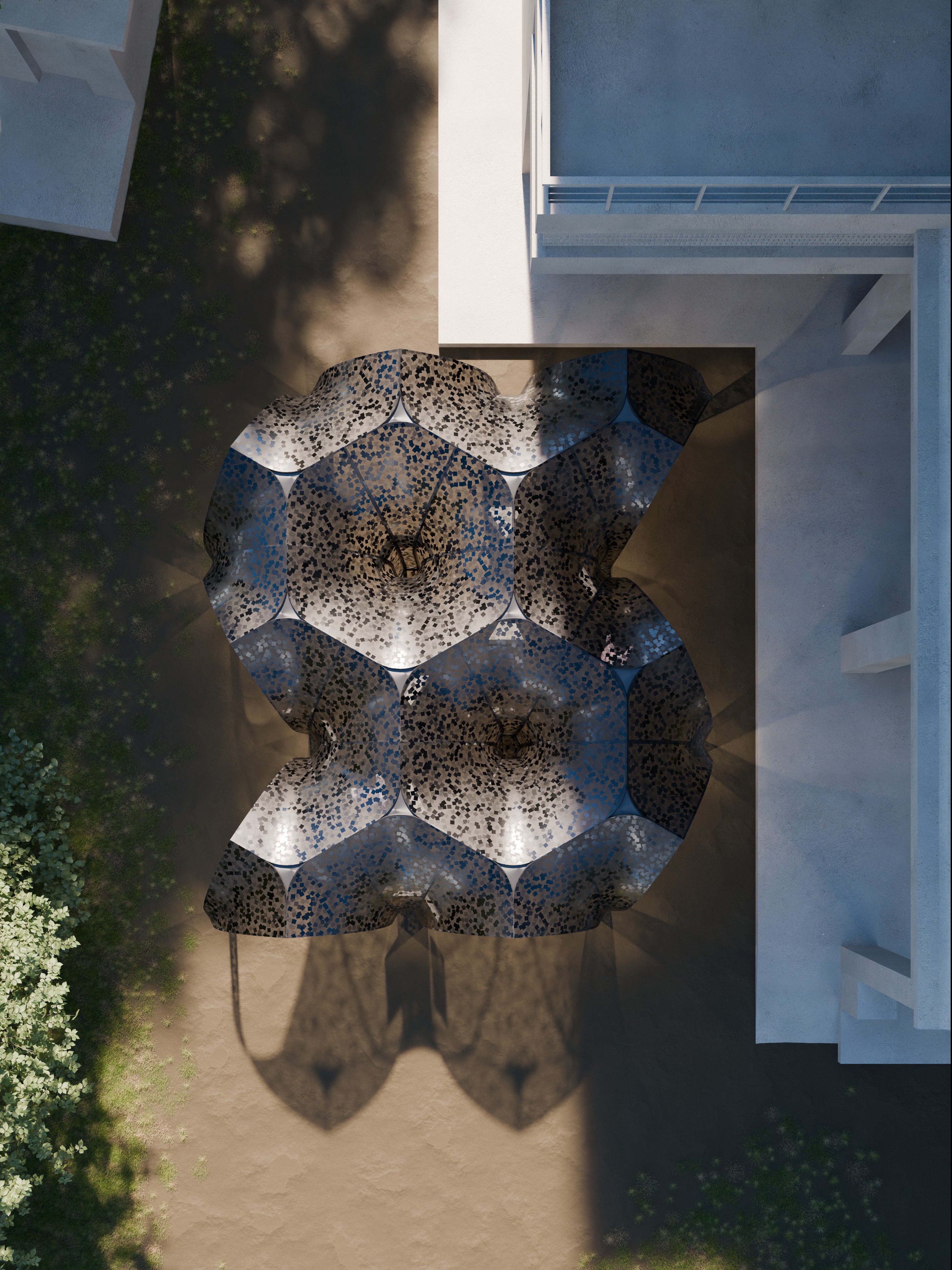
The pavilion’s form evolved through a clear geometric process, beginning with a footprint derived from the SEA campus site area. A tri-grid overlapped with a hex-grid to optimise space and establish a modular framework, with key nodes defining points of structure and assembly. From these nodes emerged the primary unit, the petal, conceived as a metal frame wrapped in tensile fabric or plasto-fabric. These arched petals are bolted together to form a vault-like structure, creating a rhythmic enclosure that can adapt to different site conditions. The geometry also creates central funnels that channel rainwater, transforming the canopy into an active rainwater harvesting system that turns Mumbai’s intense monsoon downpours into a resource.
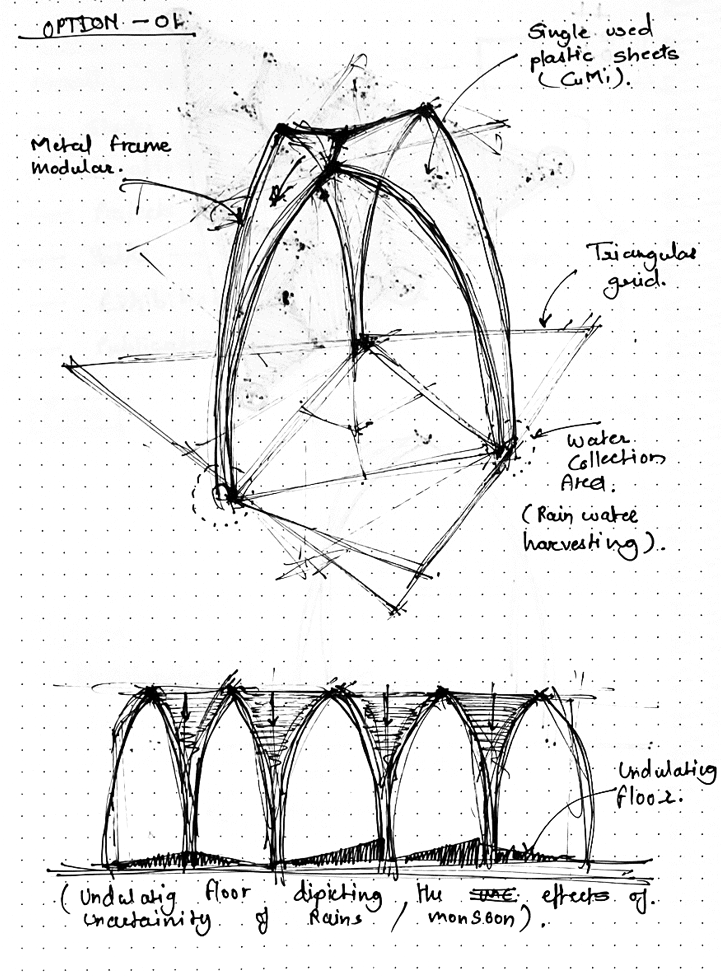
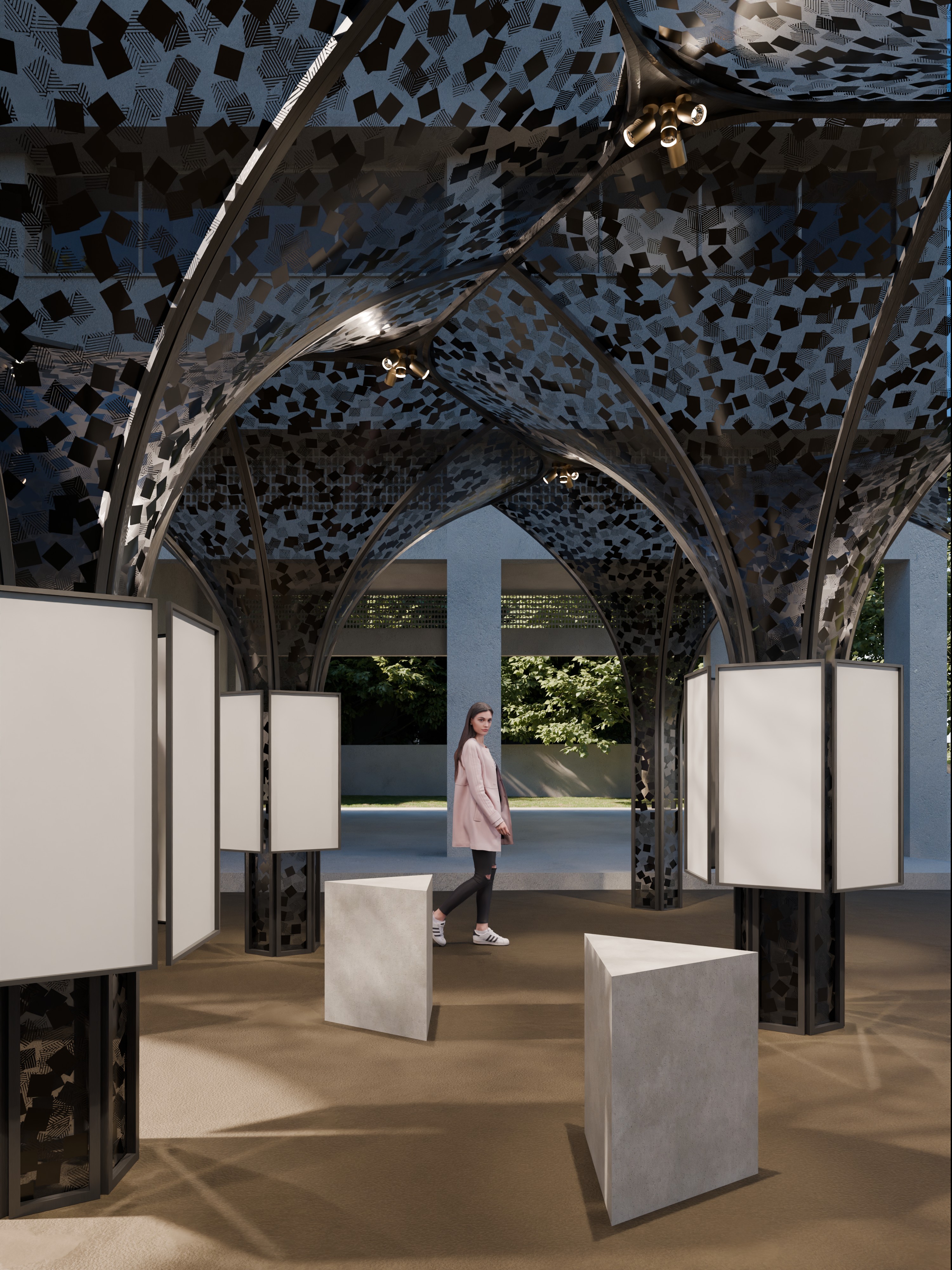
Usually viewed with disdain and associated with pollution, plastic paradoxically becomes one of the most sought-after materials at the first touch of rain. Its affordability, availability, lightweight nature, and durability form the starting point for the pavilion’s material strategy, transforming discarded plastic into a protective architectural membrane. Arboreal Wrap uses recycled plastic components to create flexible, modular units that can be repeated, adjusted, and scaled to suit different spatial constraints. This makes the pavilion a customisable and replicable solution for dense urban areas in need of low-cost, climate-responsive shelters. The membrane varies in texture, colour, translucency, and density depending on the plastic used. Single-use polythene bags are layered and heat-fused into durable sheets, forming the primary wrap and demonstrating the potential of discarded plastic as a building material while promoting responsible material use.
Since 2019