
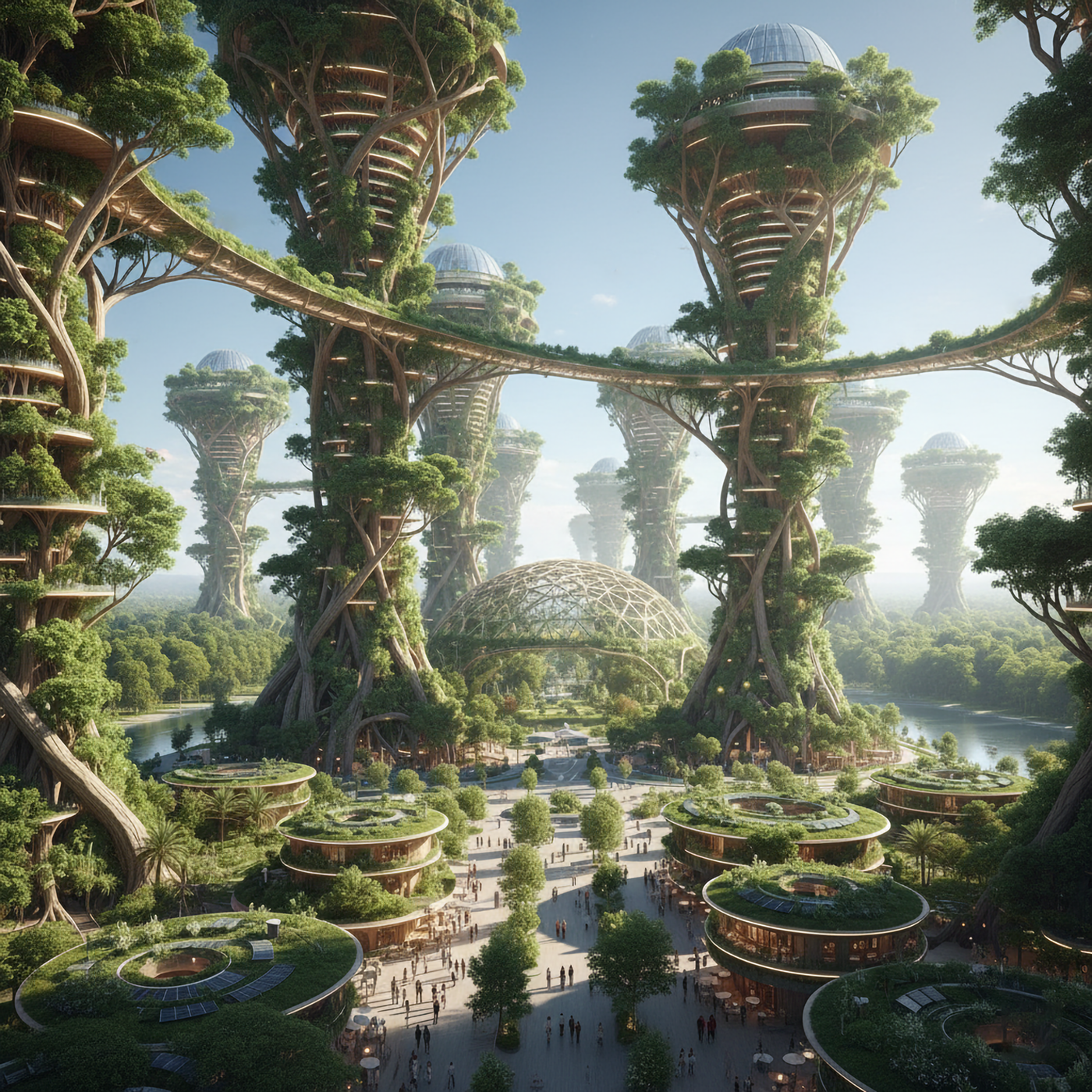
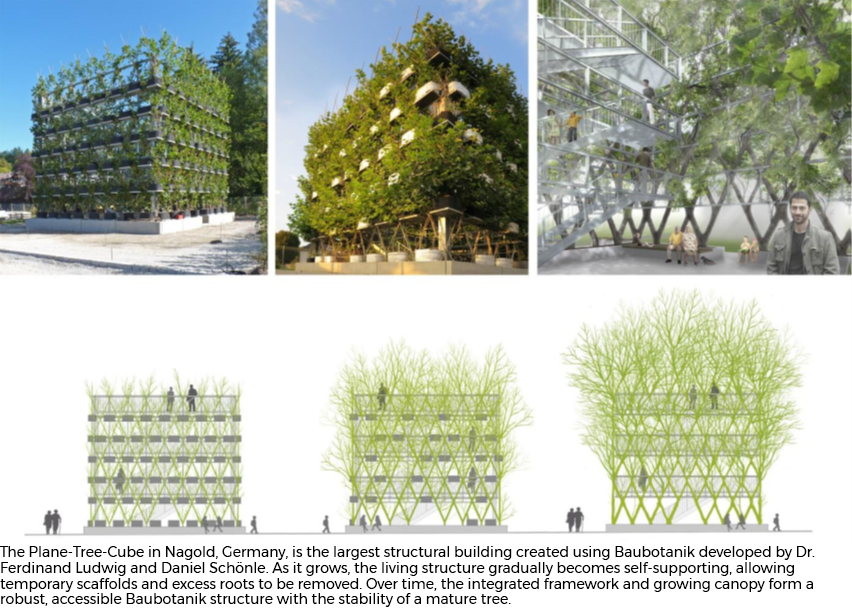
Instead of building static forms, Baubotanik creates frameworks that evolve over time, strengthening naturally as plants grow, fuse, and adapt. The method draws from both ancient practices—such as the Khasi living root bridges—and modern research on natural constructions, particularly the work initiated by Frei Otto and developed further by Ferdinand Ludwig and his team. Designing with living plants requires understanding the fundamental principles of plant growth. Trees grow in thickness, respond sensitively to light and resource availability, and exhibit adaptive strategies like competition and self-thinning. Successful Baubotanik projects incorporate these biological constraints into the design process, ensuring that structures grow as intended rather than fail due to unpredictable plant behavior. Projects such as the Plane Tree Cube and Baubotanik Tower demonstrate how temporary scaffolds and controlled plant arrangements can, over time, develop into self-supporting living architectures.
Name
Baubotanik
Year
2022
Typology
Location
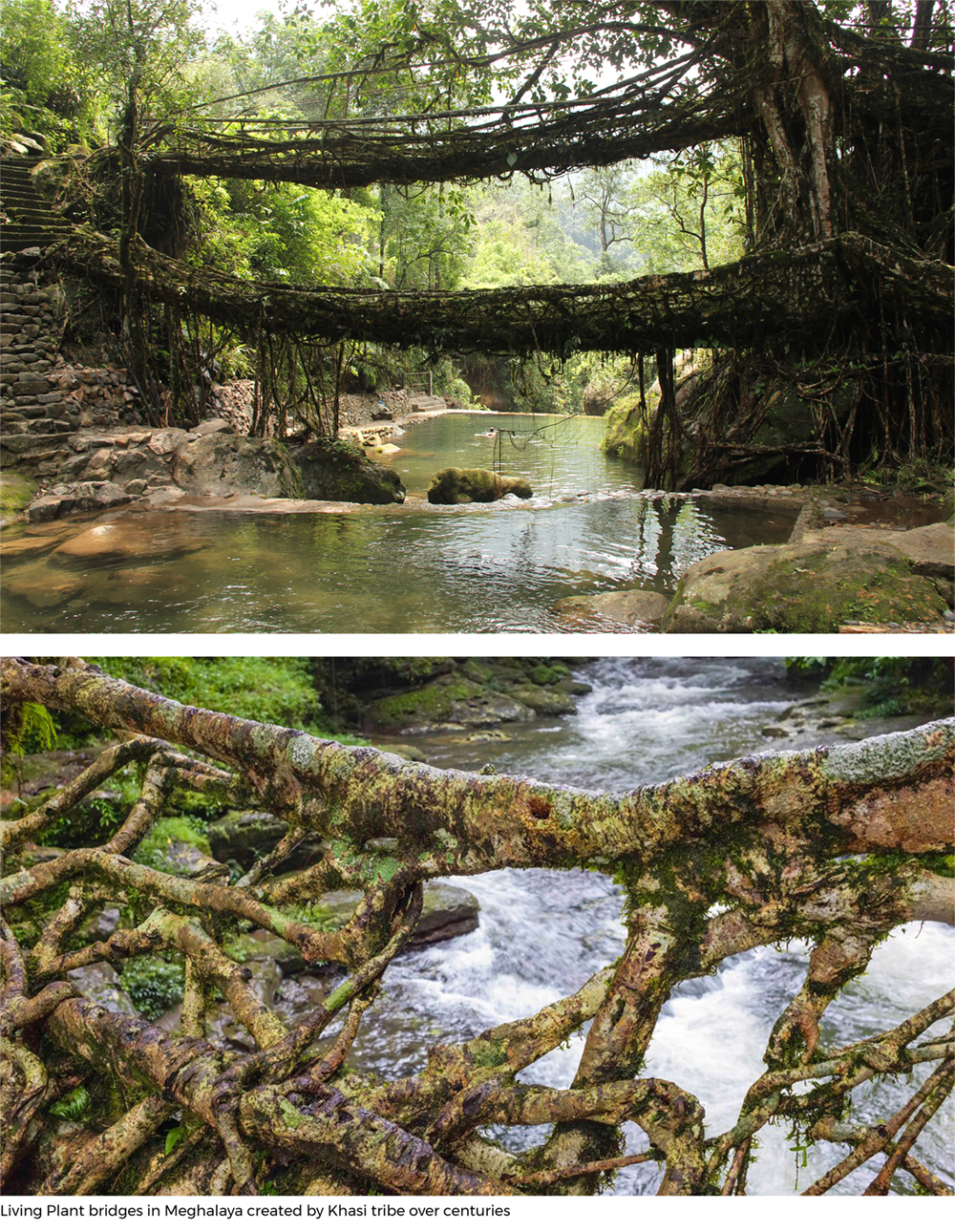
Instead of building static forms, Baubotanik creates frameworks that evolve over time, strengthening naturally as plants grow, fuse, and adapt. The method draws from both ancient practices—such as the Khasi living root bridges—and modern research on natural constructions, particularly the work initiated by Frei Otto and developed further by Ferdinand Ludwig and his team. Designing with living plants requires understanding the fundamental principles of plant growth. Trees grow in thickness, respond sensitively to light and resource availability, and exhibit adaptive strategies like competition and self-thinning. Successful Baubotanik projects incorporate these biological constraints into the design process, ensuring that structures grow as intended rather than fail due to unpredictable plant behavior. Projects such as the Plane Tree Cube and Baubotanik Tower demonstrate how temporary scaffolds and controlled plant arrangements can, over time, develop into self-supporting living architectures.
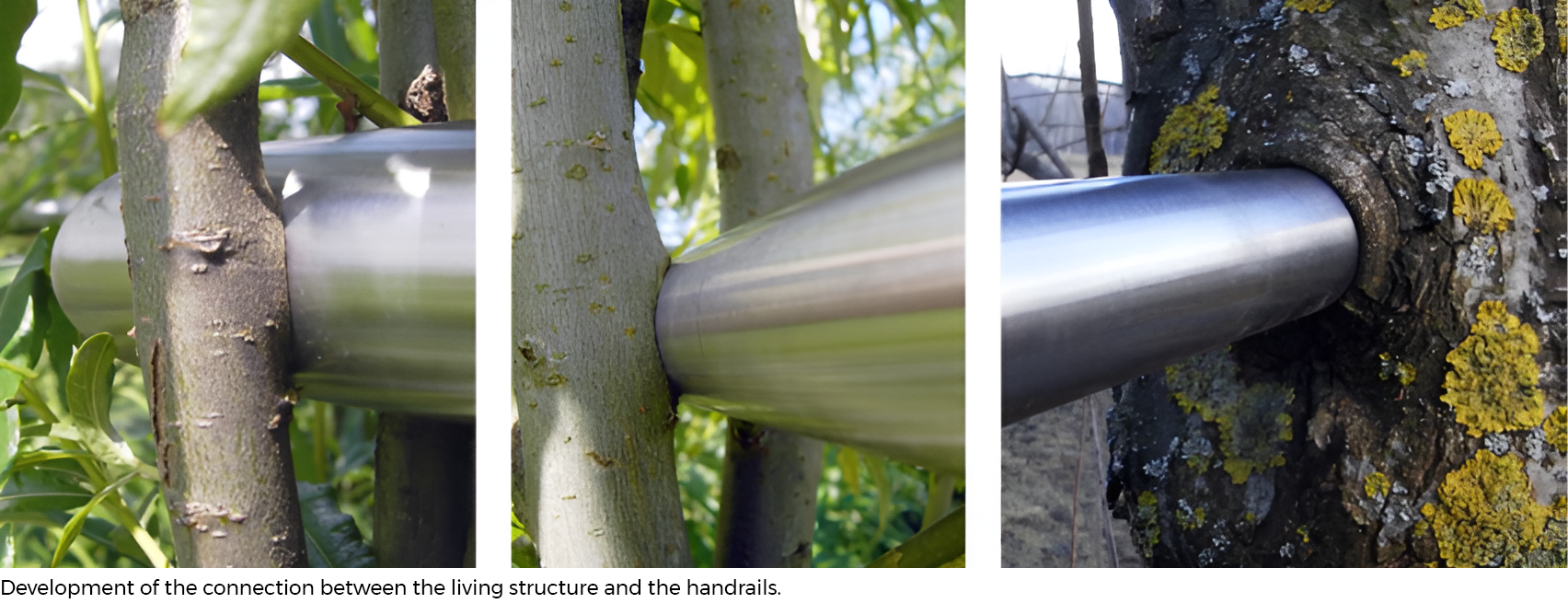
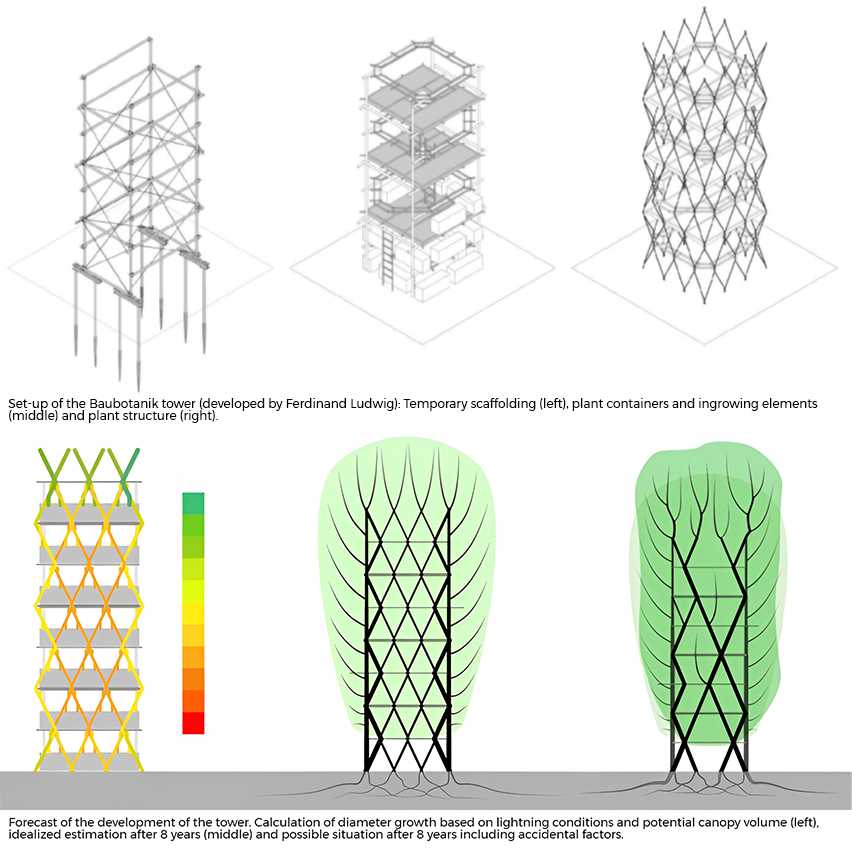
Not all tree species are equally suited for Baubotanik. Research has shown that species such as the plane tree, European hornbeam, and hop hornbeam are well suited to urban living plant construction. Robust species with strong wound-healing capacity, thin bark, and good compatibility for inosculation are especially valuable. Inosculation, or the natural joining of stems, branches, or roots, allows multiple plants to fuse into a single stronger organism. Through techniques such as pressing stems together with stainless steel screws, plants can be guided to form strong mechanical joints over time. Baubotanik also reveals the unpredictability of working with living systems. In some cases, not all planted elements grow equally. In bundled columns, where 12 to 15 plants may be used, some plants may weaken or die while others grow vigorously and replace them. Diagonal plant members, especially those bent away from their natural vertical direction, may suffer because trees tend to sprout more at their base when tilted. If these shoots are shaded by stronger vertical plants, they may eventually die due to lack of light. These observations show that plant behaviour cannot be forced entirely into architectural intention; it must be understood and worked with. Over time, the growing canopy gradually changes the building’s proportions, even though its main geometry remains the same. Since trees grow only at their upper tips, the older parts mainly thicken over time. This is especially visible where the plants connect to the handrails, as the stainless steel pipes become embedded within the growth, creating stronger and more stable connections.
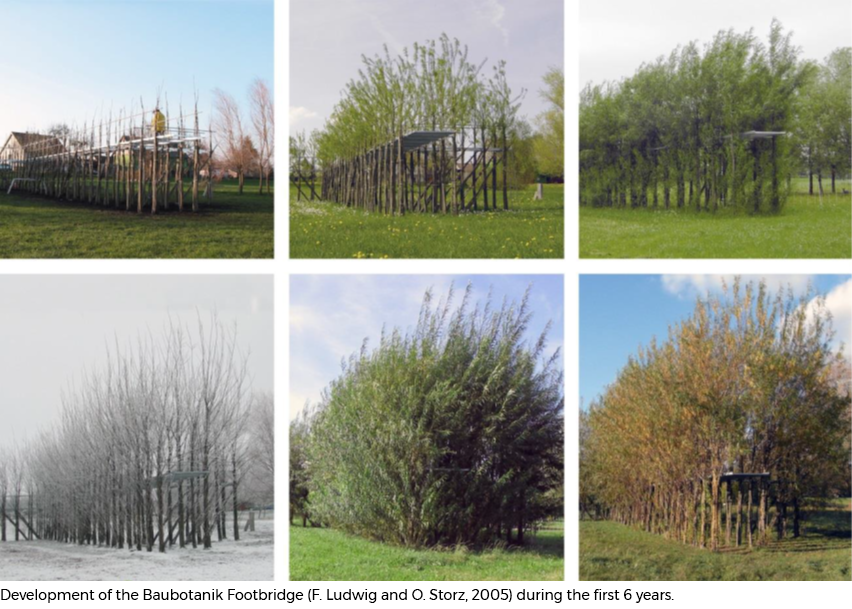
The construction method explored here is based on the technique of plant addition. Young plants are rooted in special containers and arranged within a spatial framework. They are interconnected so that, over time, they grow together into a larger structural system. Initially, these plants are supported by temporary scaffolds and supplied with water and nutrients. As the plants develop, their roots, stems, and fused joints begin to take on structural responsibility. Eventually, the auxiliary scaffolds can become redundant, allowing the living structure to support itself. Computation becomes important in this process. In Baubotanik, parametric tools and scripting platforms can be used to forecast plant growth, water transport, canopy volume, and potential structural development. Since network-like stem structures allow multiple possible pathways for water movement, computational tools help predict which stem segments are likely to grow strongly and which may become redundant.
Beyond their technical and structural innovations, Baubotanik projects offer ecological and cultural value. Living structures are resilient, self-healing, and environmentally regenerative, contributing shade, oxygen, stability, and microclimatic benefits within urban contexts. They also challenge architectural conventions by shifting the designer’s role from creating static objects to initiating and guiding long term natural processes. This perspective embraces change, uncertainty, and growth as design opportunities, proposing a more adaptive and sustainable vision of architecture that evolves alongside its environment.
Since 2019