
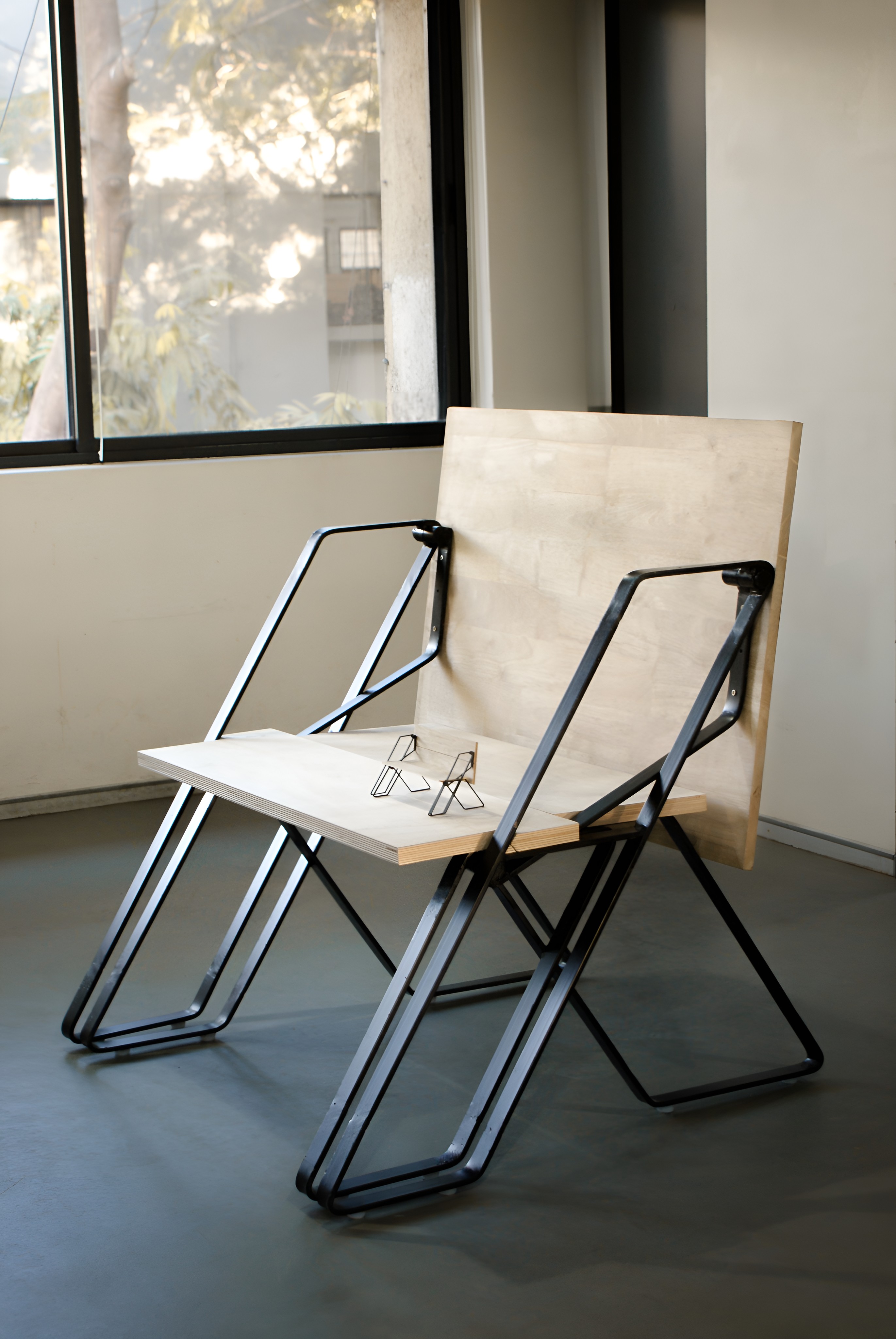
The idea emerged from observing conventional benches with integrated tabletops, which often take up considerable space regardless of how they are used. This led to the development of a transformable bench that shifts between a standard seating arrangement and a table-and-seating configuration as required. The design process focused on balancing functionality, comfort, and spatial efficiency while ensuring that the transformation remained practical and structurally feasible. Anthropometric considerations informed the proportions and ergonomics, while attention to form and aesthetics helped create a piece that sits naturally within landscaped environments. Designed for settings such as gardens, backyards, and outdoor gathering areas, the bench offers a flexible seating solution that adapts to different activities and ways of using a space.
Name
Dine Bench
Year
2023
Typology
Location
The idea emerged from observing conventional benches with integrated tabletops, which often take up considerable space regardless of how they are used. This led to the development of a transformable bench that shifts between a standard seating arrangement and a table-and-seating configuration as required. The design process focused on balancing functionality, comfort, and spatial efficiency while ensuring that the transformation remained practical and structurally feasible. Anthropometric considerations informed the proportions and ergonomics, while attention to form and aesthetics helped create a piece that sits naturally within landscaped environments. Designed for settings such as gardens, backyards, and outdoor gathering areas, the bench offers a flexible seating solution that adapts to different activities and ways of using a space.
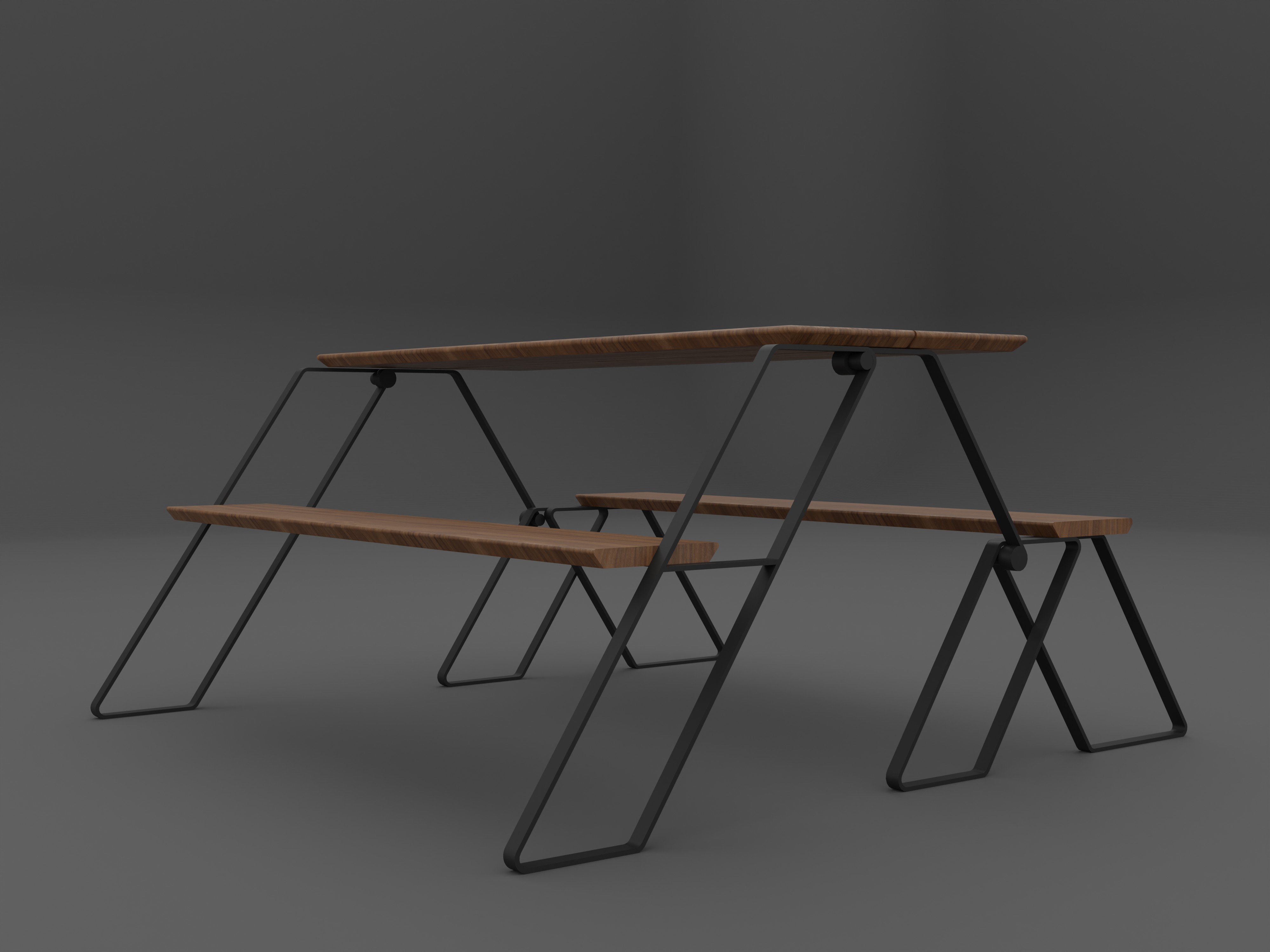
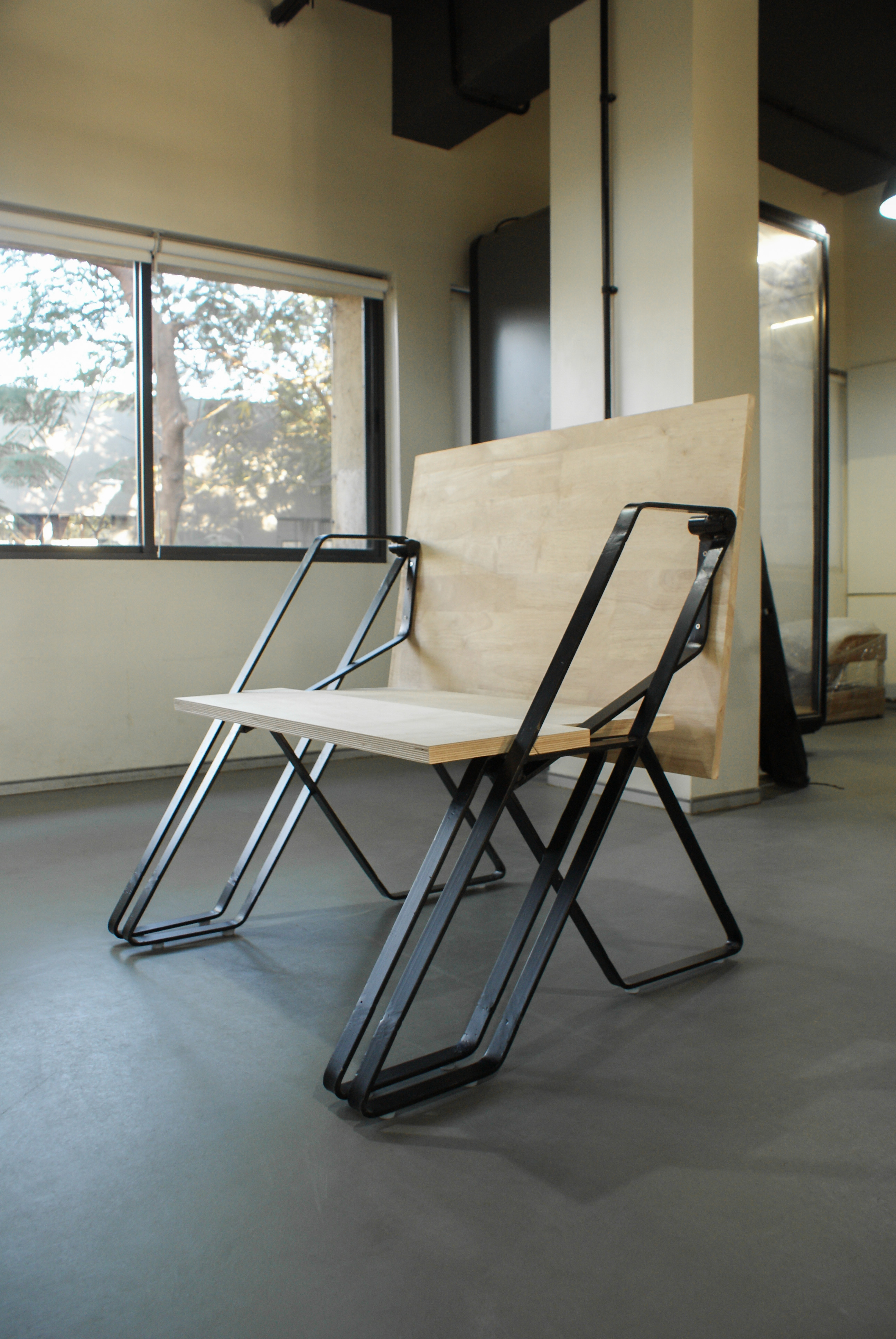
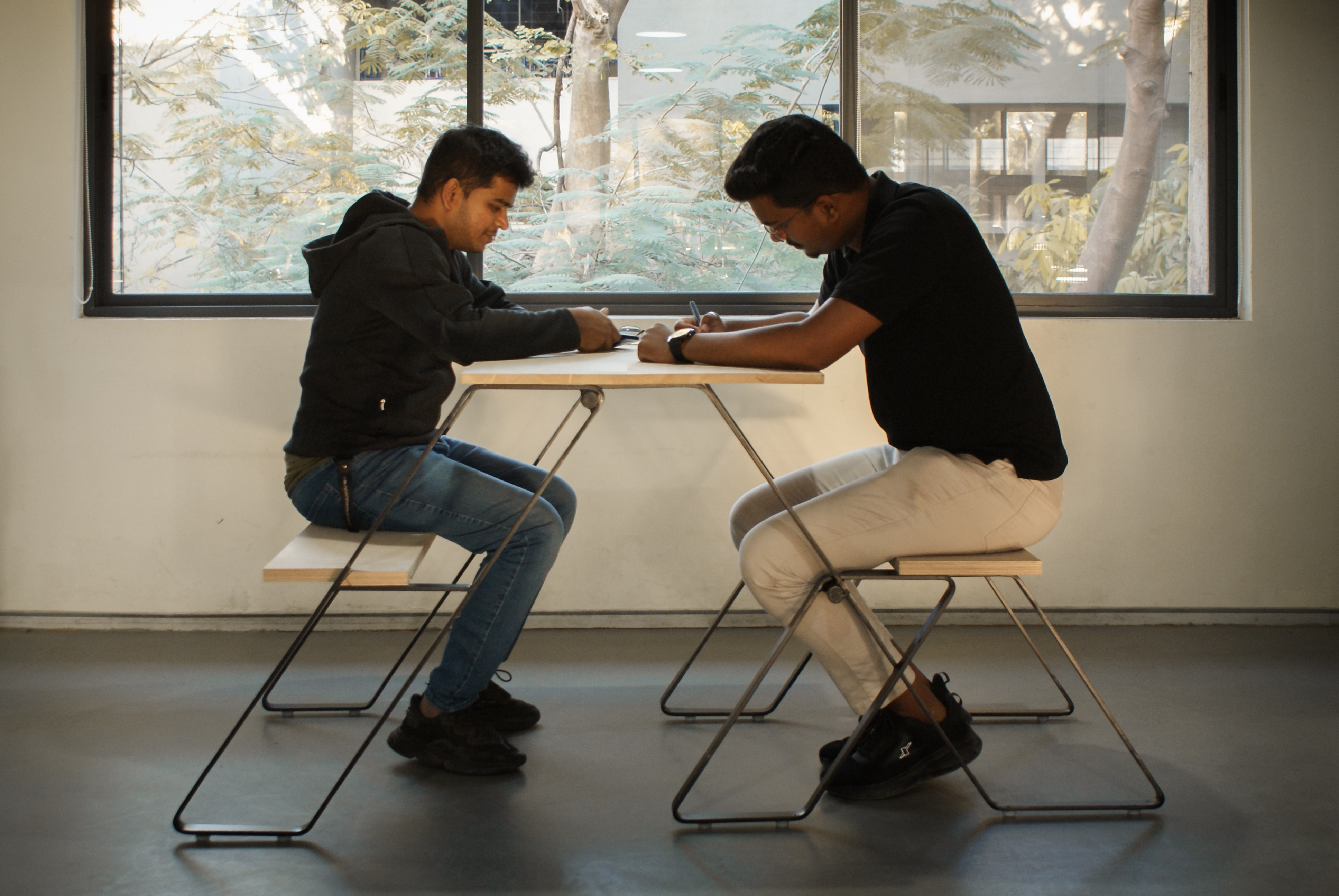
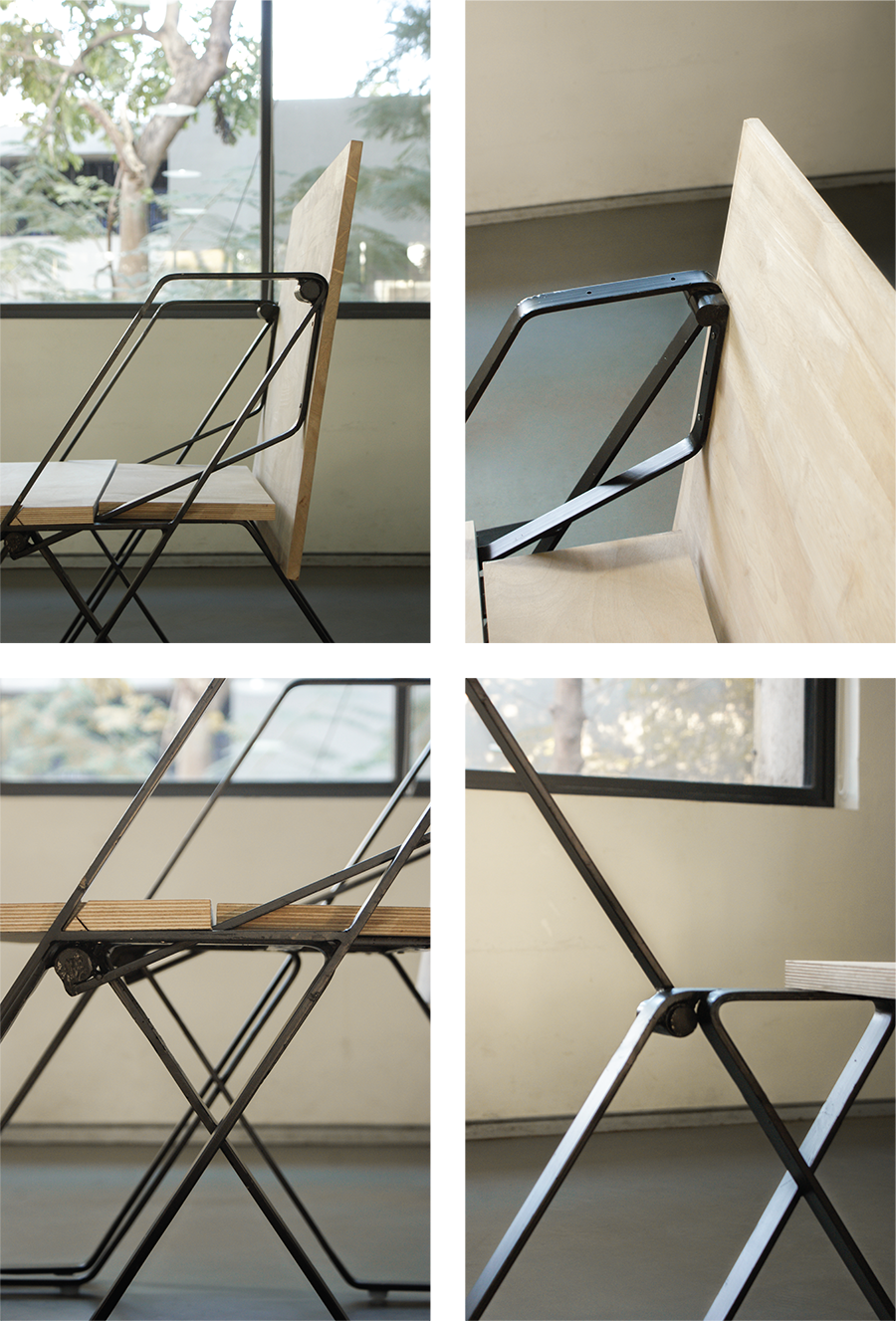
The design evolved through two iterations, focusing first on functionality, ergonomics, and transformability, followed by aesthetic refinement. A simple handle-operated mechanism allows the two-person bench to convert into a dining arrangement through a pulling motion. Seating dimensions, backrest height, and user comfort were considered in both configurations. The second iteration refined the overall form, creating cohesive structural elements, balanced overlapping legs, and chamfered wooden edges for a more polished finish. The structural system was then developed using MS members sized to support four people while maintaining a minimal profile. Bearings at the joints enabled smooth movement, while carefully calculated member angles prevented interference during transformation.
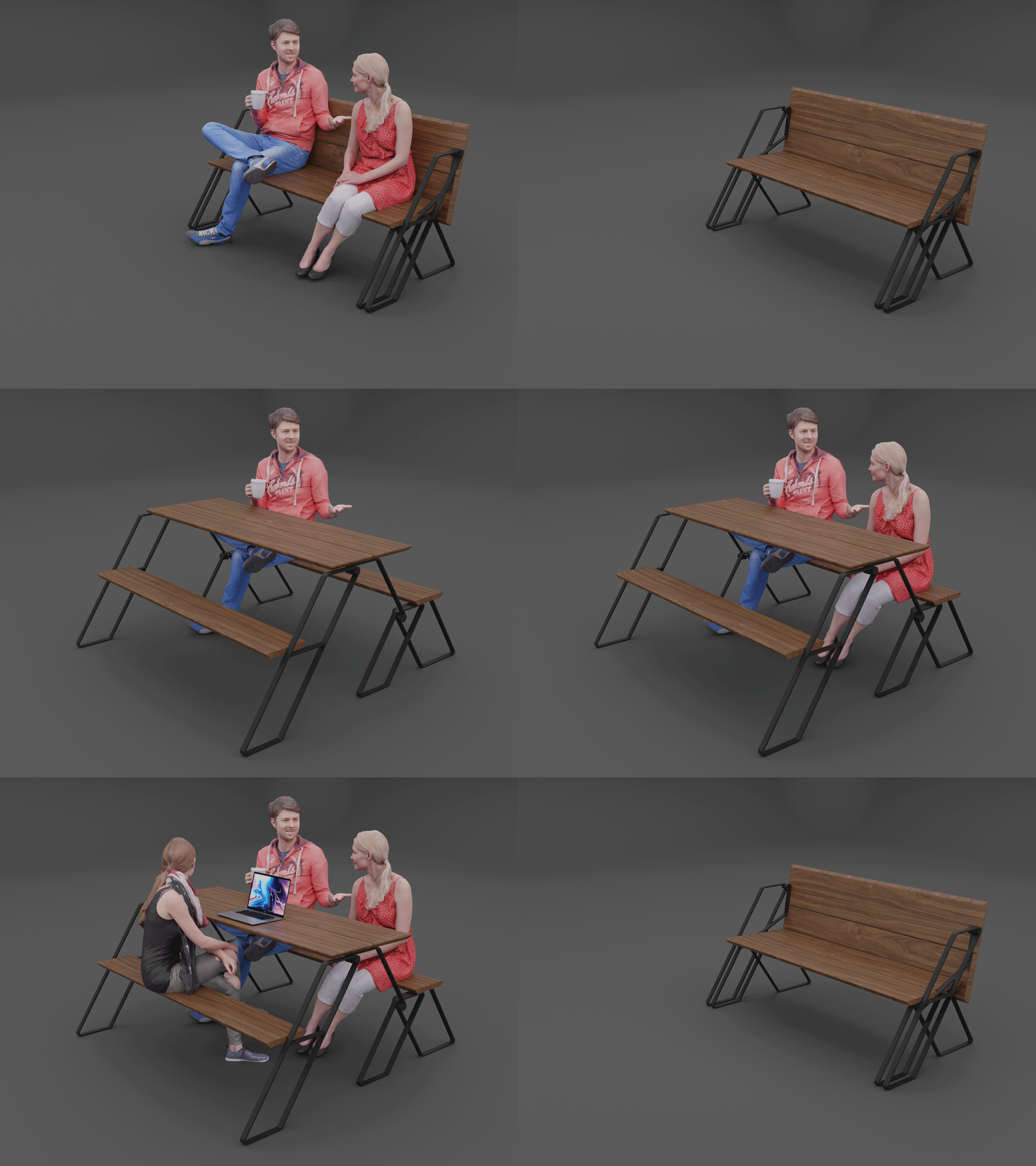
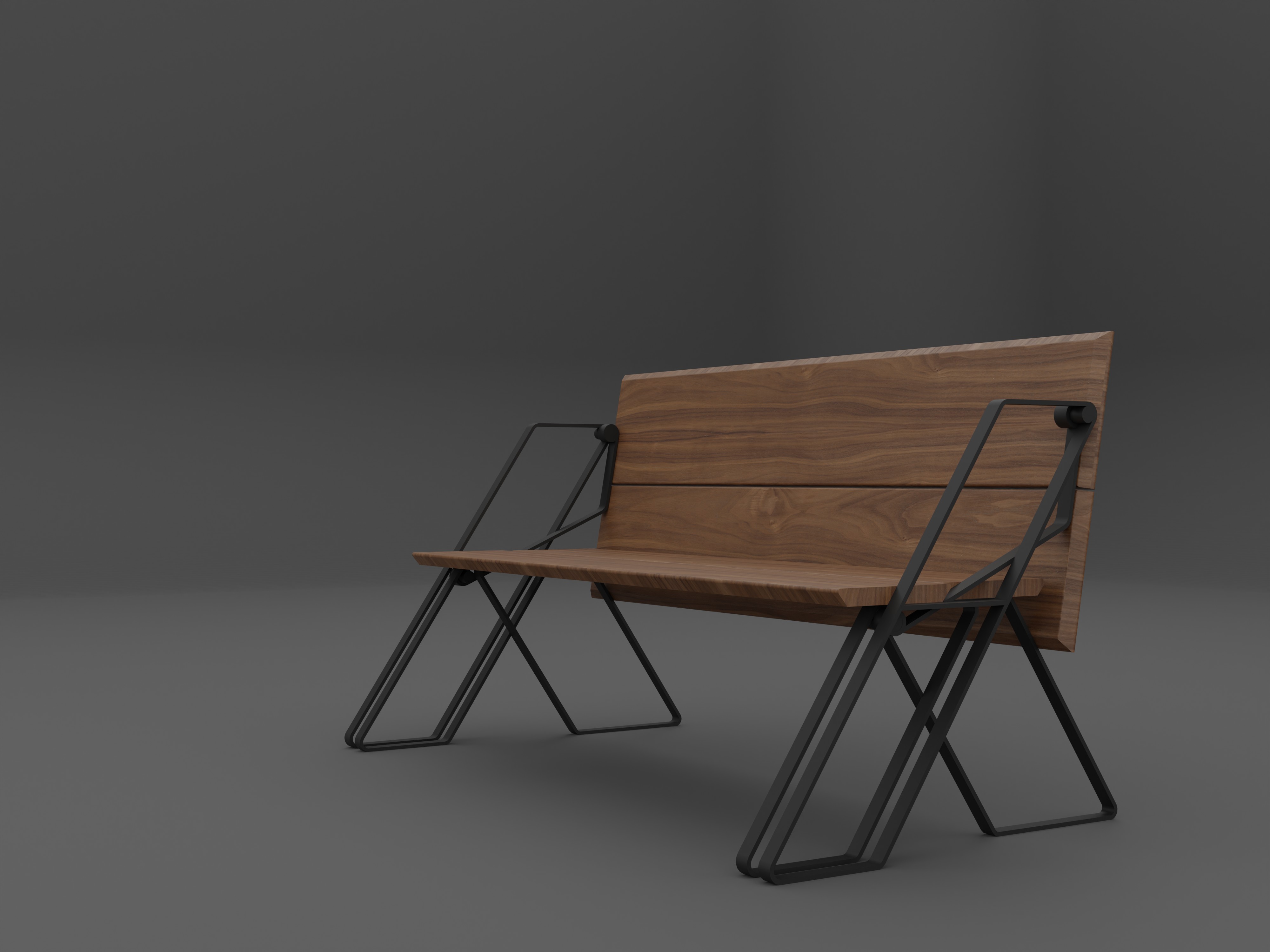
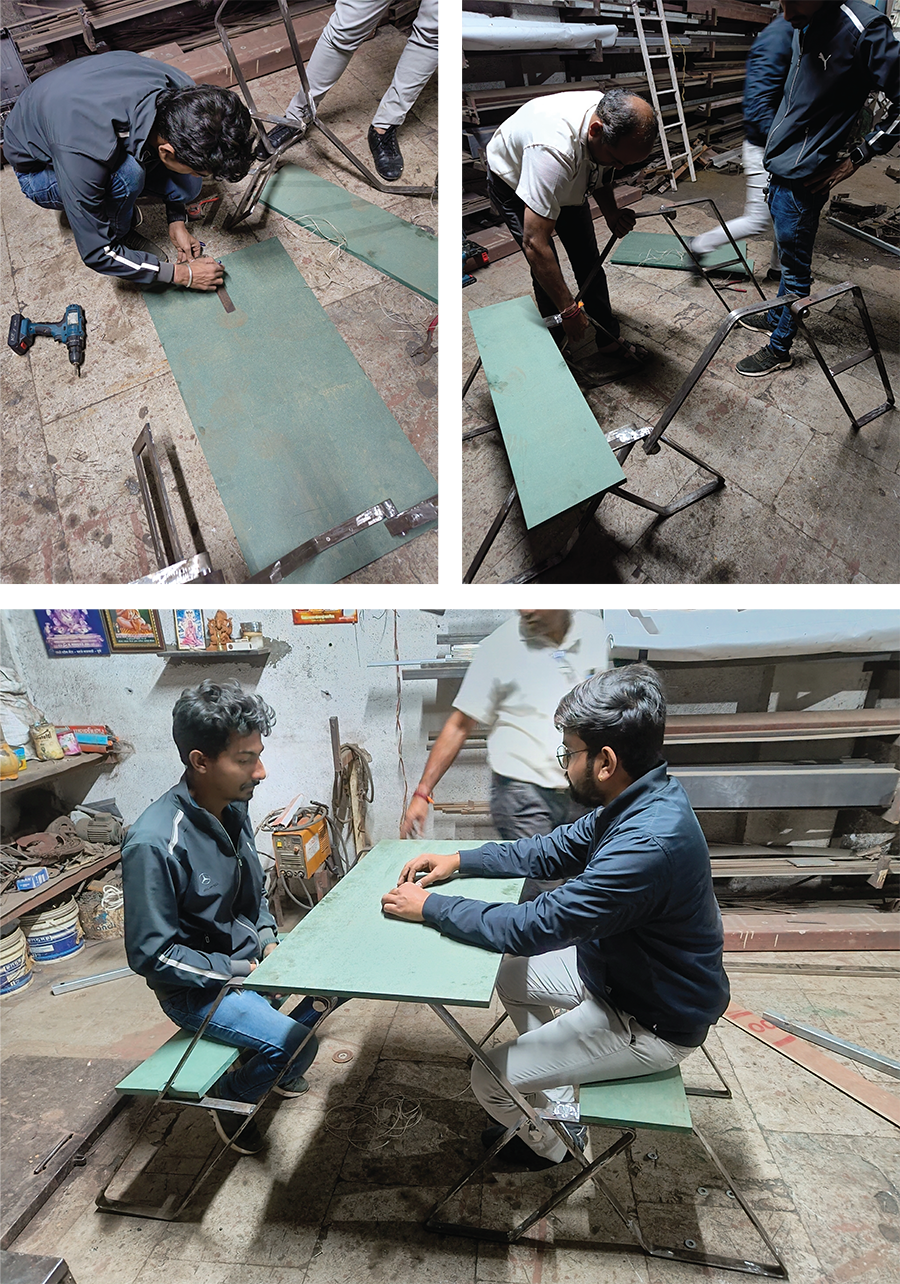
A full-scale prototype was fabricated to validate the design and its specified dimensions. The process began with assembling the metal frames using bearings for smooth movement, followed by joining horizontal members to support the tabletop and seating planks. Checks at each stage ensured seamless transformation between the two configurations. The prototype helped assess the bench’s movement, stability, comfort, and structural performance under actual use, while revealing its overall weight and opportunities to develop a lighter, more manageable design that would be easier to operate during transformation.
Since 2019