
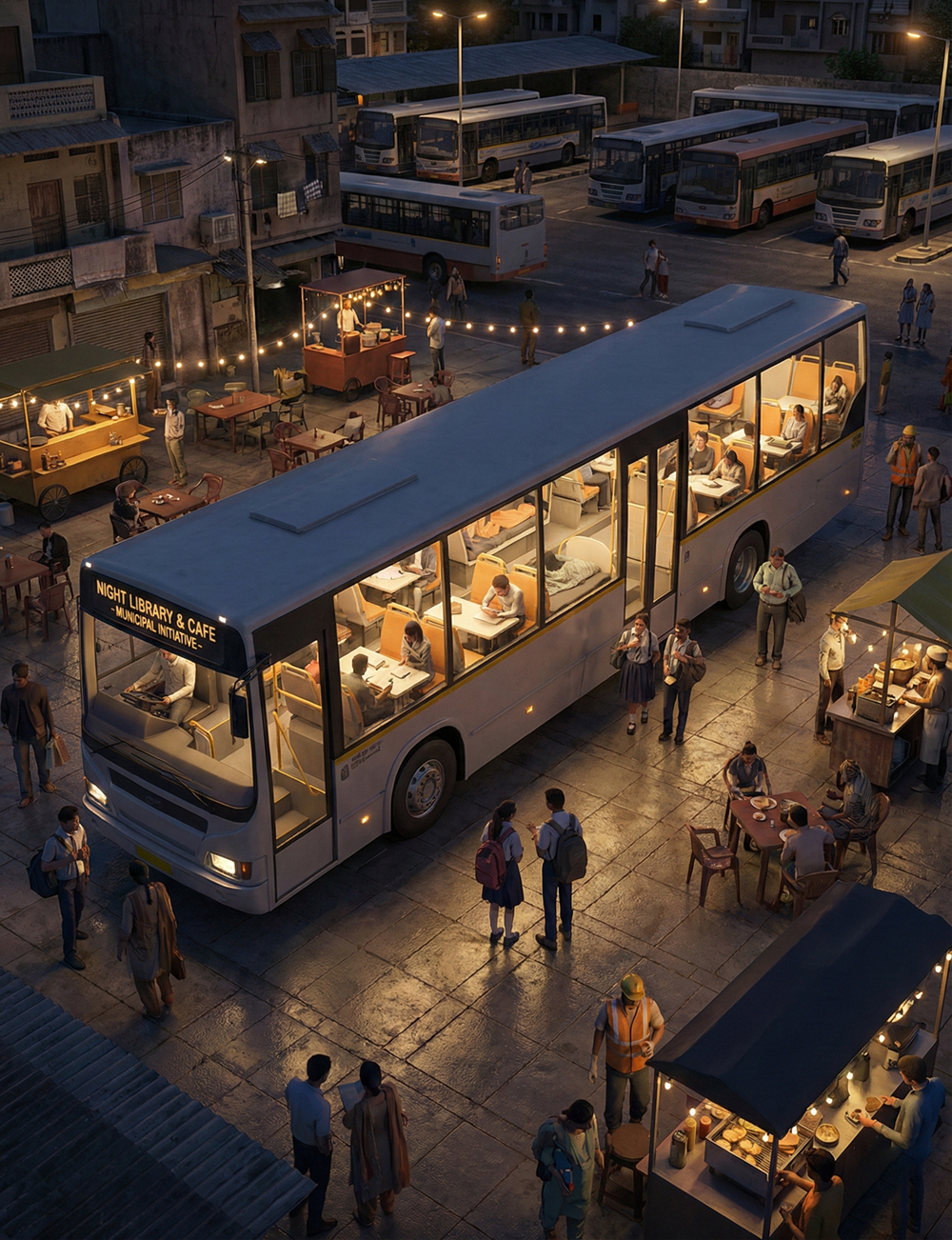
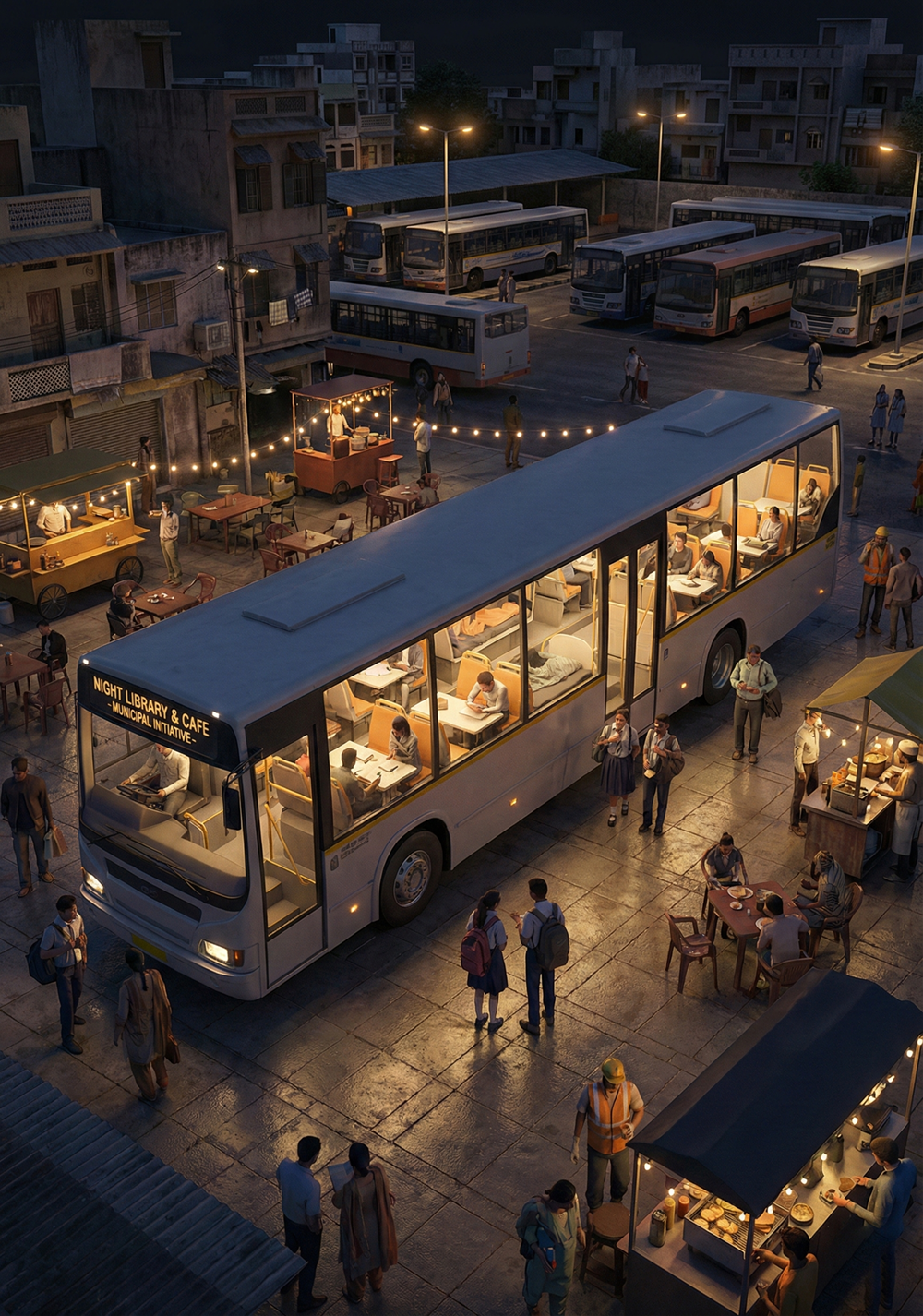
Rather than beginning with a fixed typology or programme, the elective began with curiosity - students were asked to observe current daily life and identify issues that could become design opportunities. Among the ideas explored was the underutilised potential of public buses at night. City buses are active during the day as part of the public transport network, but once their operating hours end, they are usually parked together in large lots. The students identified this as an opportunity to rethink how buses could continue to serve the city beyond their primary function as transport vehicles.
Name
Elective 01 Brick School of Architecture
Year
2022
Typology
Location
Rather than beginning with a fixed typology or programme, the elective began with curiosity - students were asked to observe current daily life and identify issues that could become design opportunities. Among the ideas explored was the underutilised potential of public buses at night. City buses are active during the day as part of the public transport network, but once their operating hours end, they are usually parked together in large lots. The students identified this as an opportunity to rethink how buses could continue to serve the city beyond their primary function as transport vehicles.
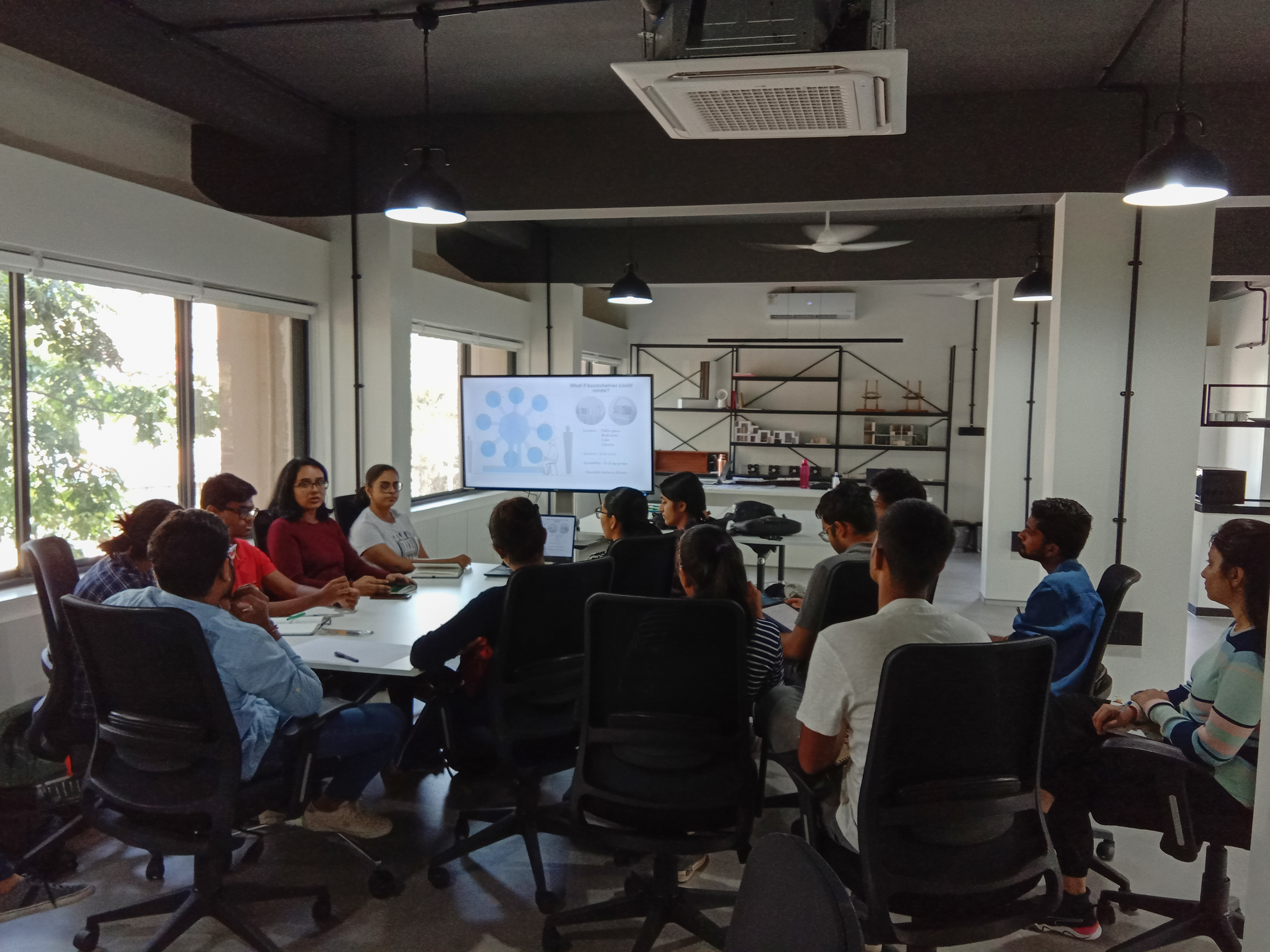
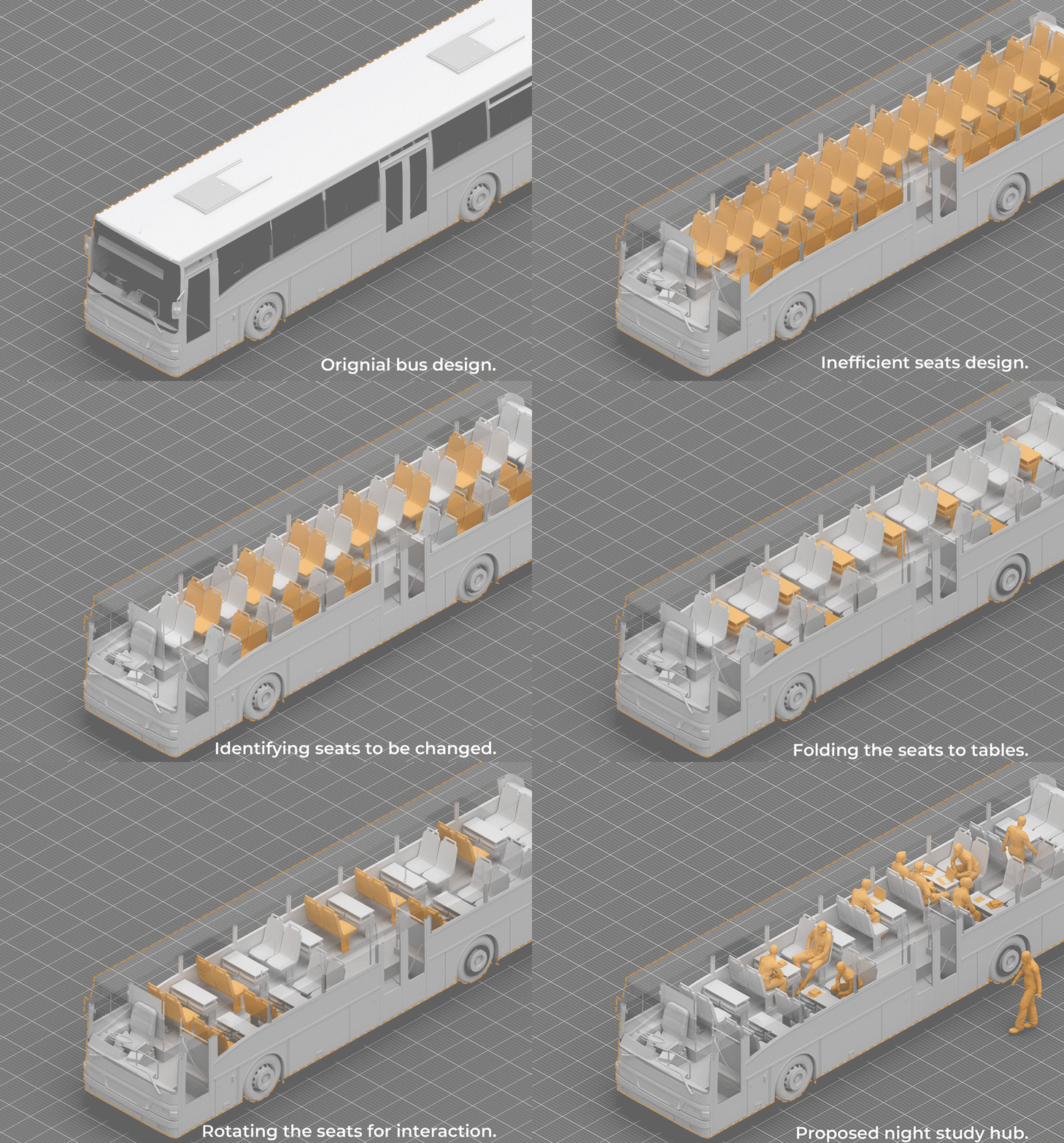
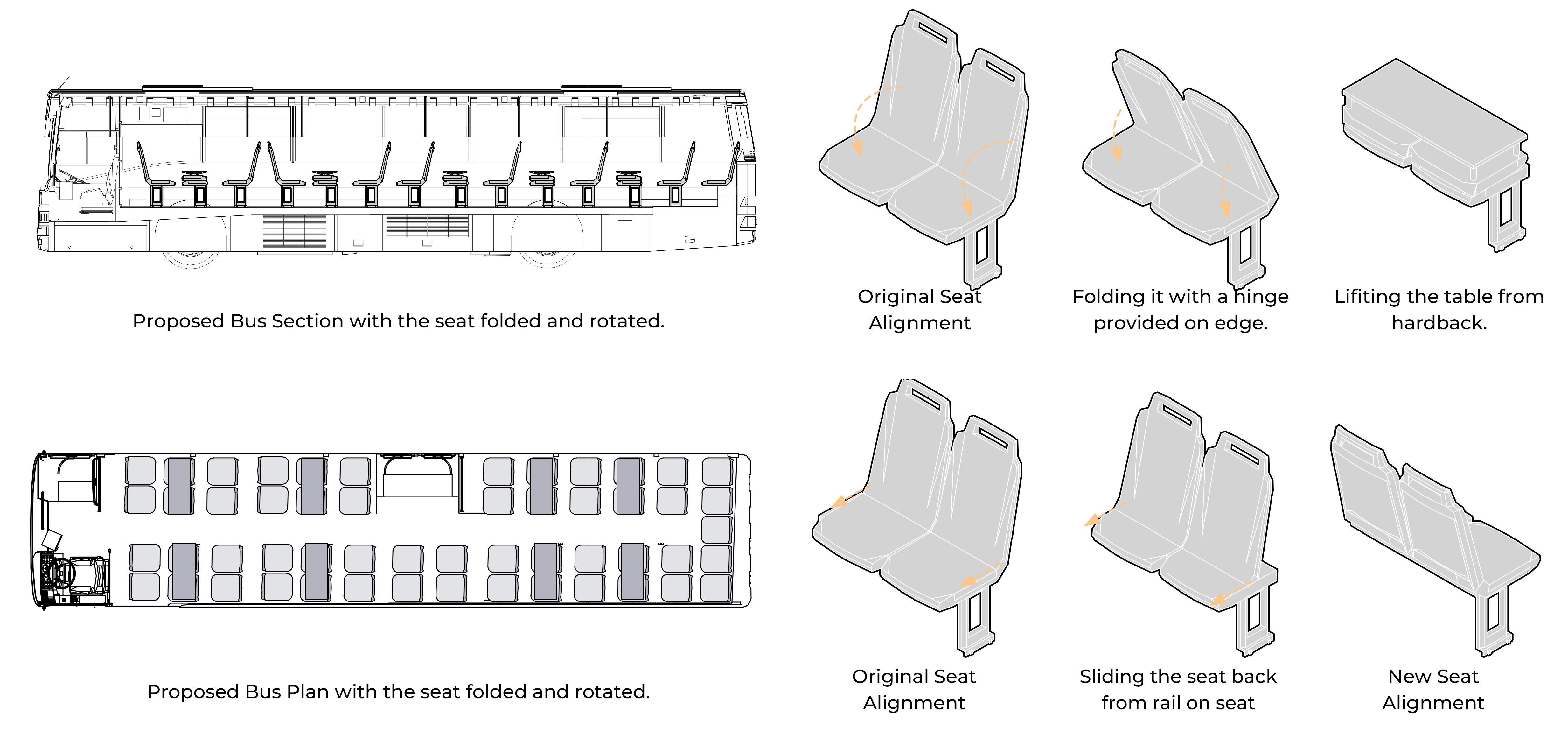
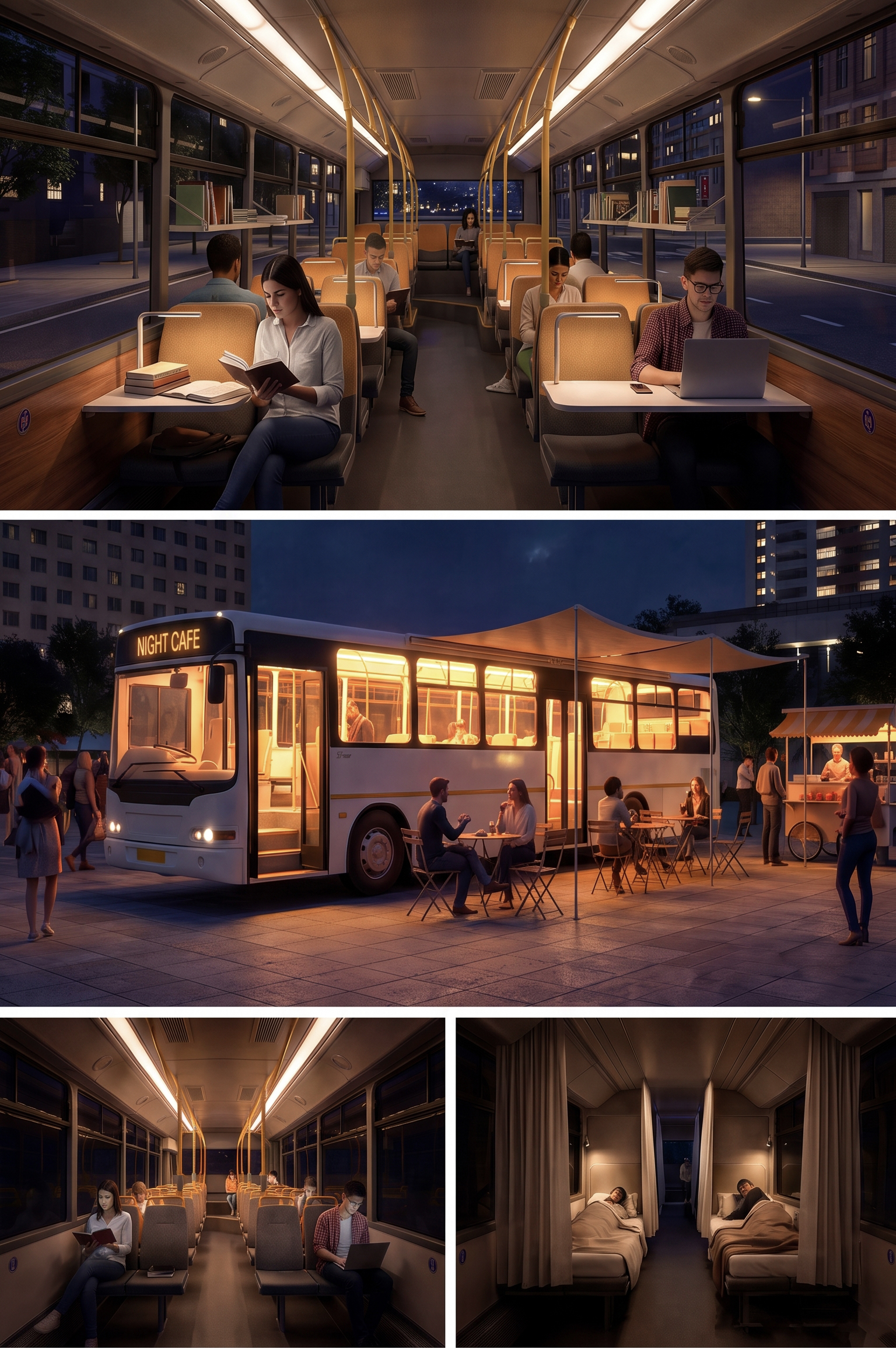
The proposed solution was to transform the internal arrangement of the bus into a flexible modular space. By reimagining the seating system as movable and adaptable, the interior of the bus could be converted into different spatial configurations that support multiple programmes, such as a night study café, a mobile library, or even a temporary sleeping space. In this way, the bus could become an active public facility by night, responding to the needs of students, night-shift workers, travellers, or citizens looking for safe and accessible spaces.
The proposal also suggested a larger urban strategy. Rather than parking buses in congested lots, these transformed vehicles could be distributed along existing city routes after operating hours. This would create a connected network of nighttime public infrastructure across the city. By turning an existing public asset into a flexible, revenue-generating facility, the project demonstrated how design can unlock new value from everyday systems.
Since 2019