

As part of the process, students studied existing kinetic installations and mechanisms to understand their underlying principles and modes of operation. These learnings were then applied to the design and development of original kinetic modules, translating research into functional prototypes that explored movement, interaction, and adaptability.
Name
Elective 03 MIT-ADT
Year
2024
Typology
Location
As part of the process, students studied existing kinetic installations and mechanisms to understand their underlying principles and modes of operation. These learnings were then applied to the design and development of original kinetic modules, translating research into functional prototypes that explored movement, interaction, and adaptability.
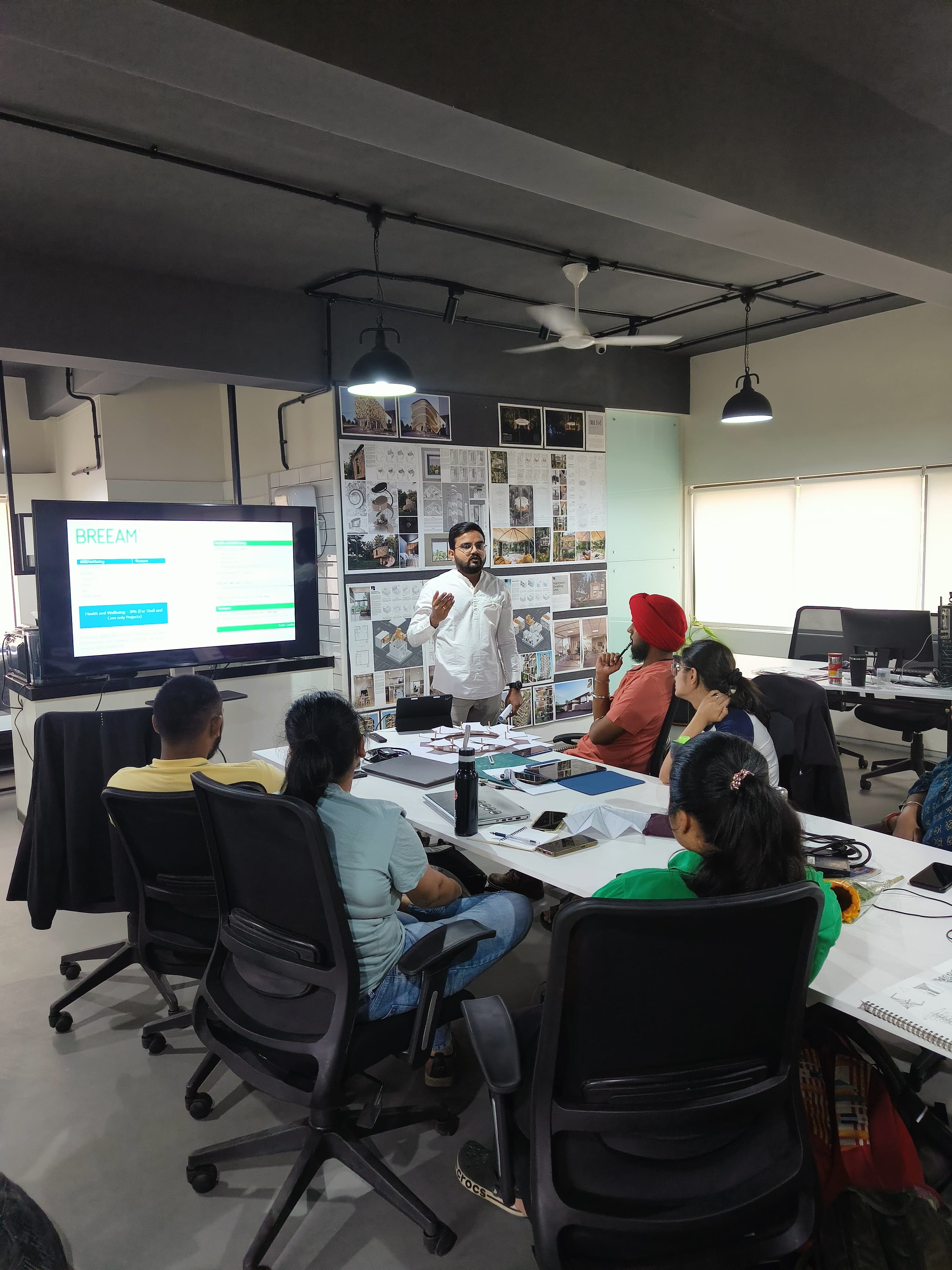
The exploration began with research into existing kinetic installations and architectural systems. These case studies helped students understand the principles of moving architecture before developing their own modules and prototypes.
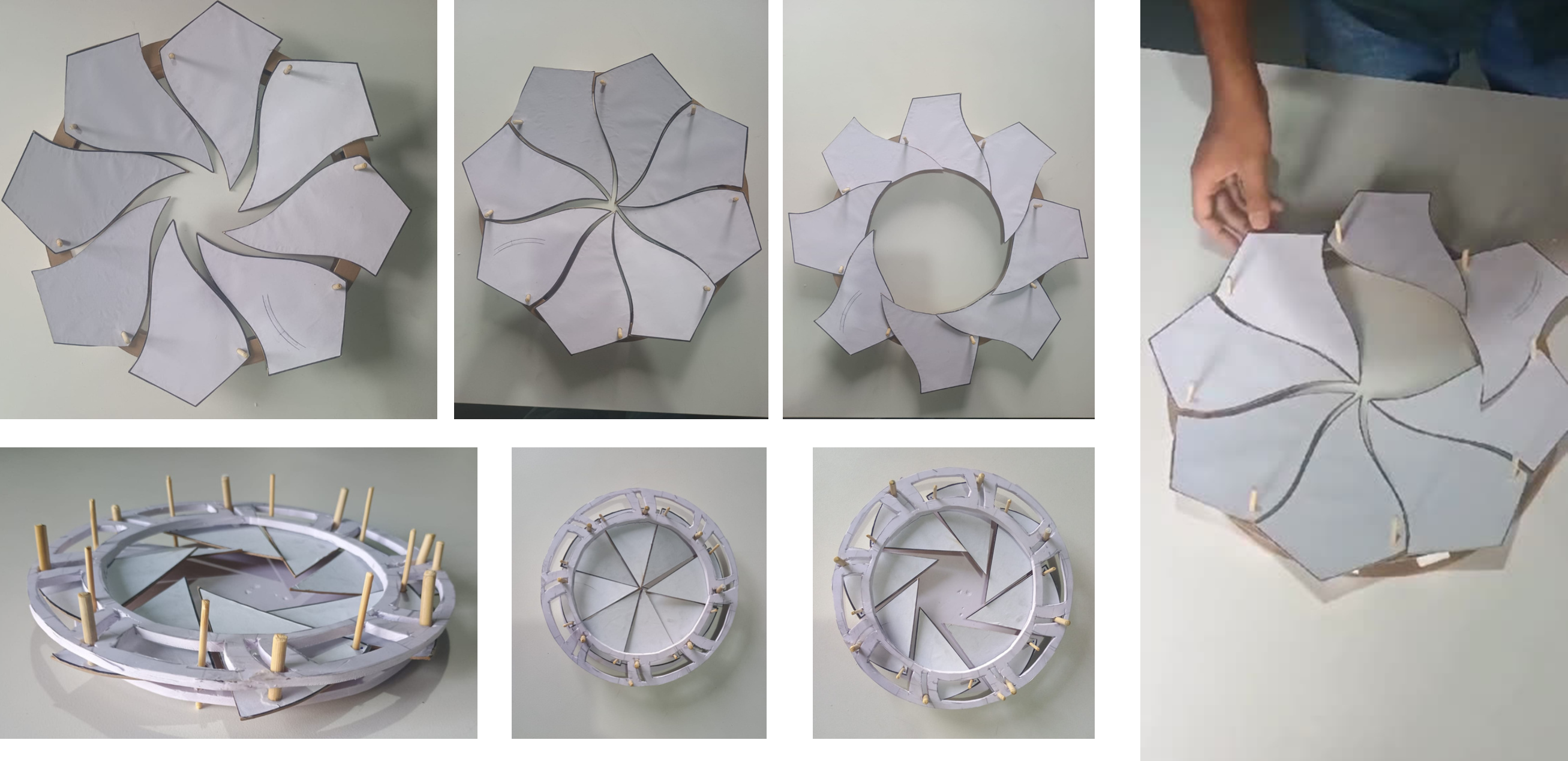
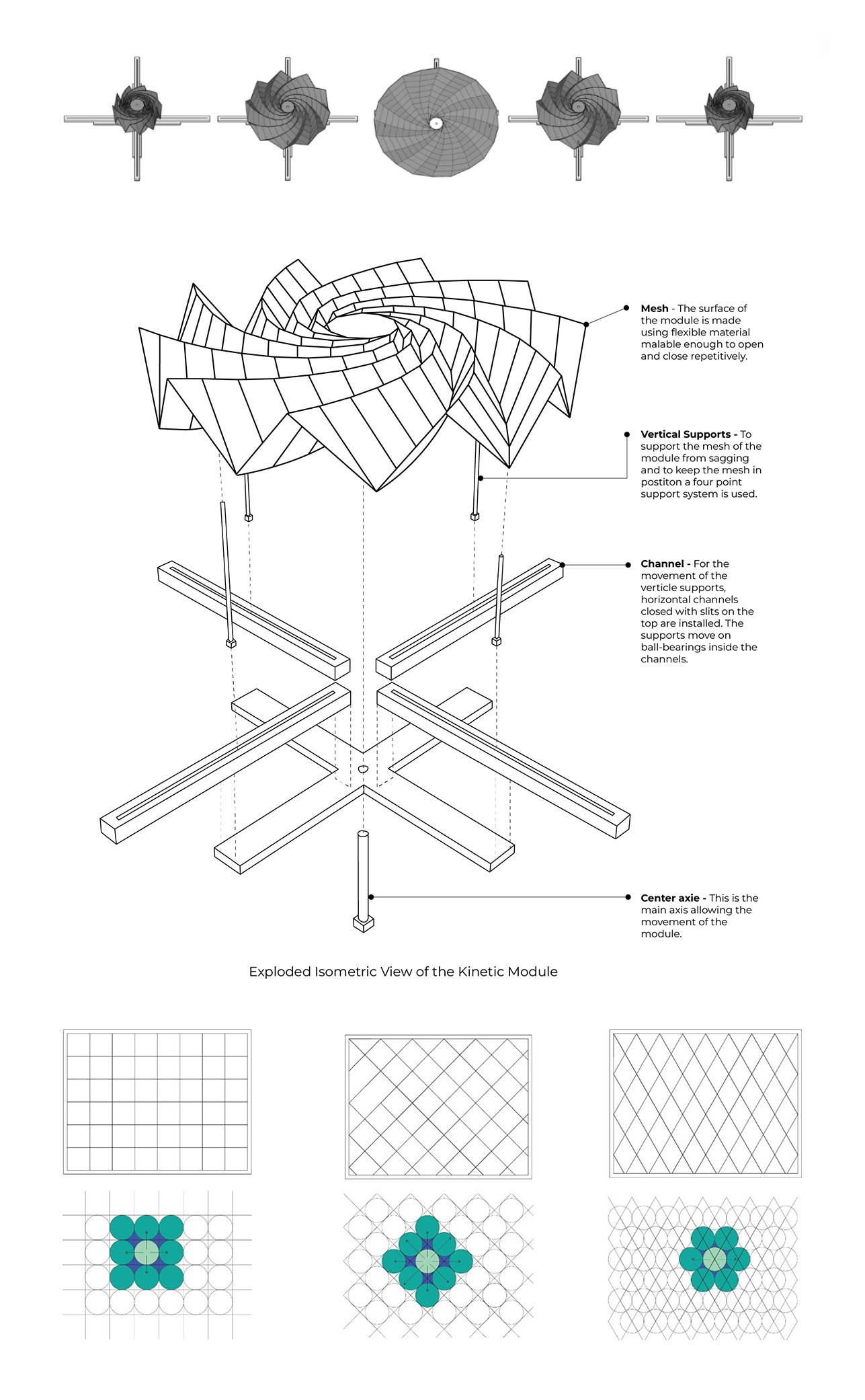
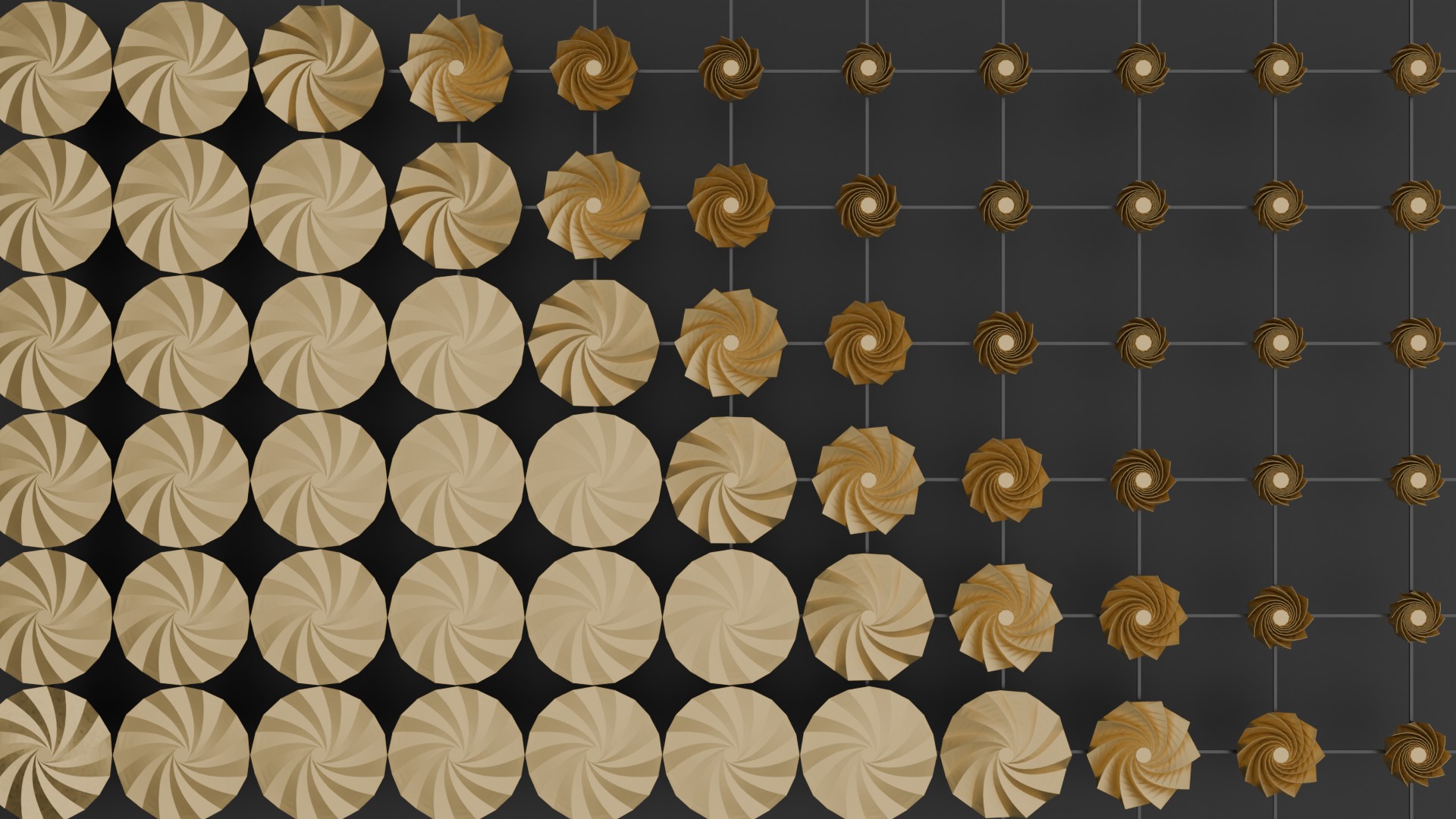
Building on these studies, the elective then explored how natural growth patterns could inform the design of a kinetic architectural system. Using the golden spiral as a starting point, the study focused on developing a transformable module capable of expanding and contracting while maintaining a consistent geometric relationship throughout its movement. The form was derived from the geometry of the golden spiral, a pattern frequently observed in nature. By rotating and repeating the spiral around a fixed axis, a circular arrangement was generated that could condense inward and reduce its footprint while retaining its overall form. This process established the geometric logic that guided the development of the module. Iterations were carried out to refine the geometry and understand the relationship between the number of segments, module size, and depth. Different polygonal configurations were tested before arriving at a final mesh geometry that balanced movement, structural performance, and spatial efficiency while maintaining a continuous spiral expression.
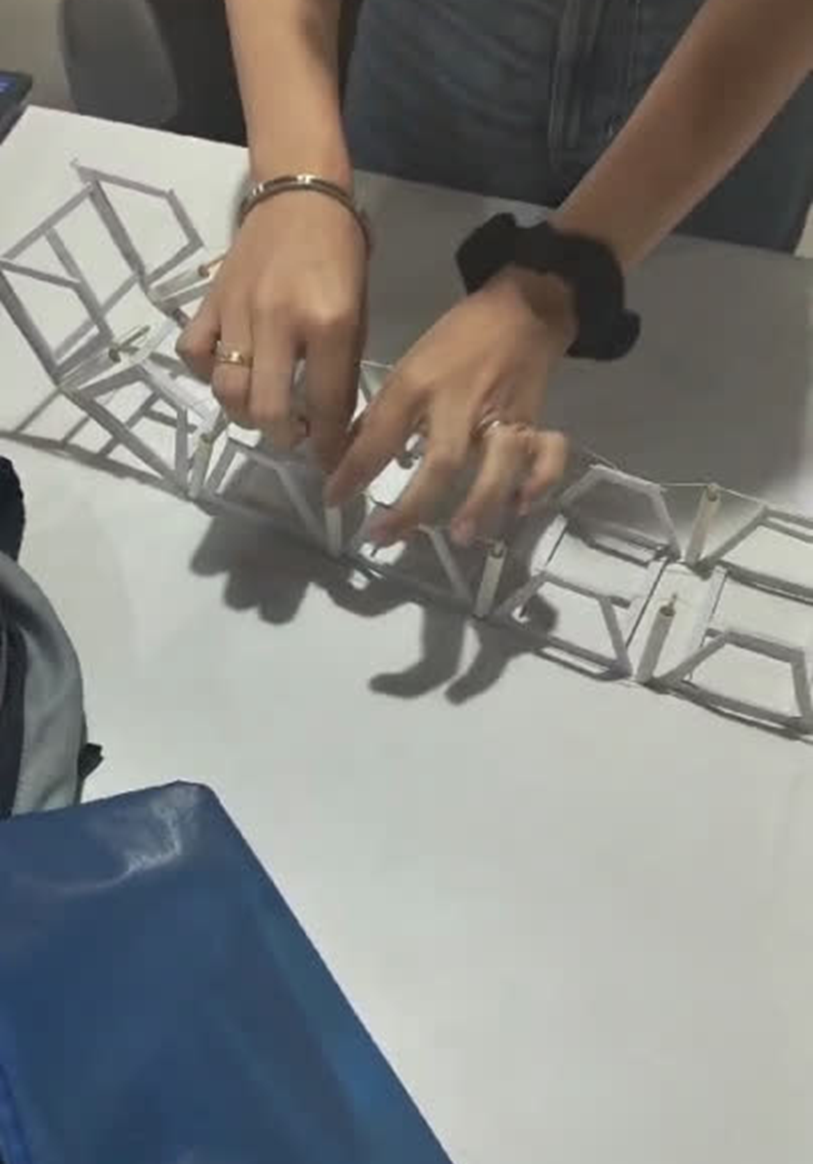
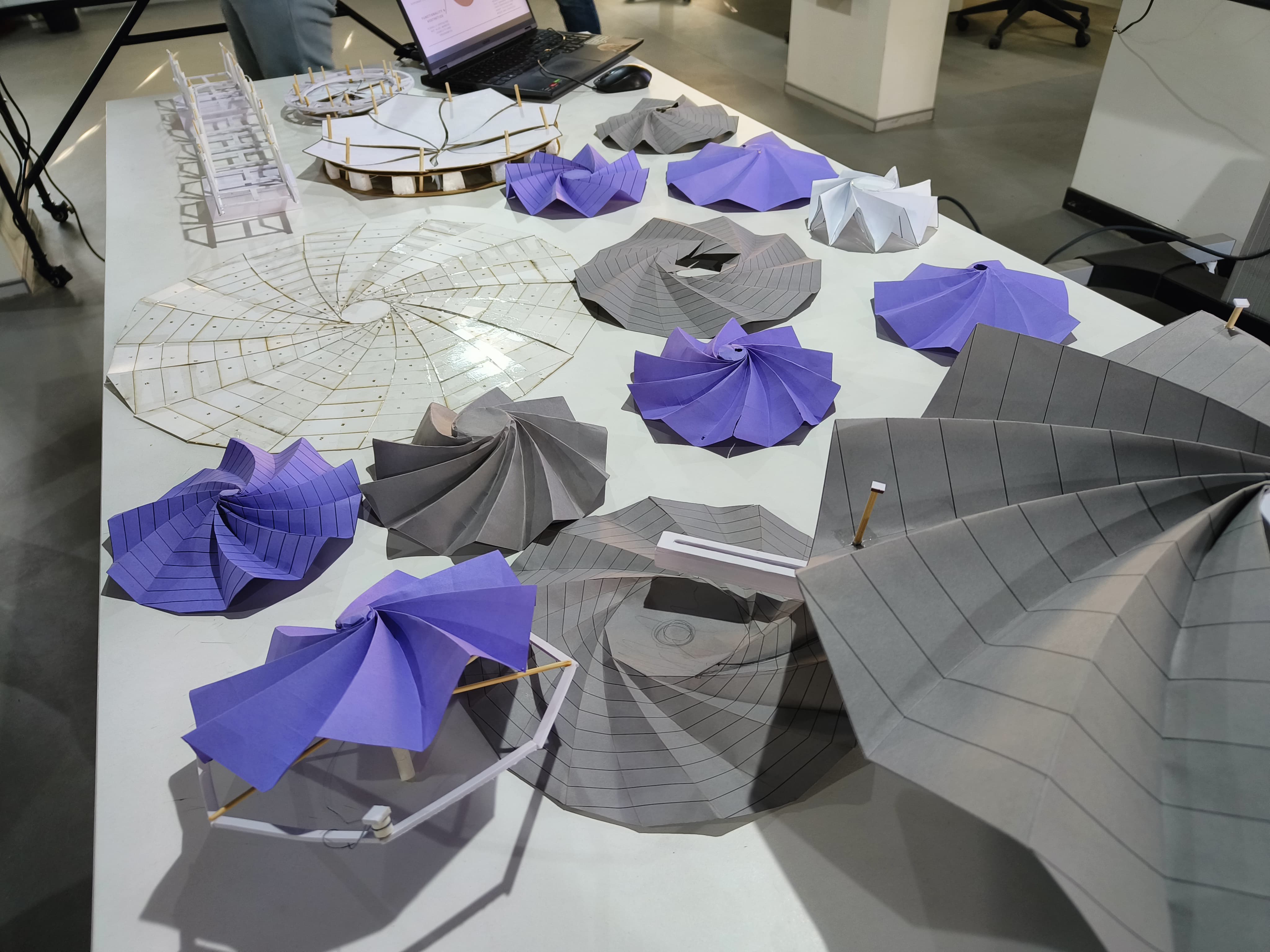
A series of physical prototypes were developed to explore both the form and mechanism of the kinetic module. Through iterative model-making, students tested different geometries, folding patterns, and movement systems to understand how the structure could expand and contract. These hands-on experiments provided valuable insights into the relationship between form, movement, and structural behaviour, helping refine the final kinetic system.
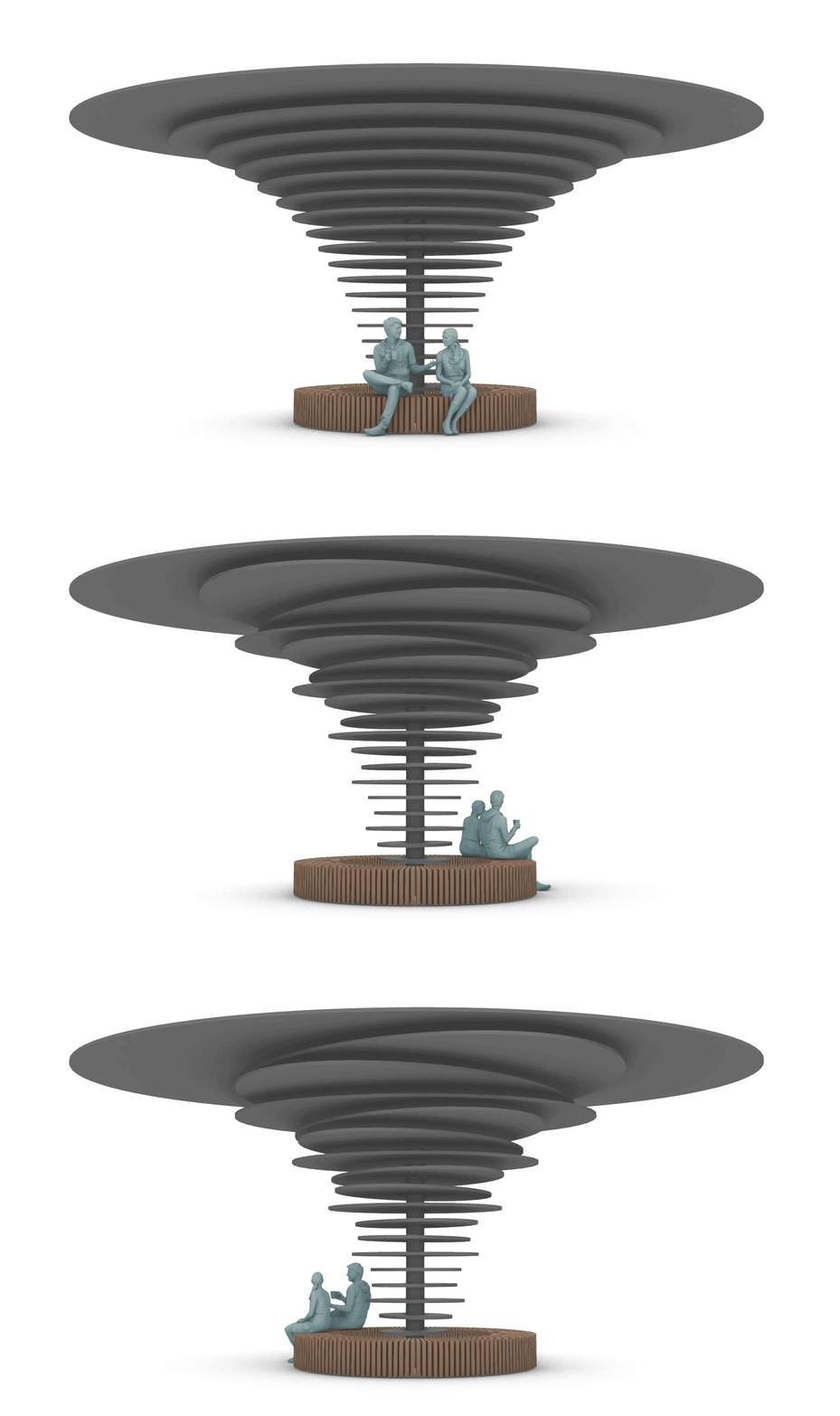
A kinetic bench was developed as an interactive installation that combines seating with movement. The design features a rotating mechanism driven through multiple levels of interconnected gears, allowing users to manually activate the transformation using their feet while seated. As the bench rotates, the stacked elements shift to create a dynamic sculptural form, turning an everyday piece of furniture into an engaging and responsive public space intervention.
Since 2019