
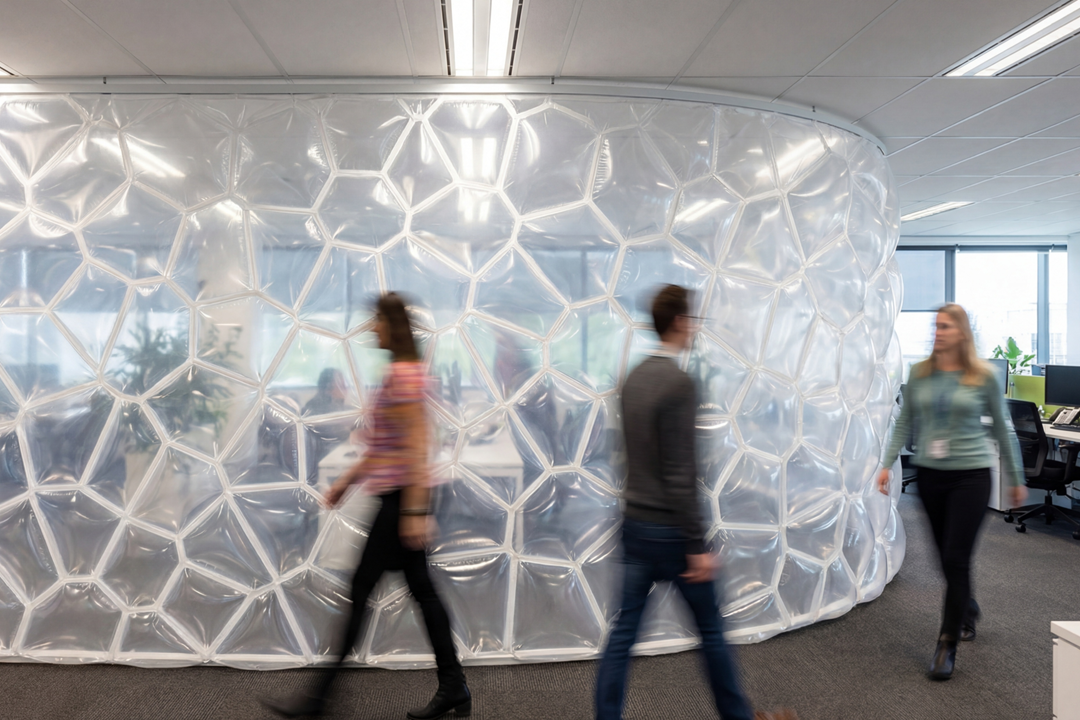
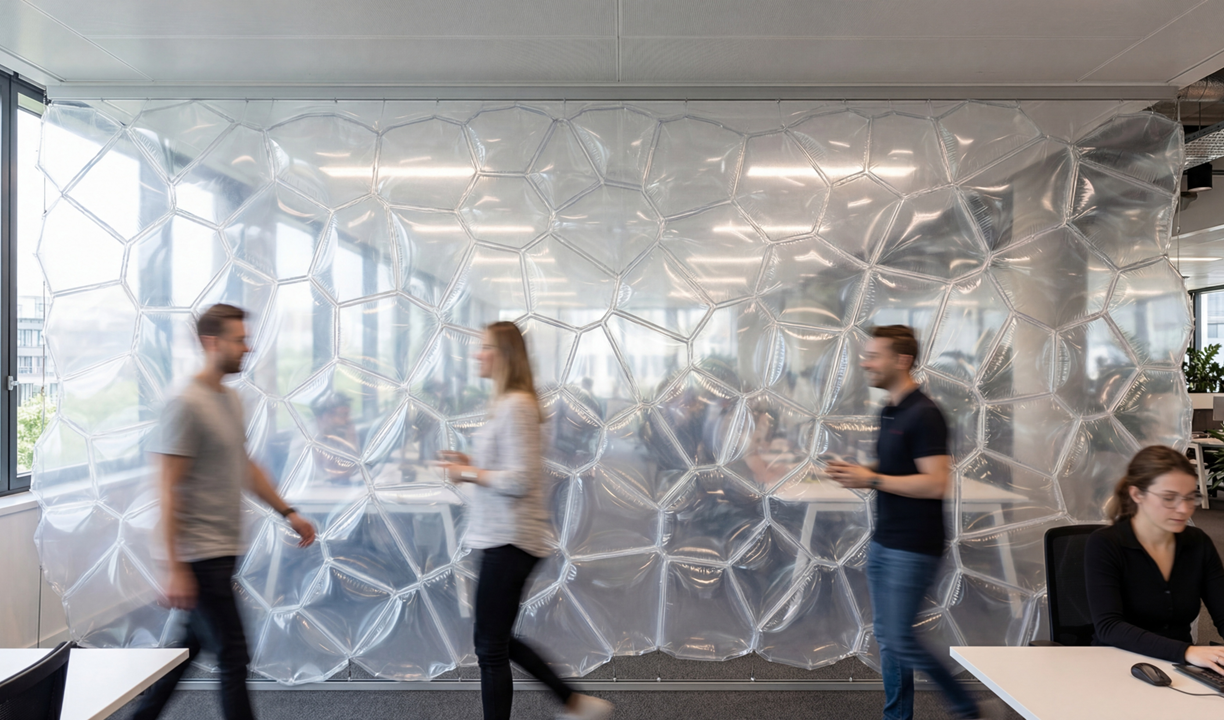
Since ETFE is commonly used as an inflated pneumatic cushion system, the design exploration focused on developing geometries that could be translated into a network of individual cushion panels. Voronoi and Delaunay patterns emerged as key areas of study, offering a visually dynamic yet mathematically structured approach to subdividing the surface. While Voronoi diagrams divide space into organic cellular forms based on proximity to a set of points, Delaunay triangulation connects those same points into a network of triangles, creating a complementary geometric framework. These patterns became the basis for a lightweight partition system for the proposed fabrication lab. The resulting designs explored how inflated ETFE cushions could be arranged within these geometric frameworks to define the workspace while maintaining visual connections with the surrounding office. The combination of material research and computational geometry created a distinctive architectural language that transformed a simple partition into an expressive design element.
Name
ETFE Partition
Year
2024
Typology
Location
Since ETFE is commonly used as an inflated pneumatic cushion system, the design exploration focused on developing geometries that could be translated into a network of individual cushion panels. Voronoi and Delaunay patterns emerged as key areas of study, offering a visually dynamic yet mathematically structured approach to subdividing the surface. While Voronoi diagrams divide space into organic cellular forms based on proximity to a set of points, Delaunay triangulation connects those same points into a network of triangles, creating a complementary geometric framework. These patterns became the basis for a lightweight partition system for the proposed fabrication lab. The resulting designs explored how inflated ETFE cushions could be arranged within these geometric frameworks to define the workspace while maintaining visual connections with the surrounding office. The combination of material research and computational geometry created a distinctive architectural language that transformed a simple partition into an expressive design element.
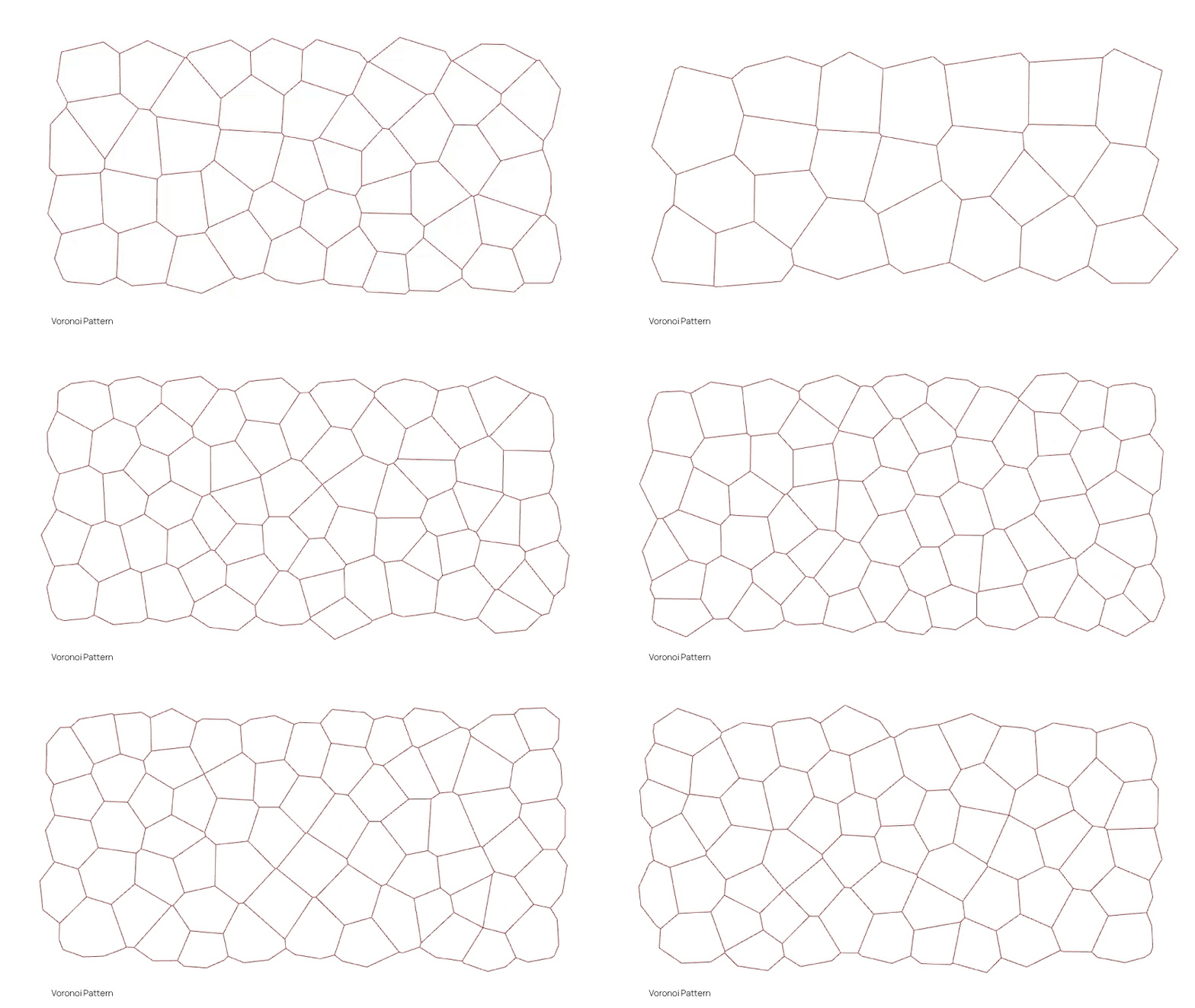
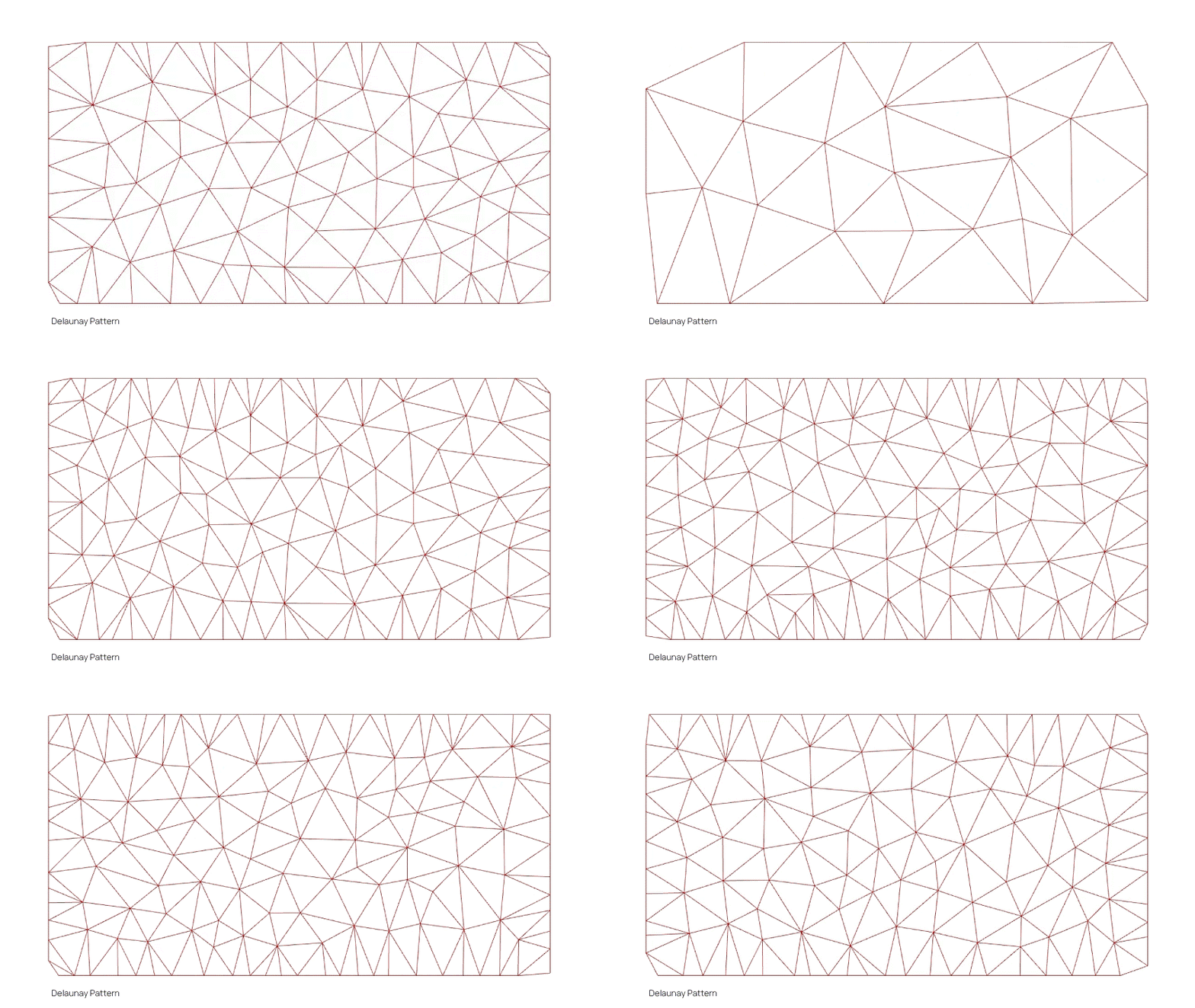
Since ETFE is commonly used as an inflated pneumatic cushion system, the design exploration focused on developing geometries that could be translated into a network of individual cushion panels. Voronoi and Delaunay patterns emerged as key areas of study, offering a visually dynamic yet mathematically structured approach to subdividing the surface. While Voronoi diagrams divide space into organic cellular forms based on proximity to a set of points, Delaunay triangulation connects those same points into a network of triangles, creating a complementary geometric framework. These patterns became the basis for a lightweight partition system for the proposed fabrication lab. The resulting designs explored how inflated ETFE cushions could be arranged within these geometric frameworks to define the workspace while maintaining visual connections with the surrounding office. The combination of material research and computational geometry created a distinctive architectural language that transformed a simple partition into an expressive design element.

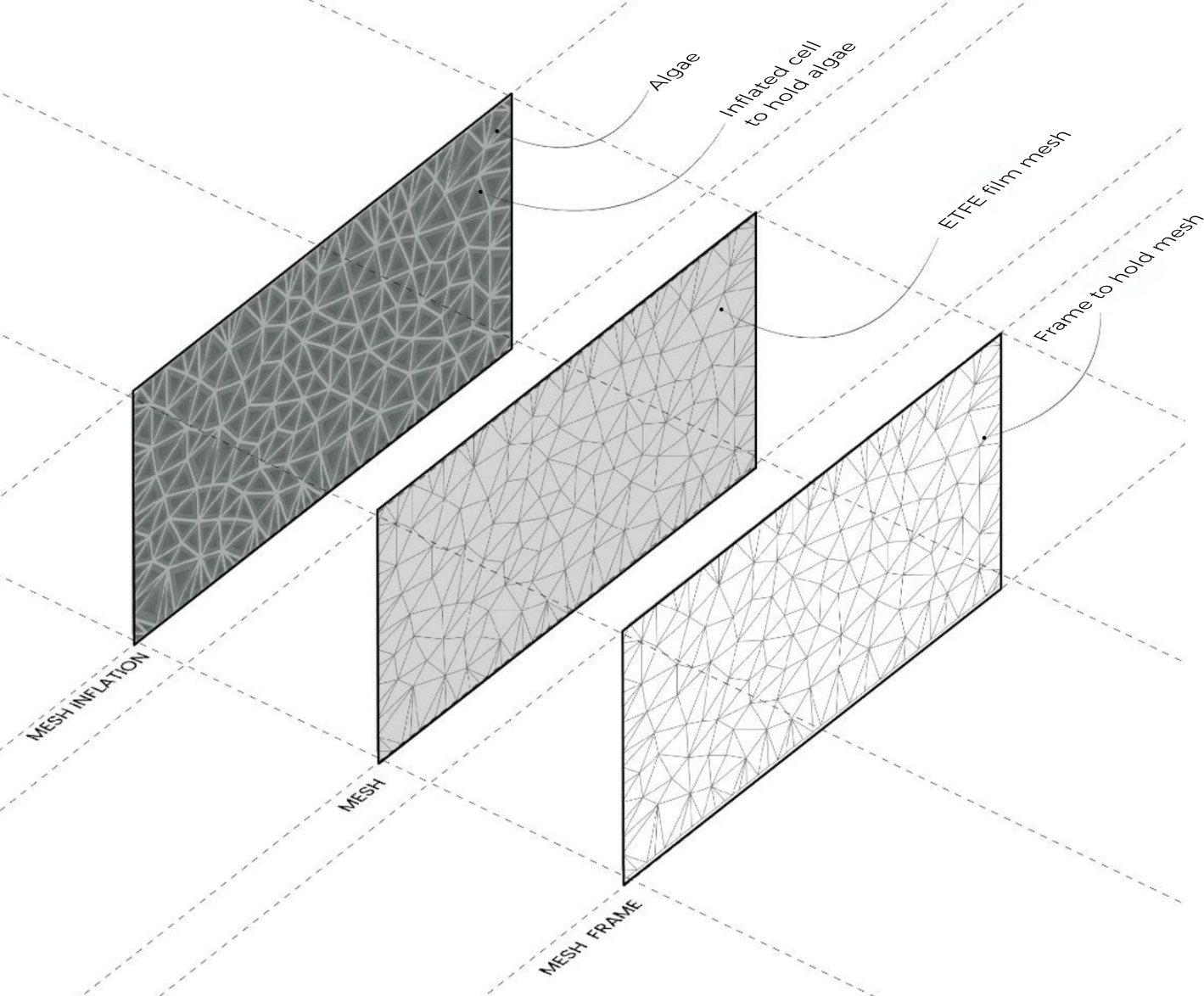
The exploration also extended beyond enclosure to consider the integration of algae within the inflated ETFE cells. By imagining the cushion panels as living compartments, the partition begins to operate not only as a spatial divider, but also as an active biological surface. The algae-filled cells could introduce colour, growth, and environmental performance into the interior, transforming the partition into a living system that responds to light and time.
Since 2019