
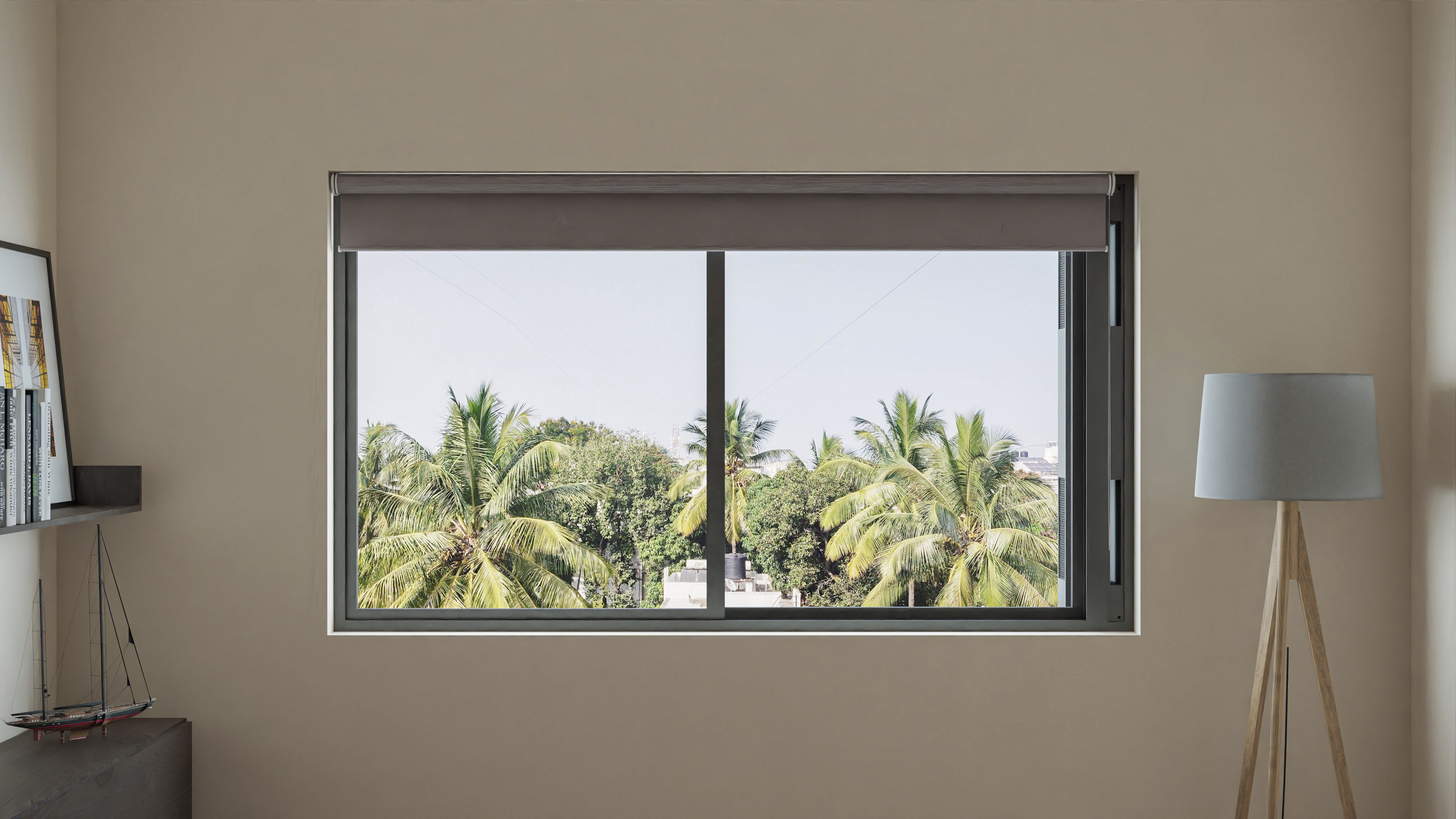
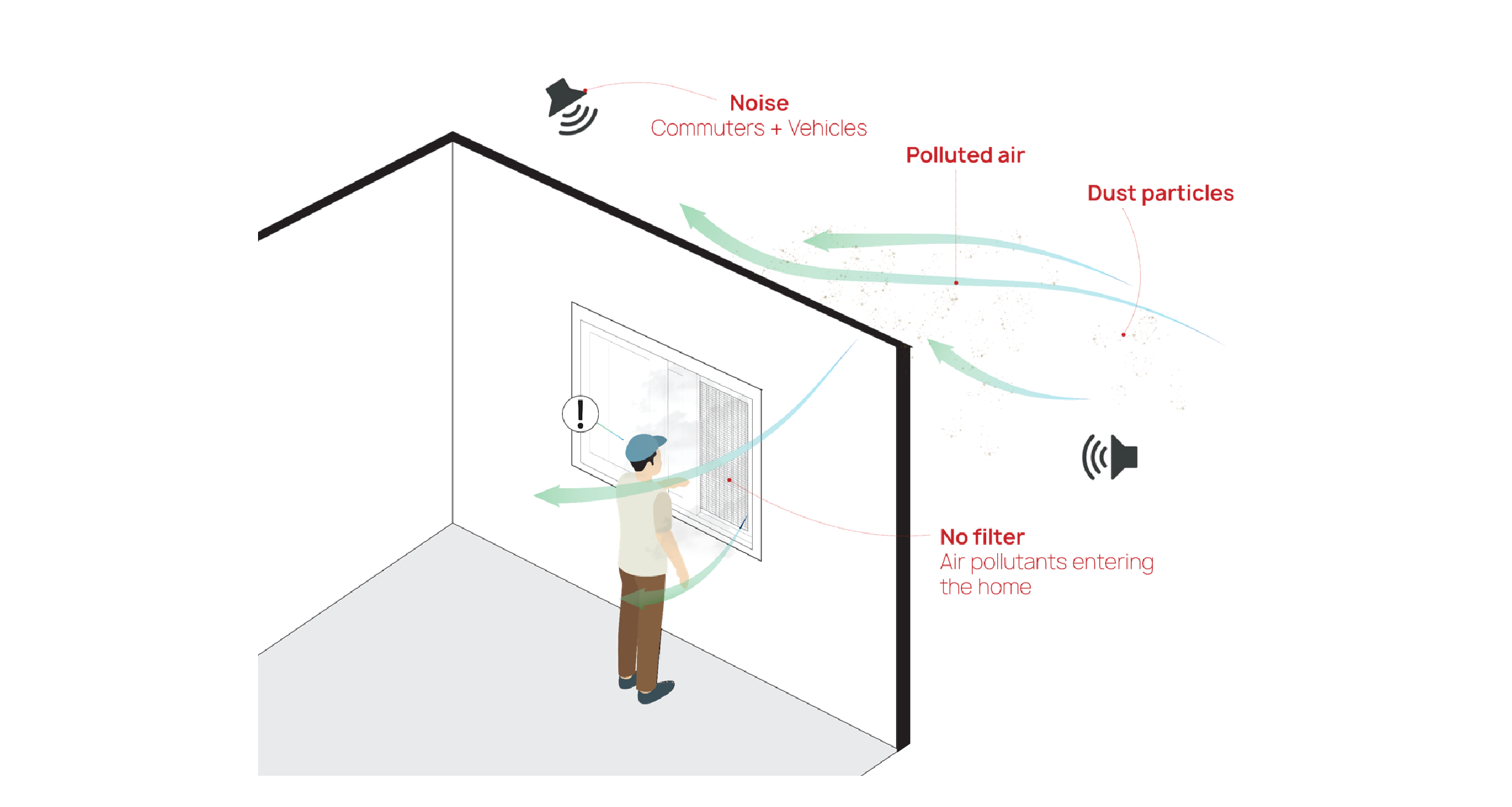
Ventilation plays a critical role in ensuring thermal comfort and maintaining healthy indoor air quality. Traditionally, windows have served as primary elements for natural ventilation in residential buildings; however, their effectiveness depends on factors such as wind movement and cross-ventilation, which are often limited in apartments. In the absence of sufficient air exchange, indoor air quality can deteriorate, leading to discomfort and issues such as Sick Building Syndrome. While air conditioners provide cooling, they do not always ensure fresh air circulation and can negatively impact health. This proposal introduces a mechanical ventilation plugin for windows, designed to enhance air exchange and nighttime cooling by utilizing cooler outdoor air and wind movement, ensuring continuous airflow and improving indoor comfort in residences.
Name
Fenestration
Year
2021
Typology
Location
Ventilation plays a critical role in ensuring thermal comfort and maintaining healthy indoor air quality. Traditionally, windows have served as primary elements for natural ventilation in residential buildings; however, their effectiveness depends on factors such as wind movement and cross-ventilation, which are often limited in apartments. In the absence of sufficient air exchange, indoor air quality can deteriorate, leading to discomfort and issues such as Sick Building Syndrome. While air conditioners provide cooling, they do not always ensure fresh air circulation and can negatively impact health. This proposal introduces a mechanical ventilation plugin for windows, designed to enhance air exchange and nighttime cooling by utilizing cooler outdoor air and wind movement, ensuring continuous airflow and improving indoor comfort in residences.
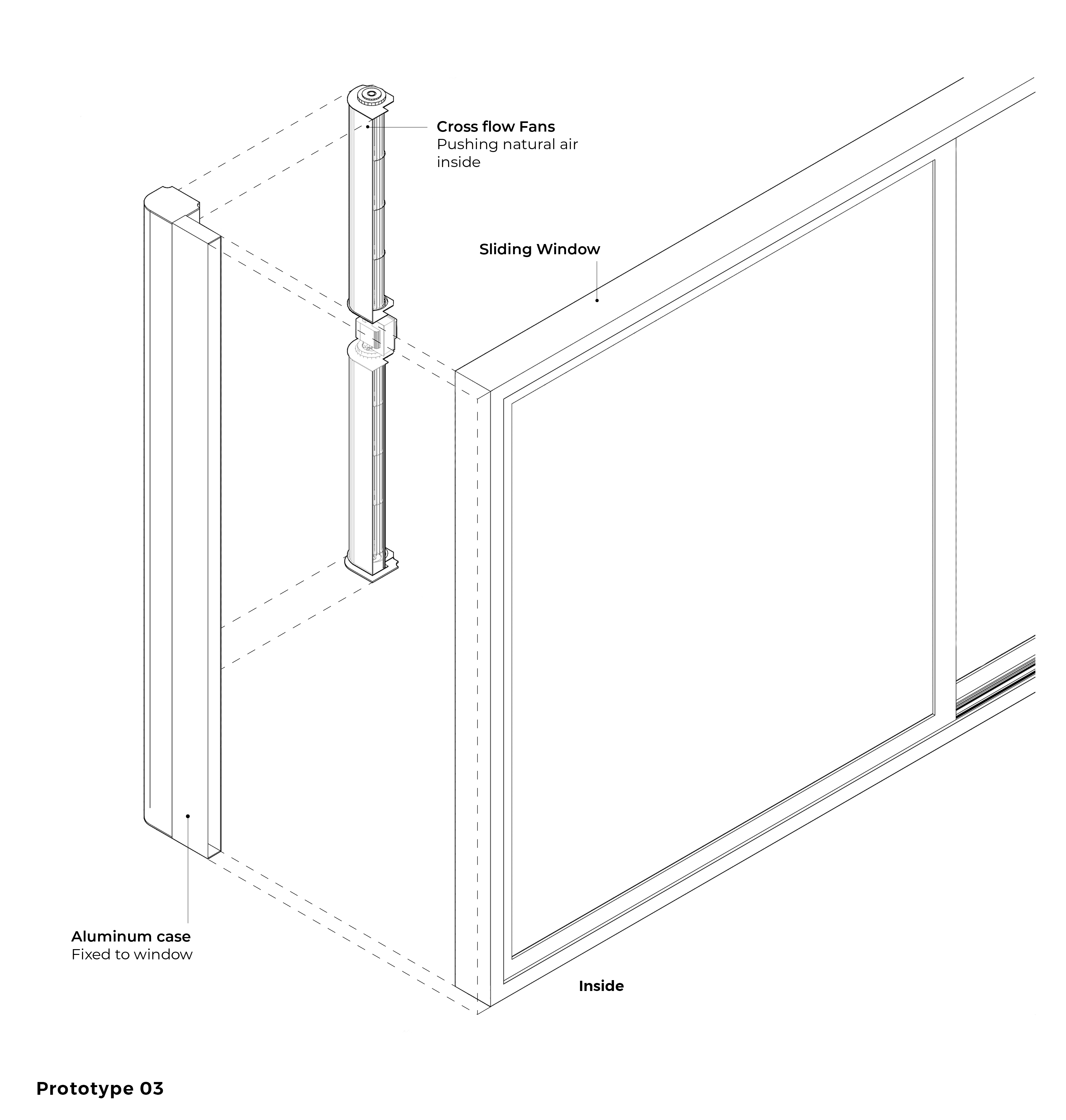
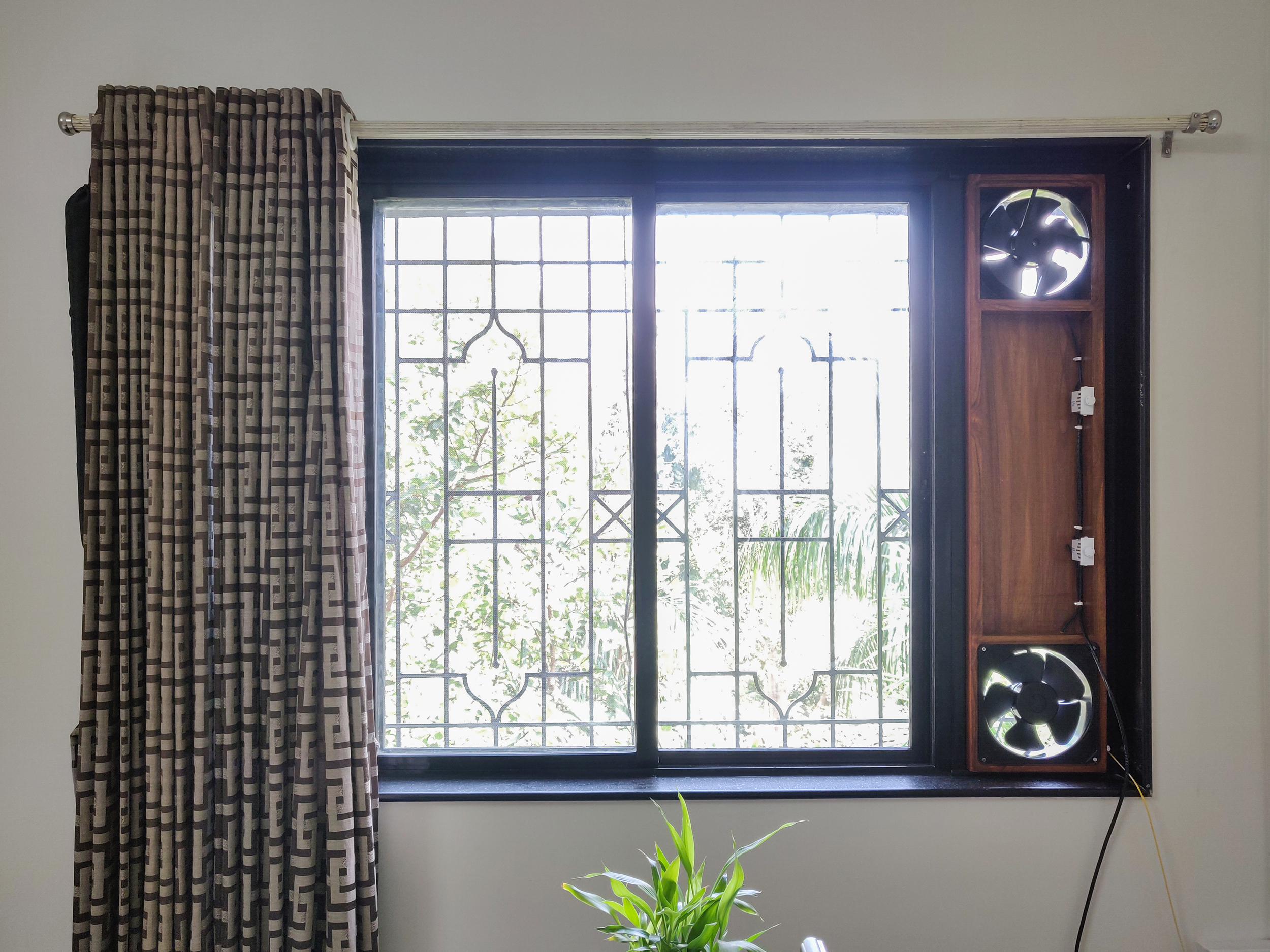
Prototype 1 explored a window-mounted ventilation system using two vertically arranged axial fans, one for fresh air intake and the other for exhausting warm indoor air. While the prototype established the basic airflow mechanism, testing revealed opportunities to improve noise levels, cooling performance, and integration with interior spaces. Prototype 2 introduced Peltier devices and heat sinks to explore active air cooling, alongside improvements to the fan assembly and airflow direction. Although it demonstrated the potential for cooling incoming air, the system remained bulky and industrial in appearance. Prototype 3 therefore reworked the design into a concealed window-integrated unit, replacing axial fans with a compact cross-flow fan. This improved air delivery with lower noise levels while allowing the system to blend more seamlessly into the window frame.
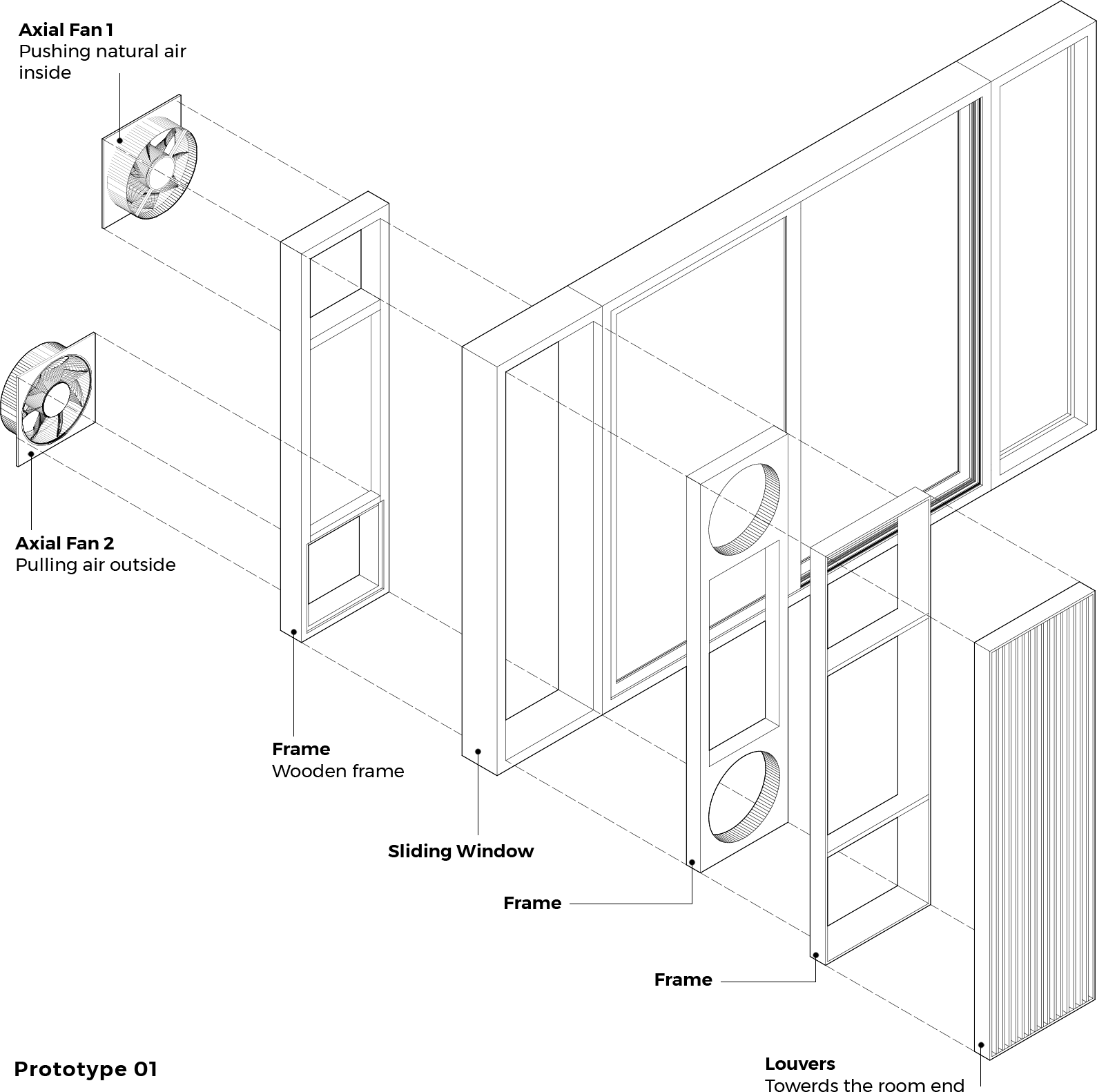
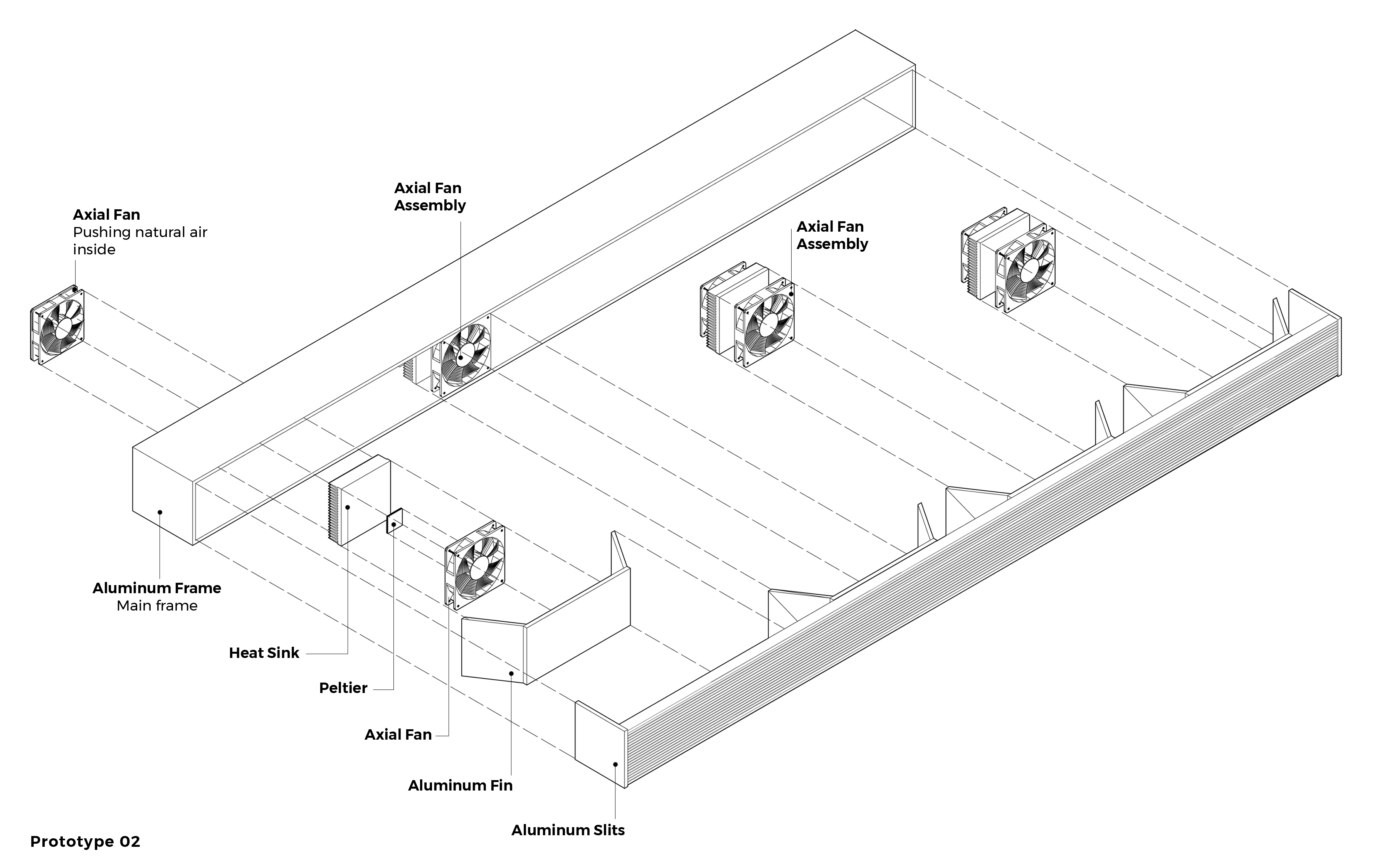
Prototype 1 was fabricated and tested to evaluate the airflow mechanism, ventilation efficiency, and overall functionality of the system. The testing helped identify key limitations in noise levels, cooling performance, and design integration, providing a basis for further refinement.
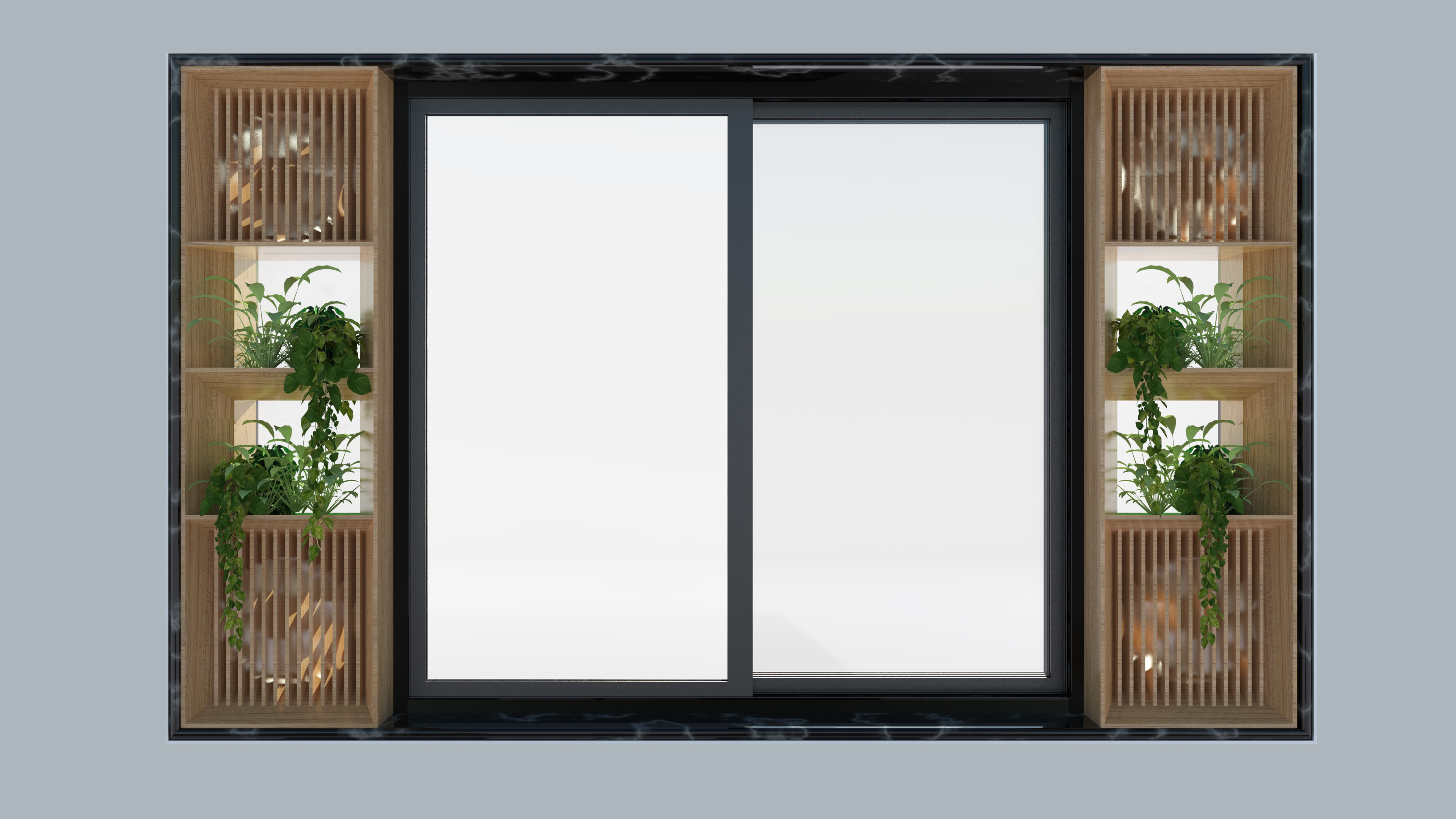
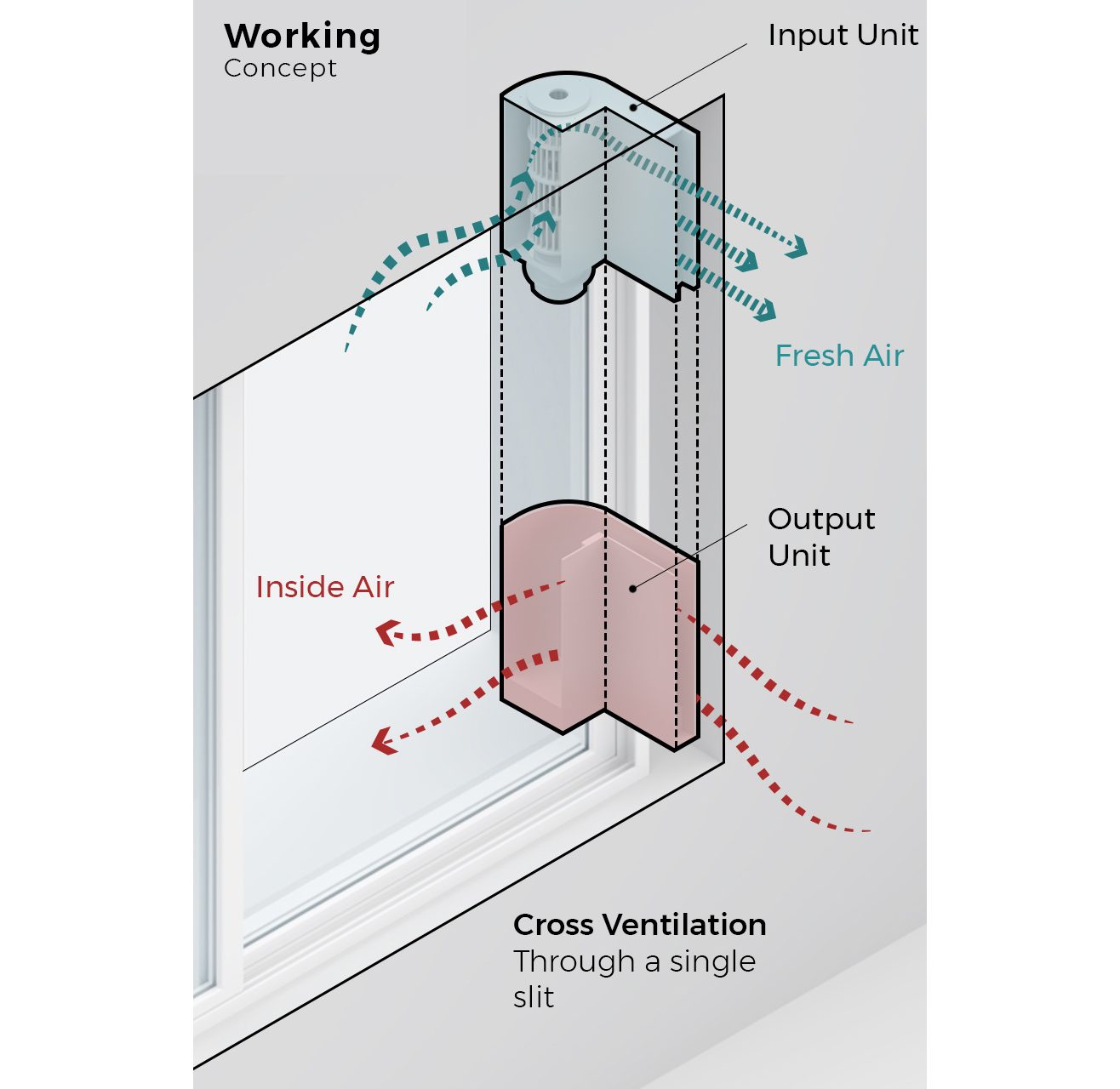
The prototypes led to a patented fenestration system designed to fit within a window opening, drawing in cooler outdoor air while simultaneously expelling warm, stagnant indoor air. This controlled dual-action airflow creates a flushing effect that improves air quality and thermal comfort, effectively simulating cross-ventilation even in single-window rooms. Concealed within a discreet casing, the system integrates seamlessly with the window while maintaining full functionality.
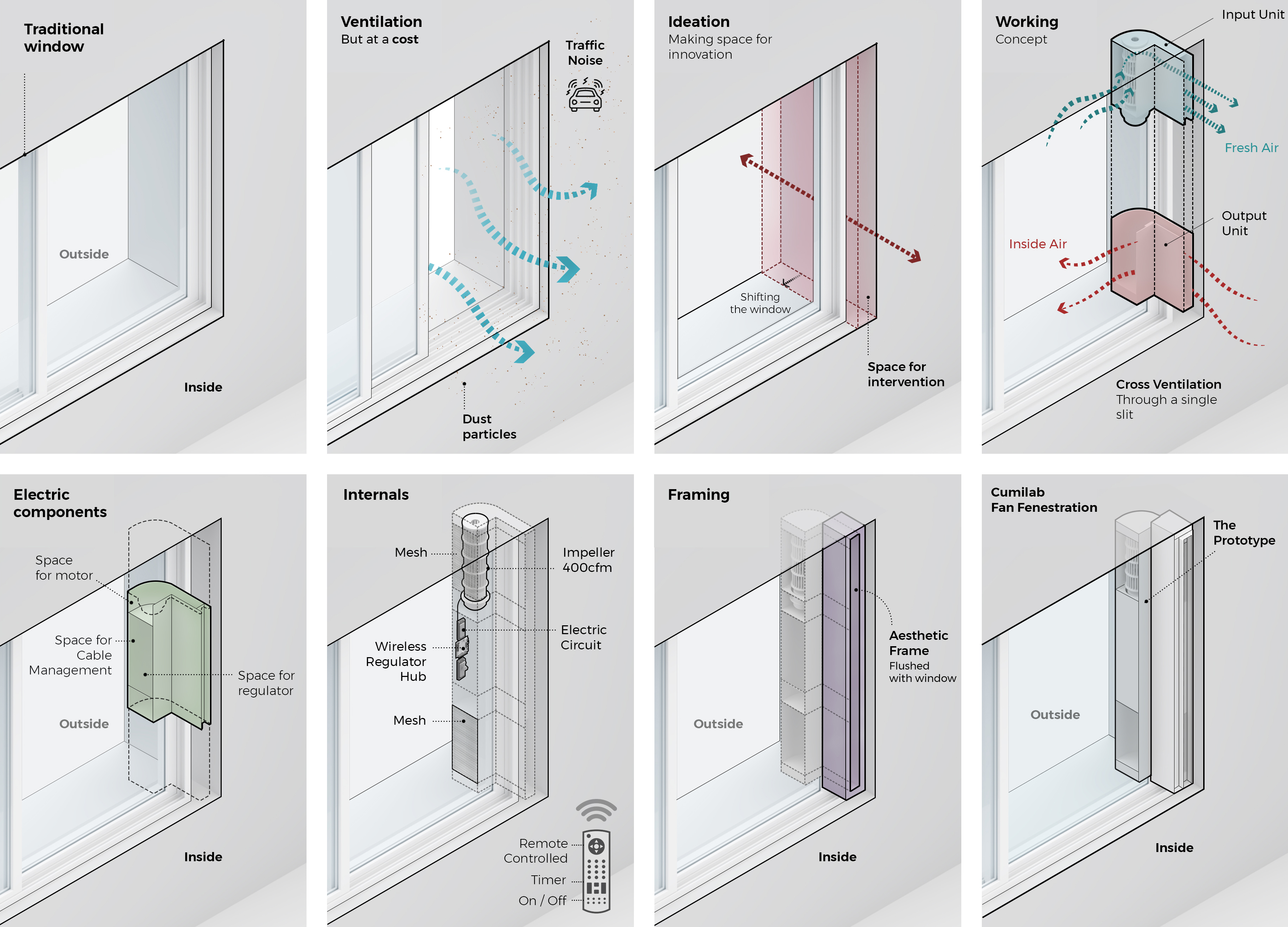
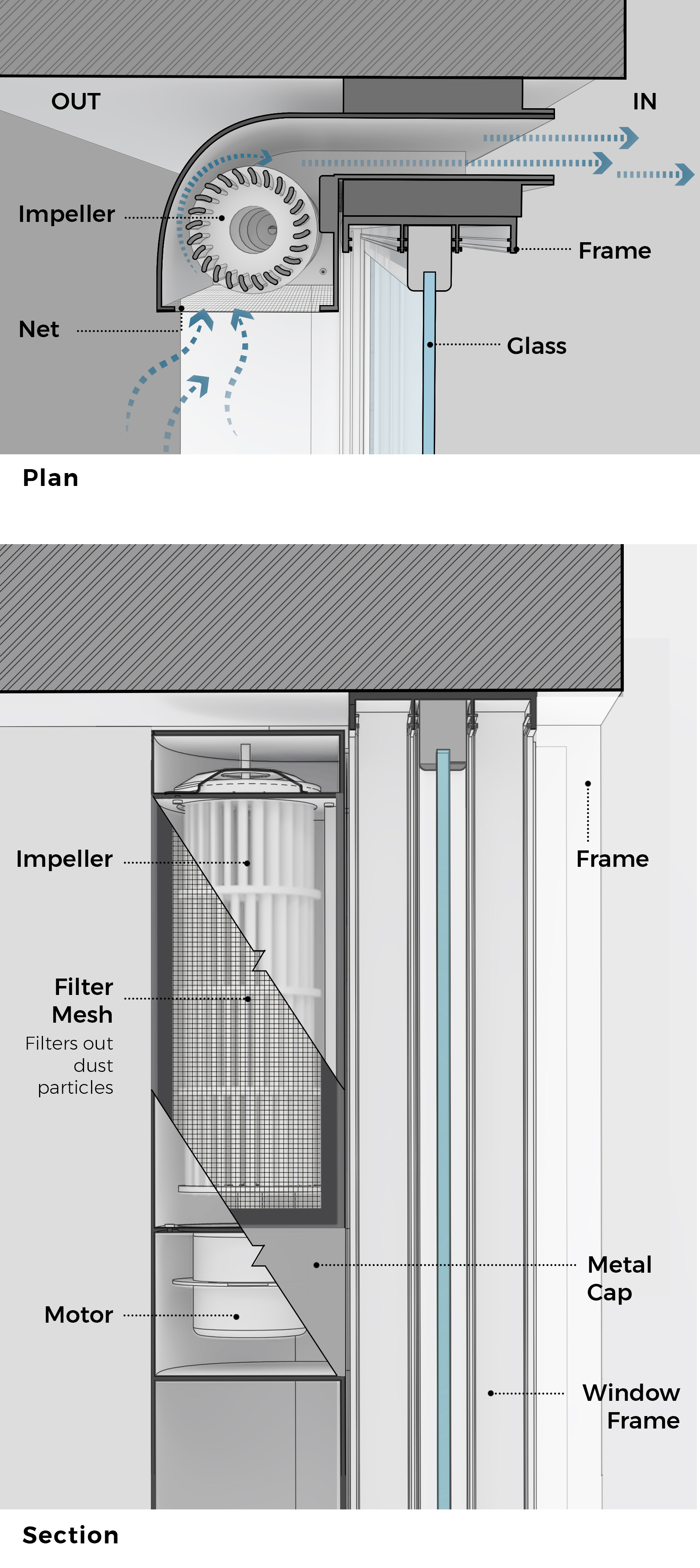
The fenestration system operates using a concealed cross-flow fan integrated within the window casing, designed to generate a controlled laminar airflow into the room. Unlike conventional systems that rely on horizontal air movement, this system directs air in a vertical flow pattern, allowing it to use the full height of the space for more uniform distribution. The cross-flow fan and its impeller are optimized to deliver efficient air exchange with higher CFM and lower noise levels. By drawing in fresh outdoor air and pushing it deep into the room, the system creates a consistent flushing effect that improves air circulation, reduces localized drafts, and enhances overall thermal comfort while while remaining unobtrusive within the window assembly. An aluminium casing houses the impeller, motor assembly, and control units, arranged to maximize performance while occupying minimal space. The body is shaped with a specific curvature to guide airflow with minimal turbulence and resistance, improving overall efficiency. When installed, the unit aligns with the window geometry, with only a slim frame visible from the interior.
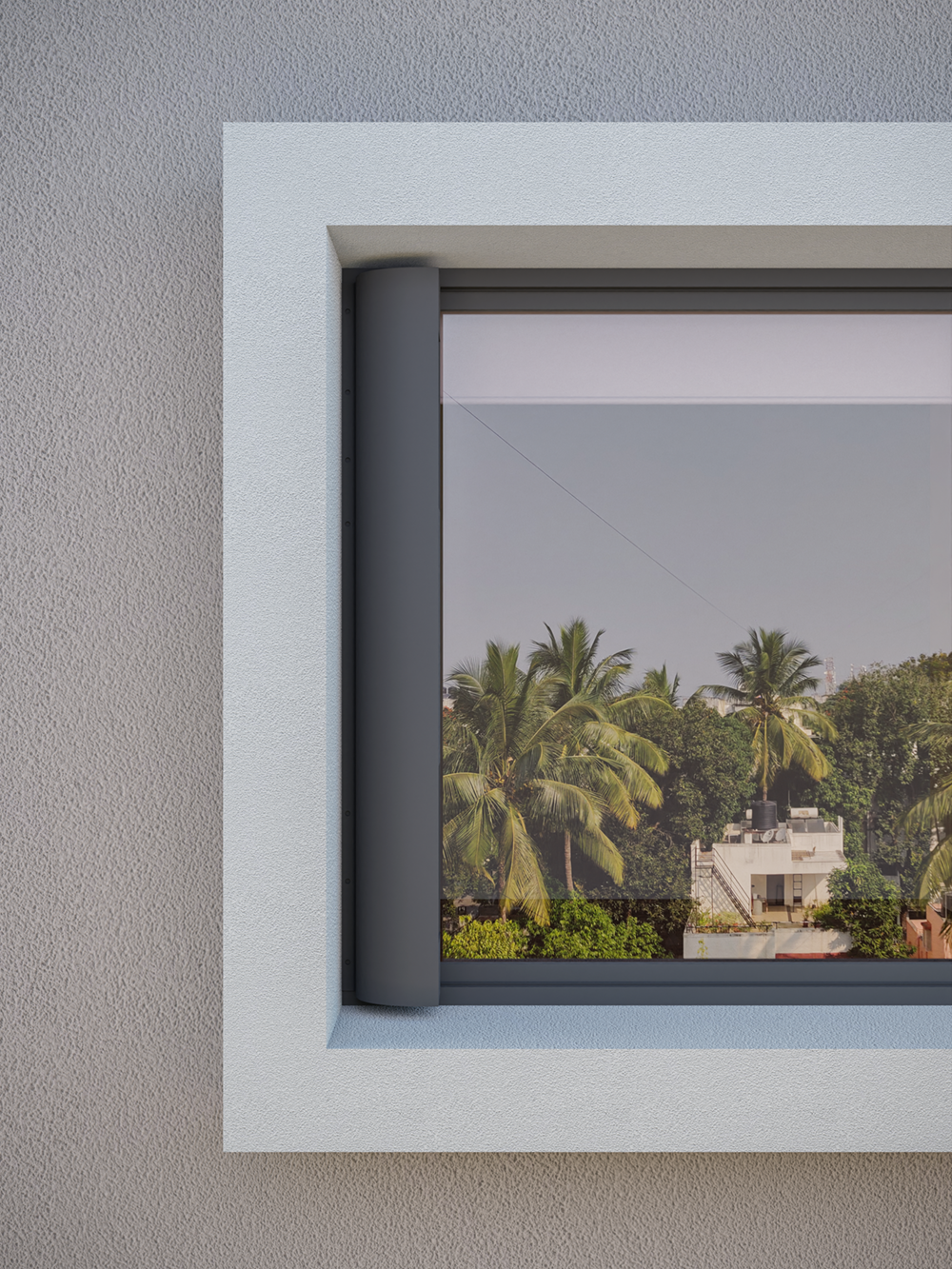
Designed for discretion, it's minimal visual footprint ensures that the system blends into the window frame.
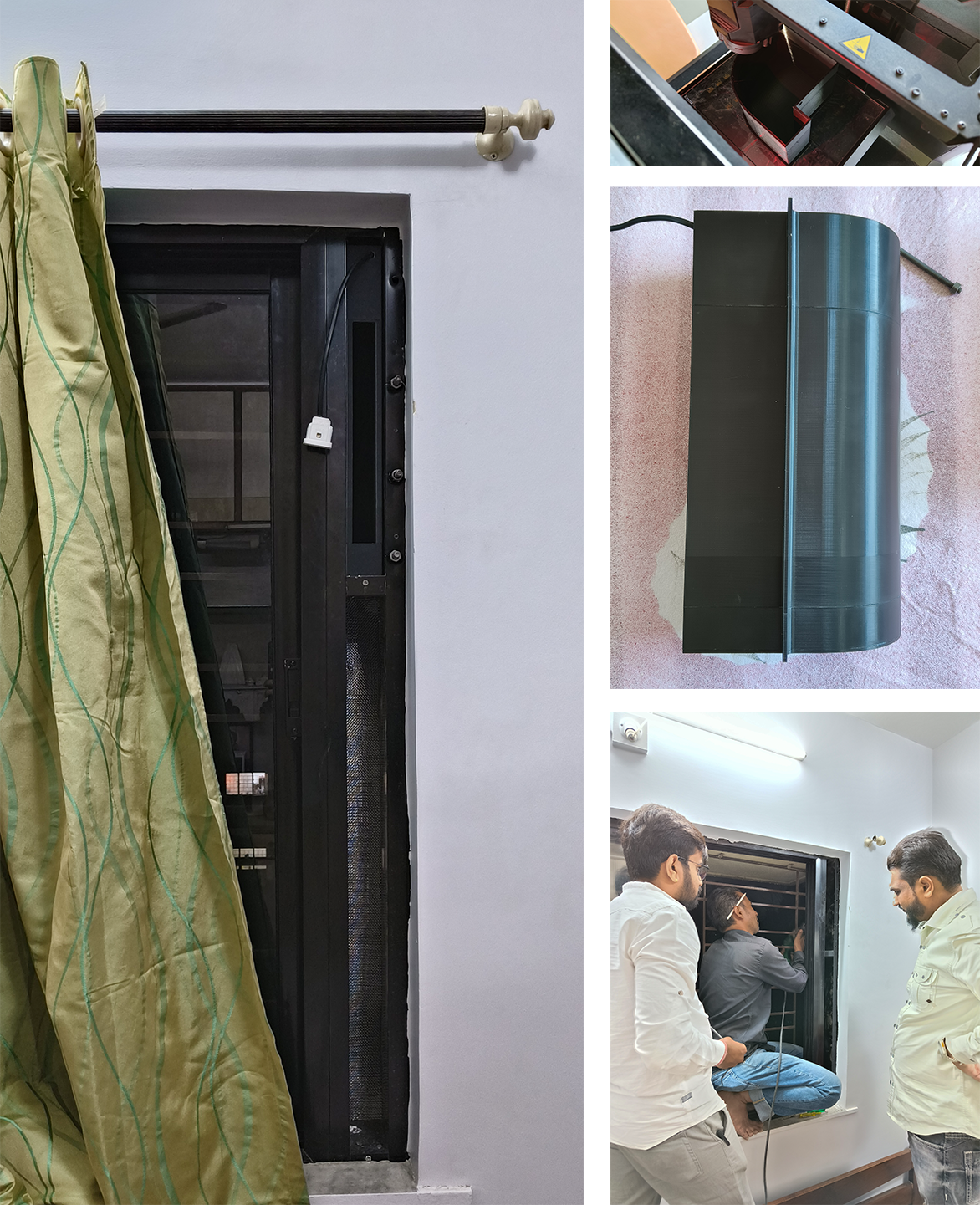
The final prototype featured a 3D-printed body fitted within a modified window frame. It was installed into the room which was earlier taken as a specimen for simulations and monitored for its effectiveness under varying environmental conditions. Data collected through logger readings indicated a consistent and noticeable temperature difference between indoor and outdoor environments.
Since 2019