
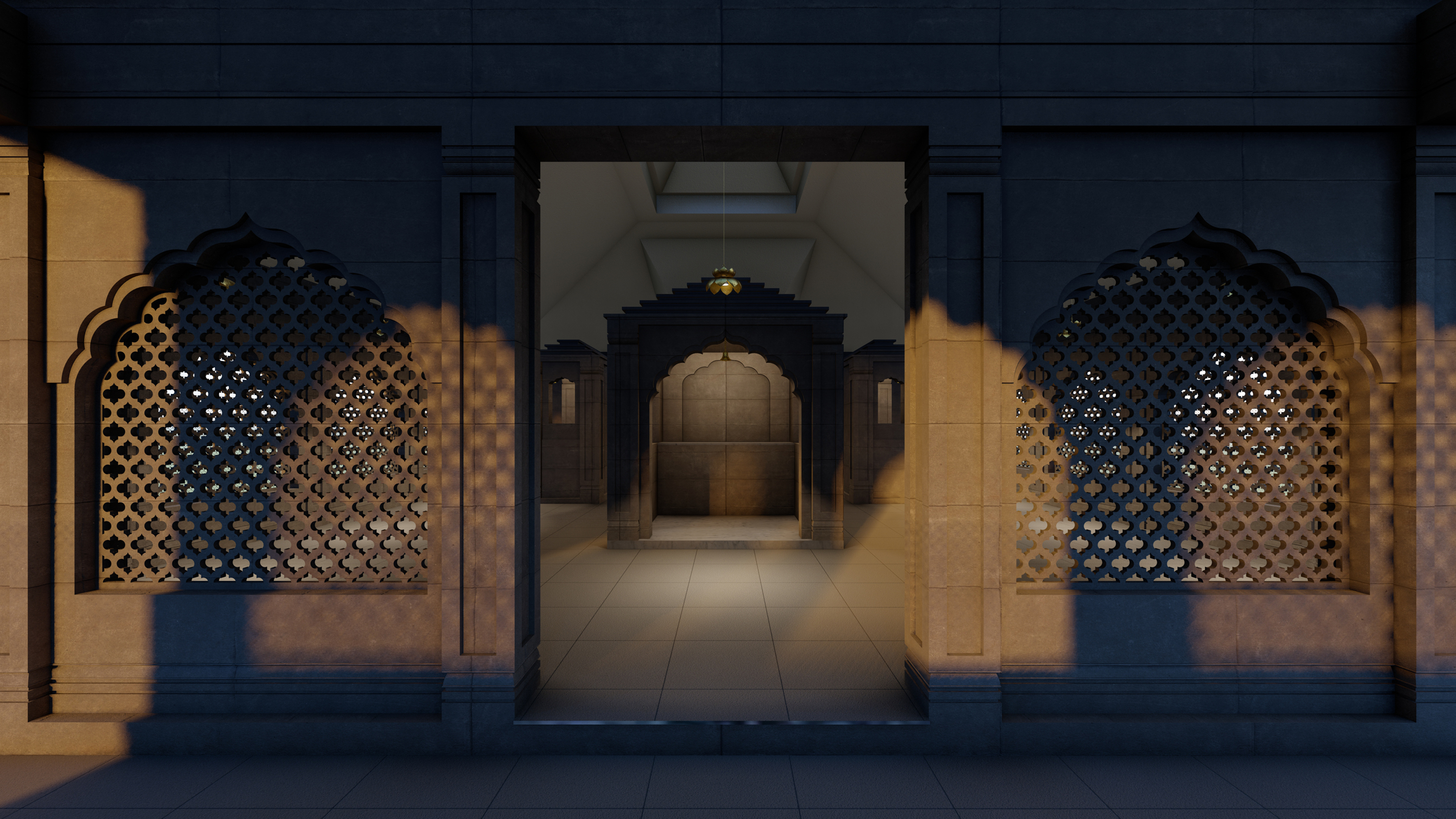
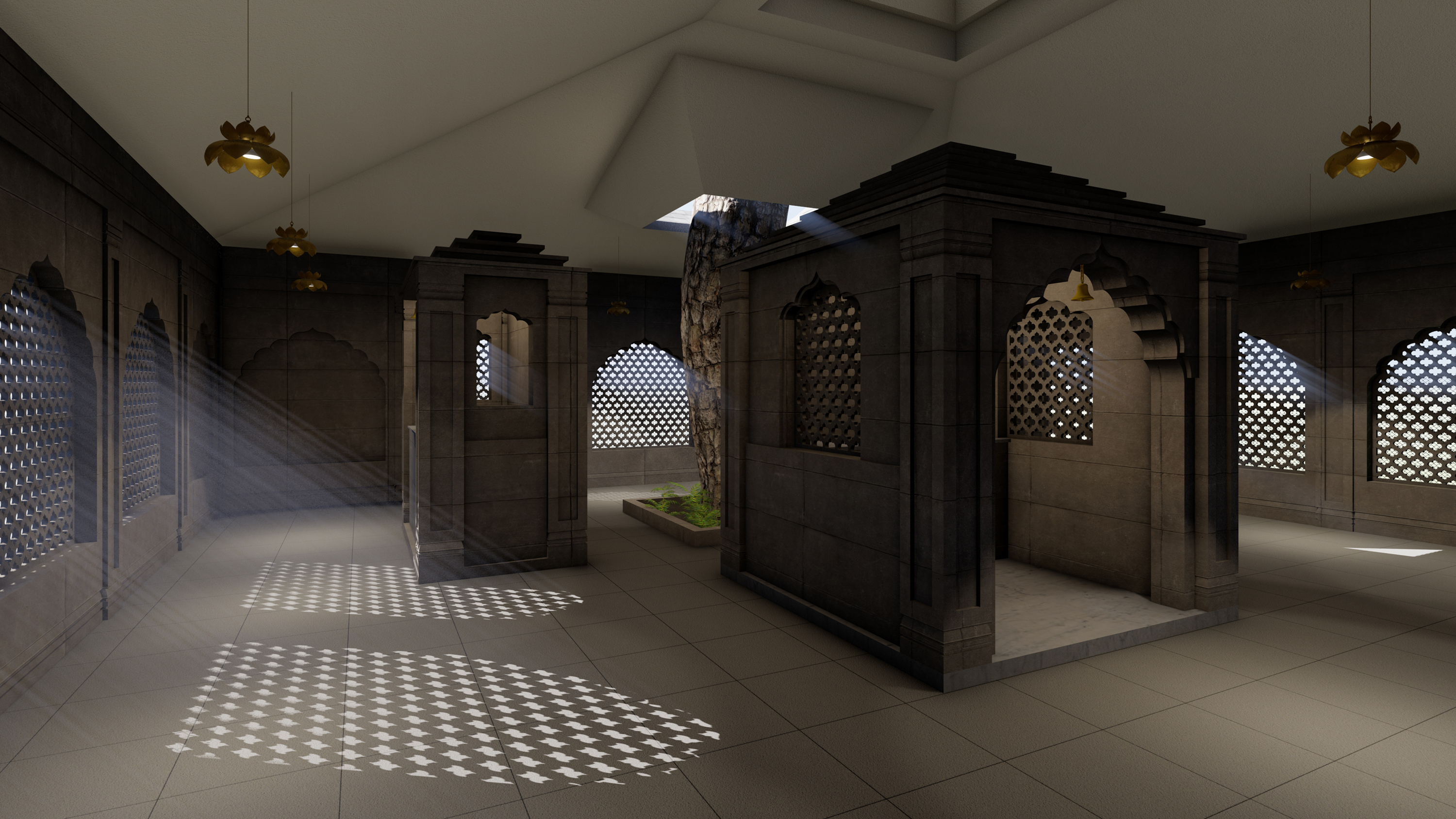
Unlike a new construction, this project required the design to work carefully around the existing sacred positioning, ritual movement, and devotional continuity. At the centre of the temple stood a tree of religious significance, to be preserved exactly as it was. Along with the tree, the position of the idol was also to remain undisturbed. These two fixed elements became the primary anchors around which the redevelopment was imagined.
Name
Maruti Temple
Year
Typology
Location
Shirur
Unlike a new construction, this project required the design to work carefully around the existing sacred positioning, ritual movement, and devotional continuity. At the centre of the temple stood a tree of religious significance, to be preserved exactly as it was. Along with the tree, the position of the idol was also to remain undisturbed. These two fixed elements became the primary anchors around which the redevelopment was imagined.
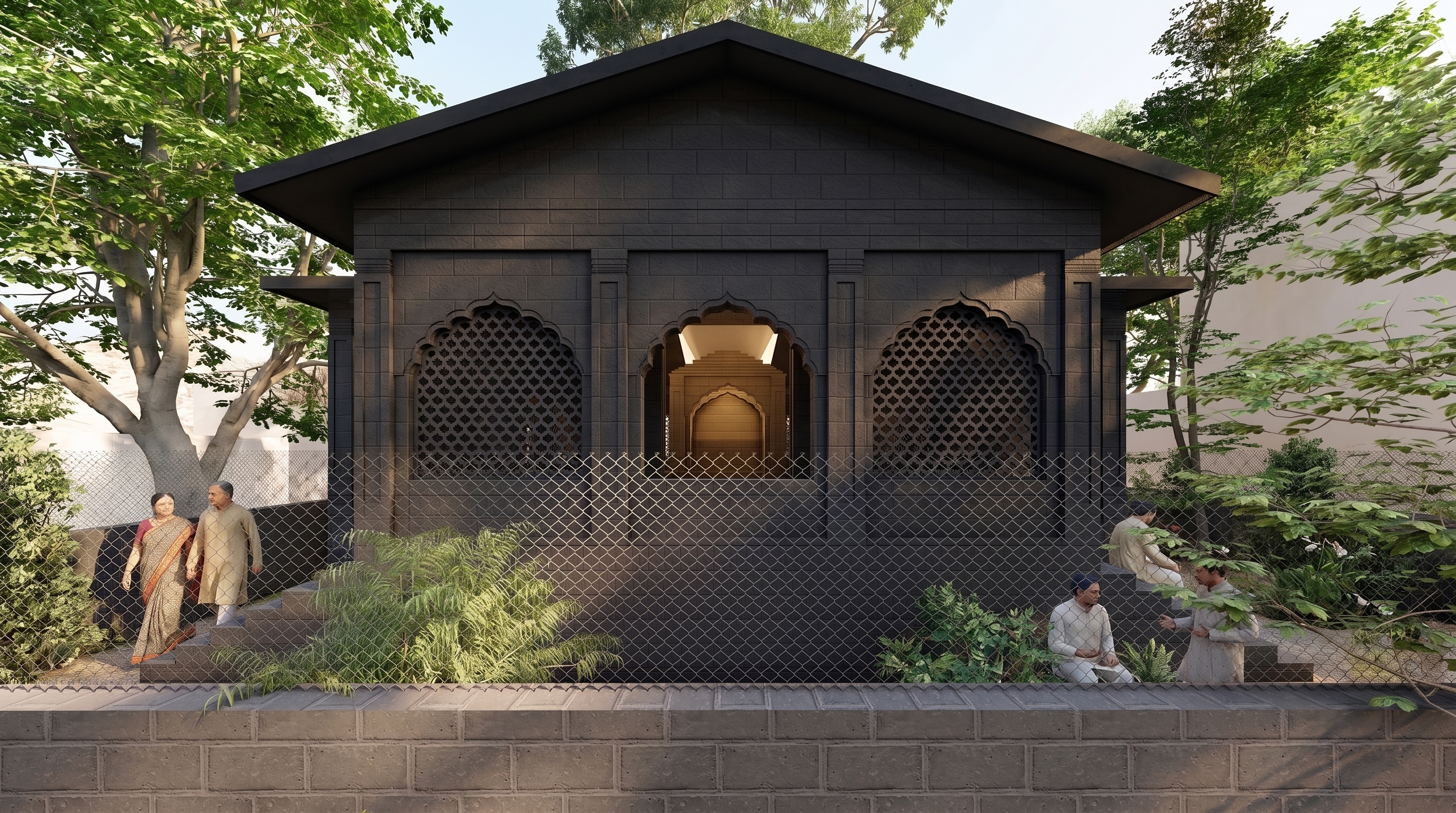
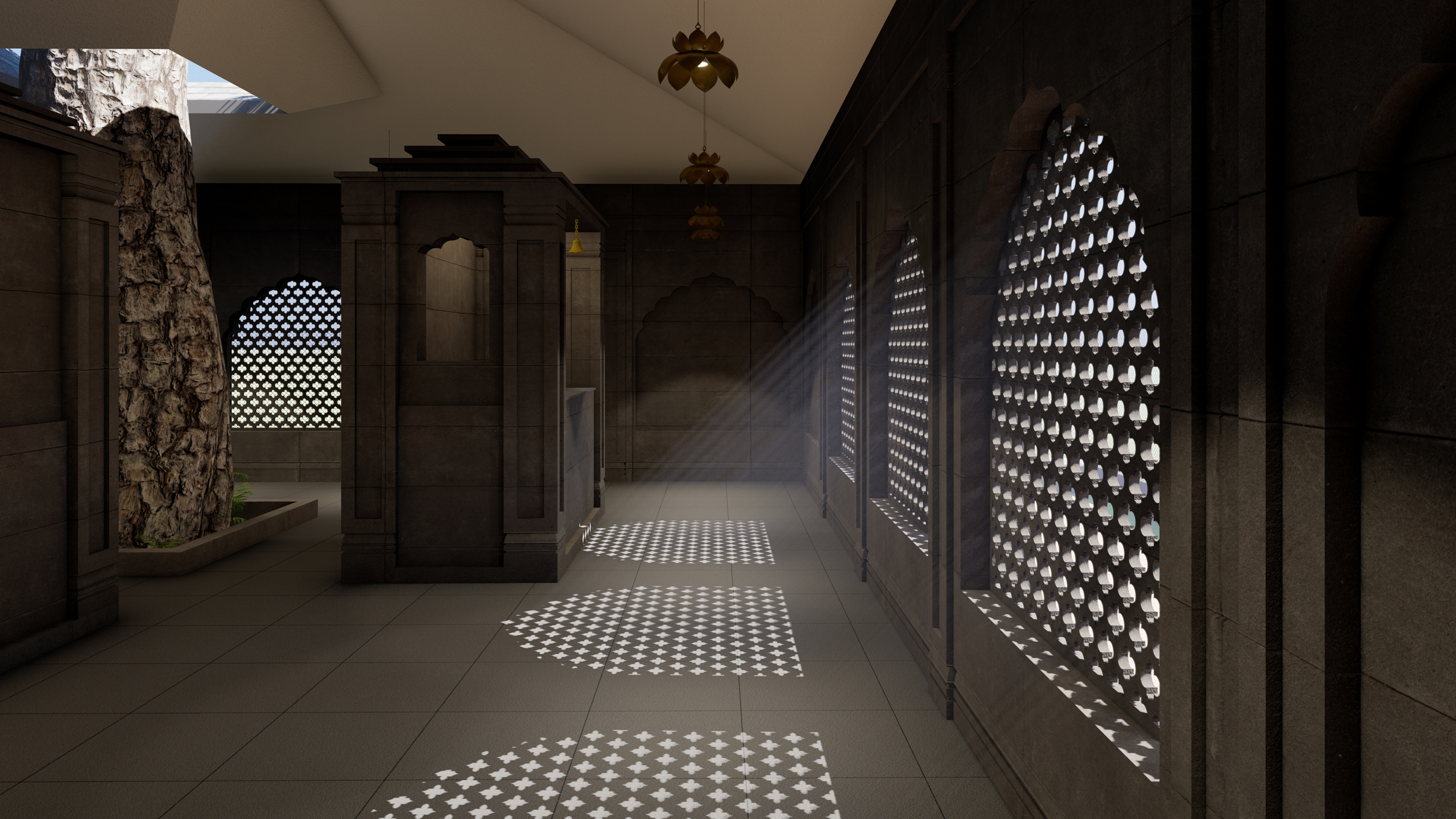
The site contained two smaller temples placed on opposite sides of the central tree. Their orientation and placement were studied carefully to ensure that the ritual movement within the temple remained uninterrupted. In many Hindu temples, the practice of pradakshina, or circumambulation, is an essential act of devotion where devotees move around the deity as a form of reverence. The design therefore had to allow this movement to continue smoothly. The redesigned temple was planned around the tree by creating passages that allowed devotees to move through and perform pradakshina without obstruction.
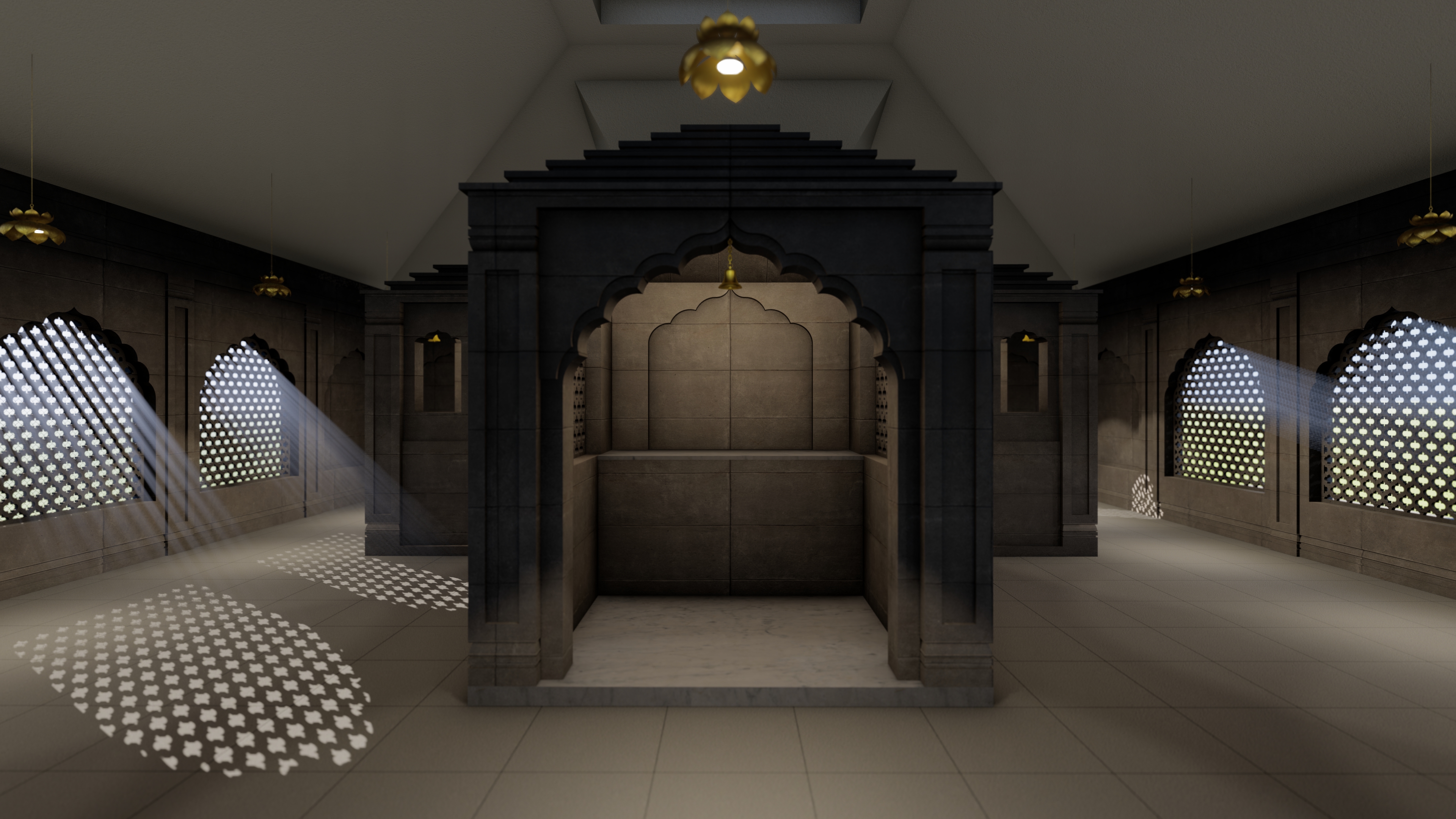
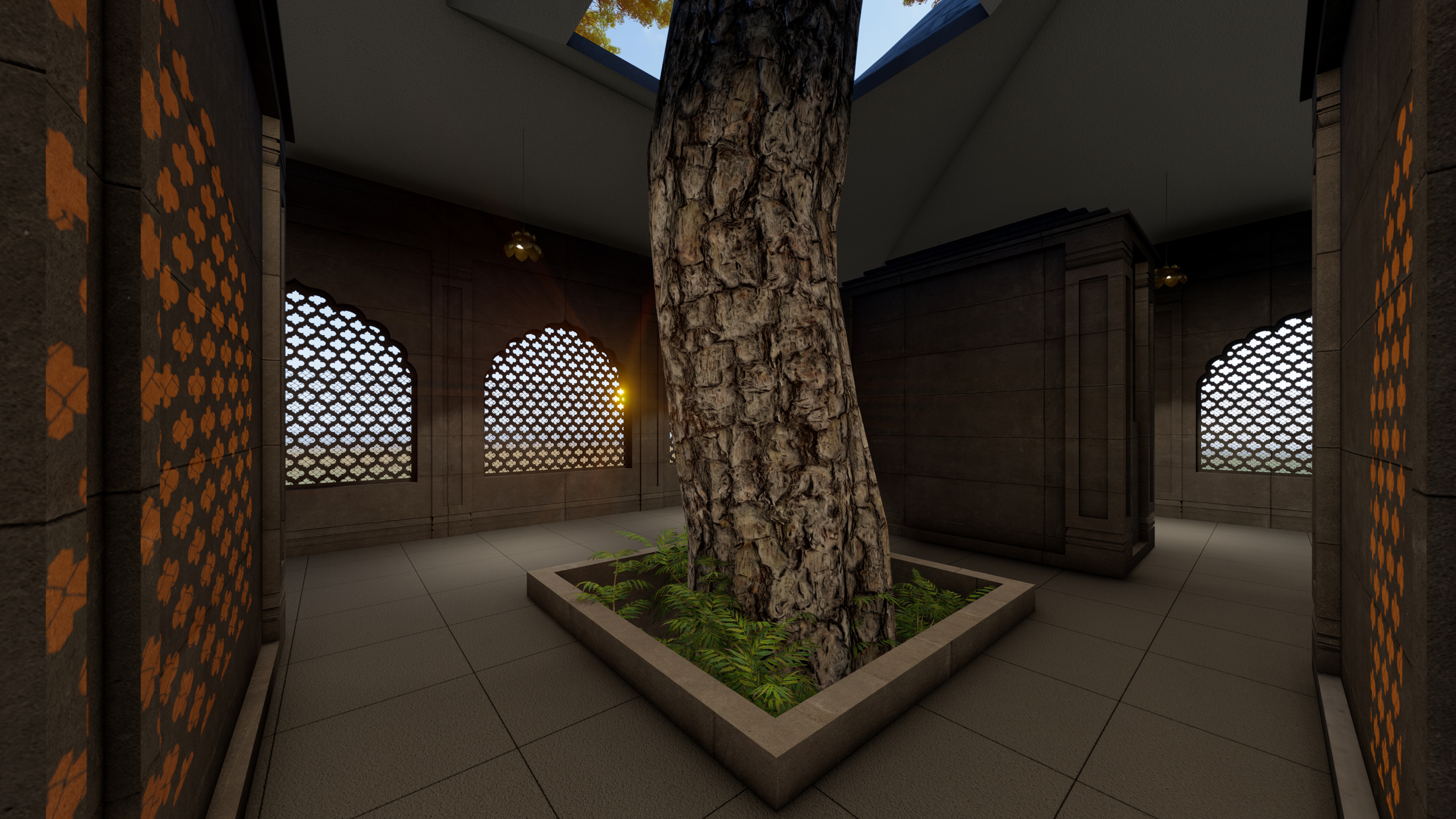
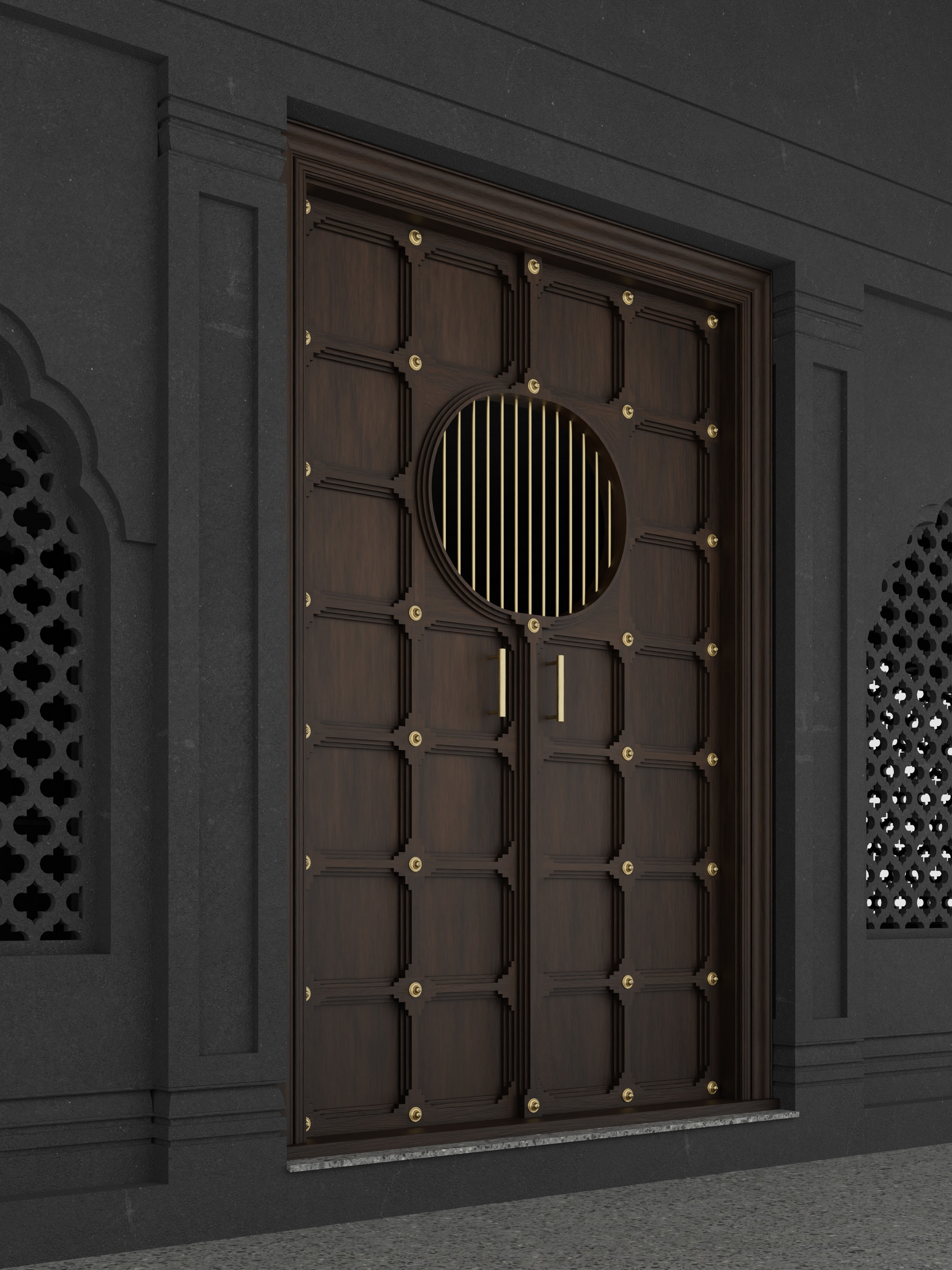
Materiality played an important role in shaping the temple’s identity. The design used black stone, often revered in temple architecture because it is considered a living conductor of cosmic energy and is believed to absorb daily offerings such as abhishekam. Symbolically, its dark hue evokes the void of deep meditation and the infinite nature of the divine. Jaalis, or patterned screens, allow light to enter the interiors in a filtered and gradual manner, creating an interplay of light and shadow. The result is a renewed temple that respects continuity while creating a more composed, meaningful, and spiritually resonant space for worship.

Since 2019