
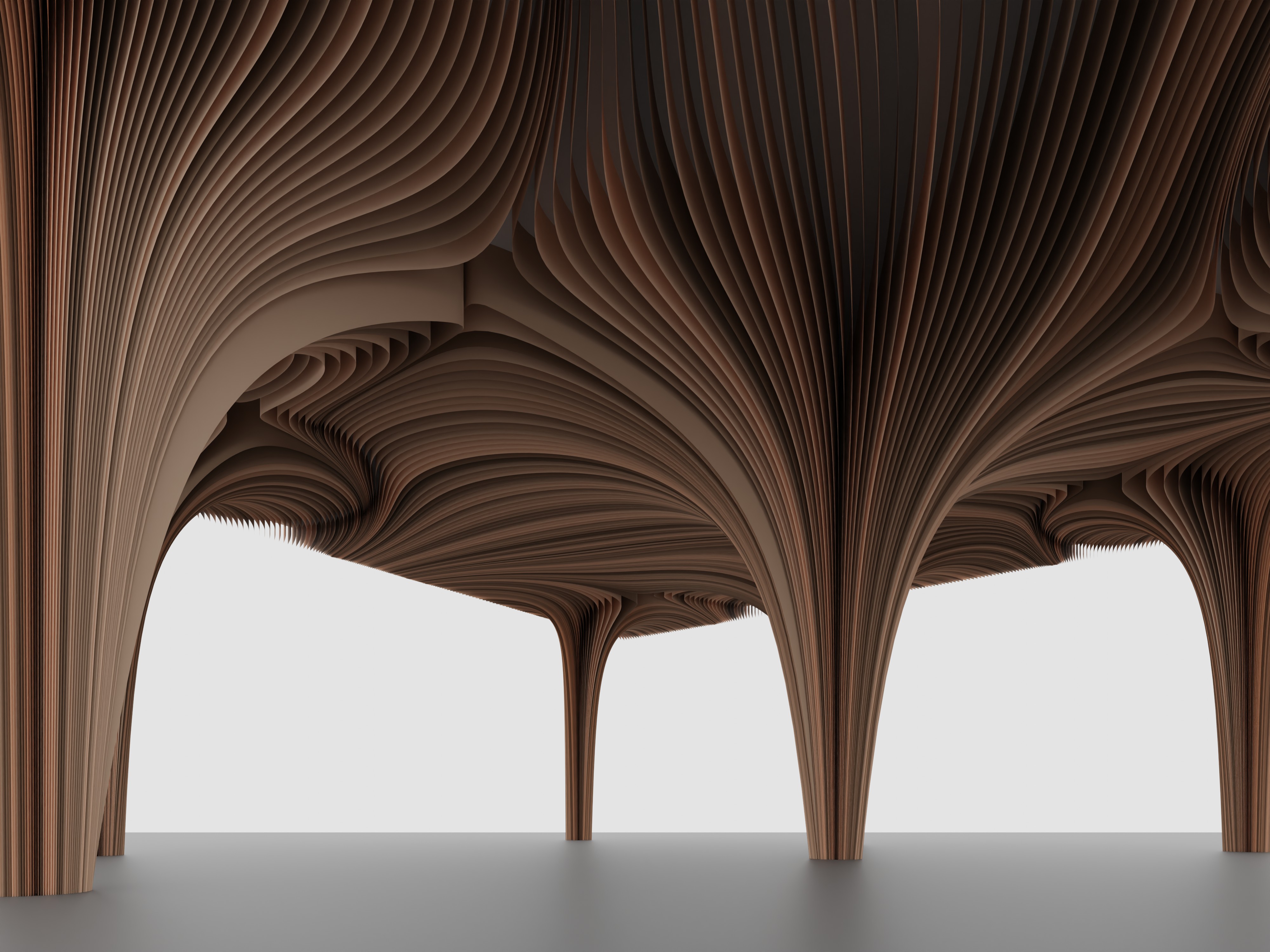
The design began with the scientific concept of electromagnetic point charges and the force fields they generate. When multiple point charges interact, they create regions of attraction, repulsion, and equilibrium, producing a network of flowing curves and organic geometries. These naturally emerging patterns offered a unique foundation for design exploration, generating forms that are both mathematically driven and visually expressive. The resulting geometry strikes a balance between logic and fluidity, creating dynamic patterns that lend themselves well to architectural and computational design applications.
Name
Pavillion
Year
2023
Typology
Location
The design began with the scientific concept of electromagnetic point charges and the force fields they generate. When multiple point charges interact, they create regions of attraction, repulsion, and equilibrium, producing a network of flowing curves and organic geometries. These naturally emerging patterns offered a unique foundation for design exploration, generating forms that are both mathematically driven and visually expressive. The resulting geometry strikes a balance between logic and fluidity, creating dynamic patterns that lend themselves well to architectural and computational design applications.
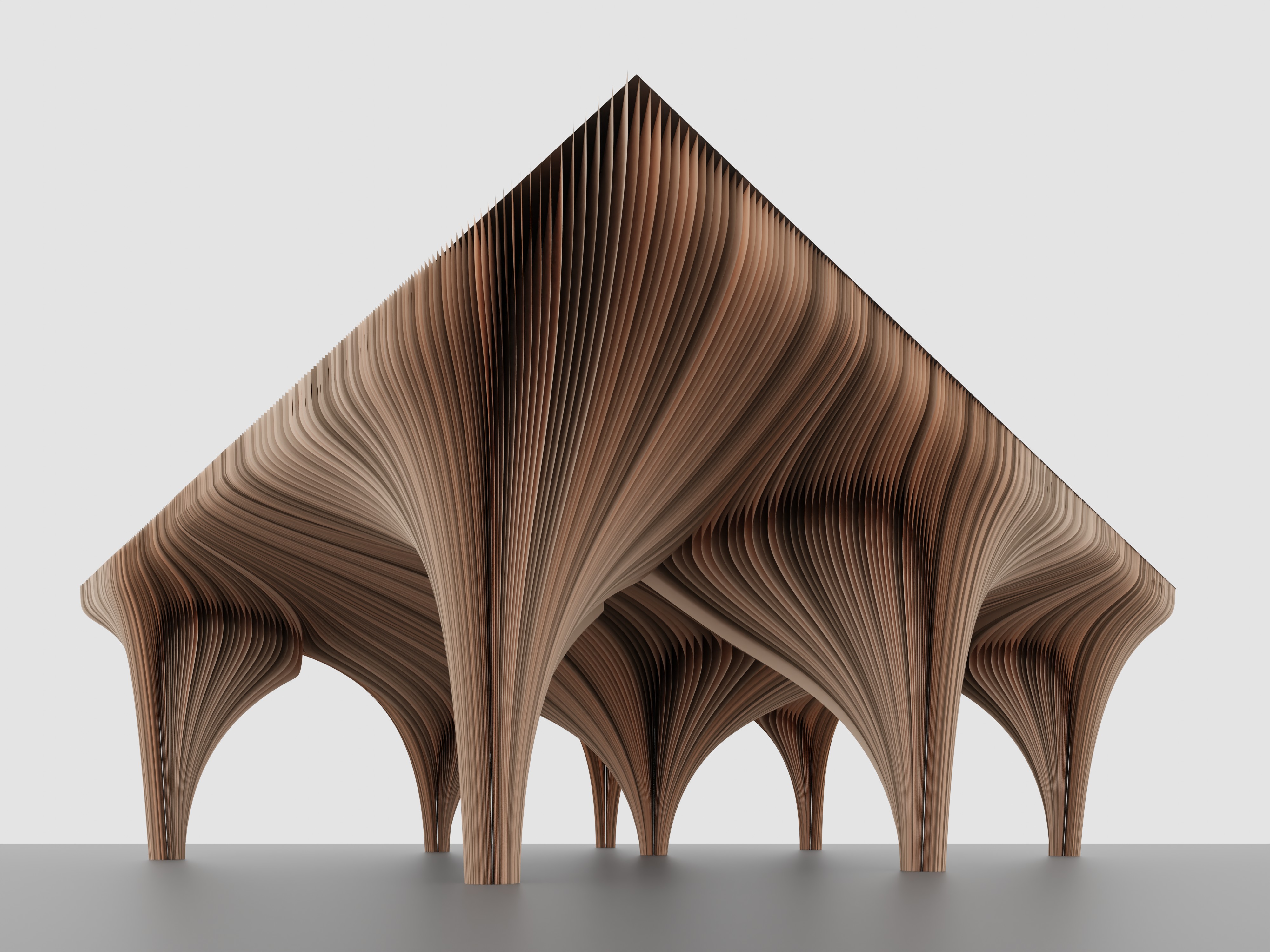
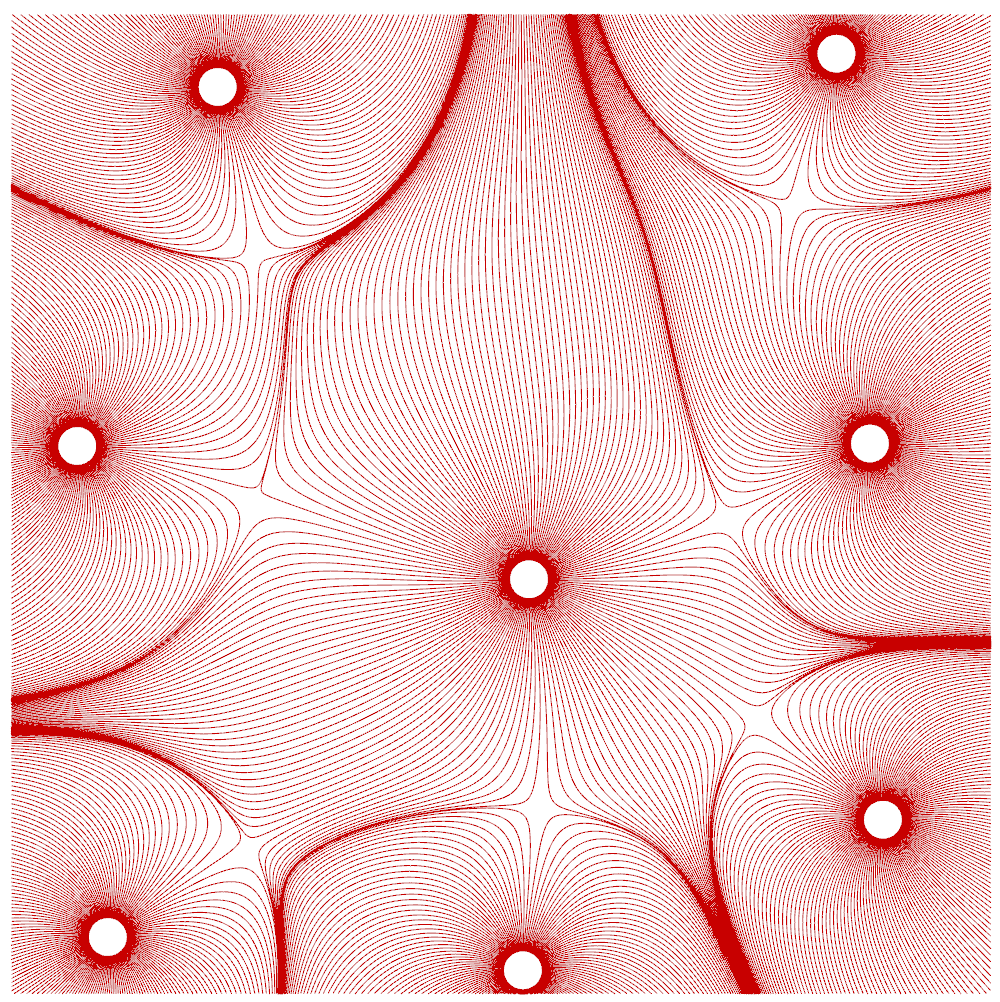
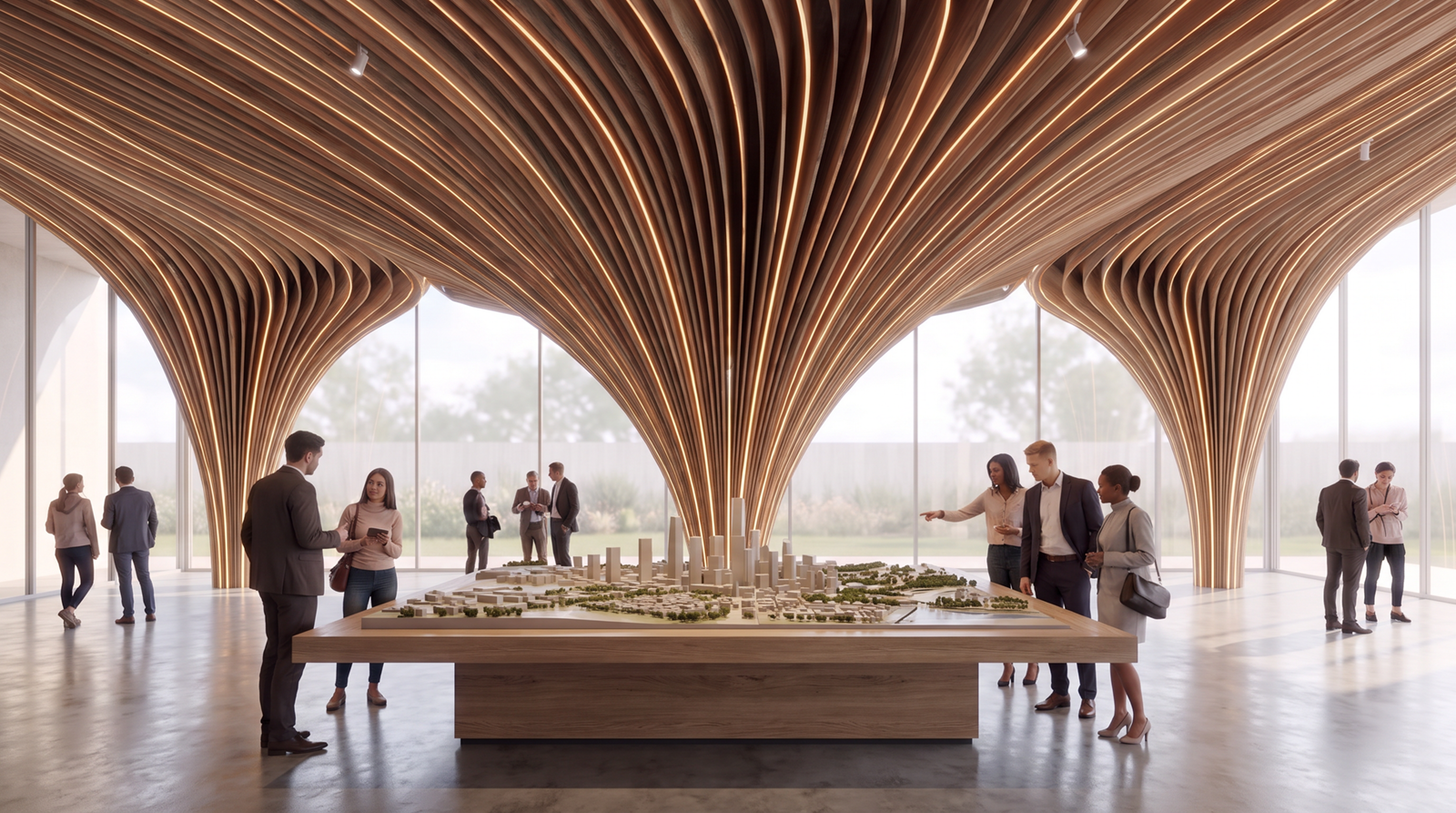
In design and computational geometry, these force-field interactions are often simulated digitally. By placing multiple point charges and calculating the resulting field, designers can generate fluid, organic forms and line networks that appear naturally grown. The resulting patterns often resemble streamlines or flowing parametric geometries, making electromagnetic field simulations a useful tool for architectural form-finding and generative design. These patterns were then translated into the design of a pavilion roof, where the generated geometry informed the overall form and structural expression. The flowing network of curves created a visually engaging canopy, demonstrating how scientific principles can be transformed into architectural elements that are both functional and aesthetically compelling.
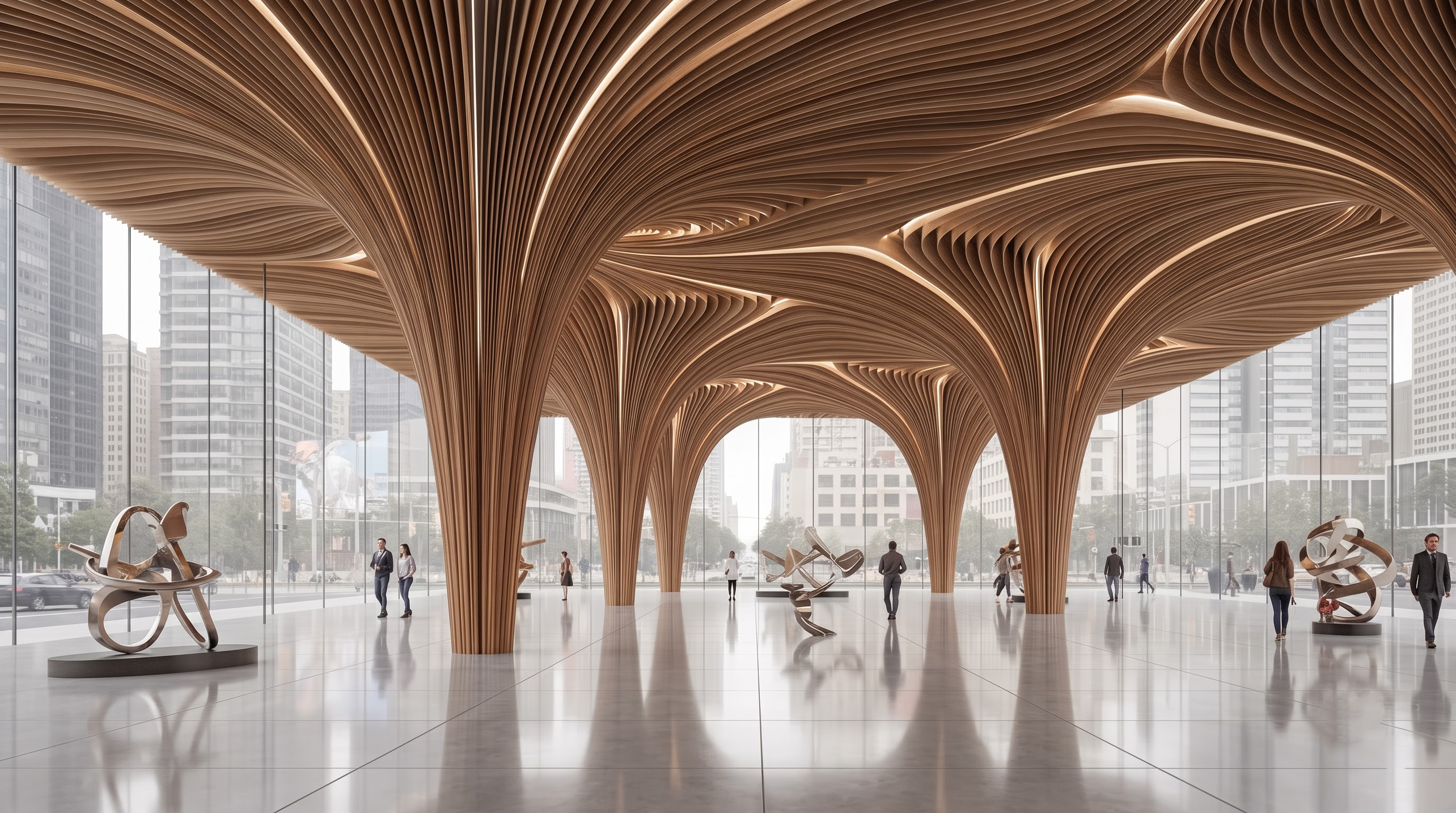
The pavilion translates computationally generated geometries into architectural form. Its flowing pattern and sculptural quality make it ideal as a visually striking ceiling or canopy for galleries, exhibition spaces, and public 173 172 installations
Since 2019