
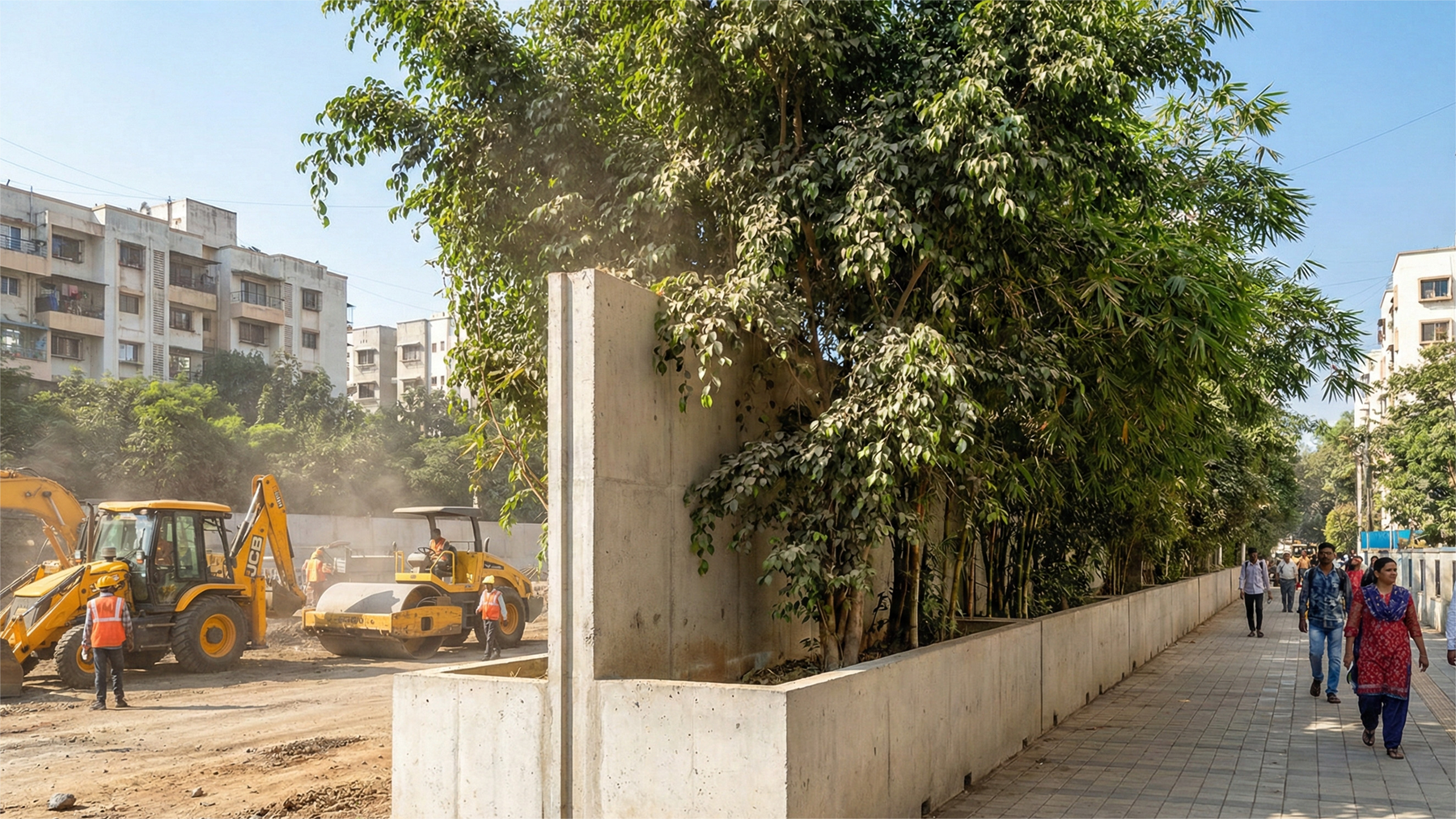
Heavy road maintenance, trenching, and machinery such as pneumatic breakers and excavators regularly push noise levels to around 90 to 115 dBA, far above healthy ambient limits and straining homes, schools, and parks beside active works. In dense Indian corridors like Pune, narrow 9 to 15 meter streets, facades within roughly 5 meters of the work zone, and work stretching across weeks or months make noise containment urgent while leaving little room for bulky permanent barriers.
Name
Road Acoustics
Year
2025
Typology
Location
Heavy road maintenance, trenching, and machinery such as pneumatic breakers and excavators regularly push noise levels to around 90 to 115 dBA, far above healthy ambient limits and straining homes, schools, and parks beside active works. In dense Indian corridors like Pune, narrow 9 to 15 meter streets, facades within roughly 5 meters of the work zone, and work stretching across weeks or months make noise containment urgent while leaving little room for bulky permanent barriers.
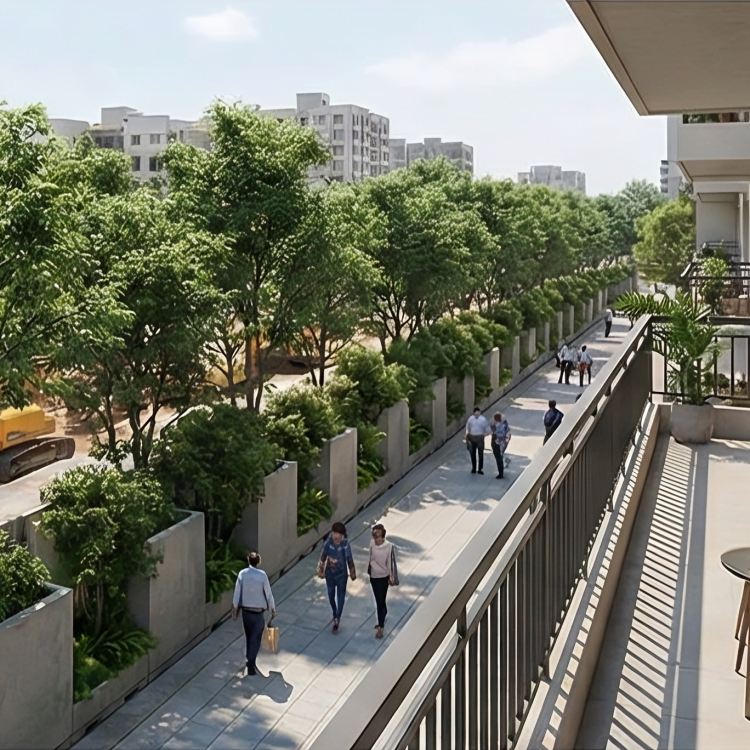
To meet those constraints, the proposal introduces demountable acoustic enclosures built around three simple actions: containing sound at the source, absorbing energy through porous linings, and maintaining airflow through baffled acoustic louvers. Rather than treating noise control as an afterthought, the system adapts to street geometry and work type while keeping active roadwork practical
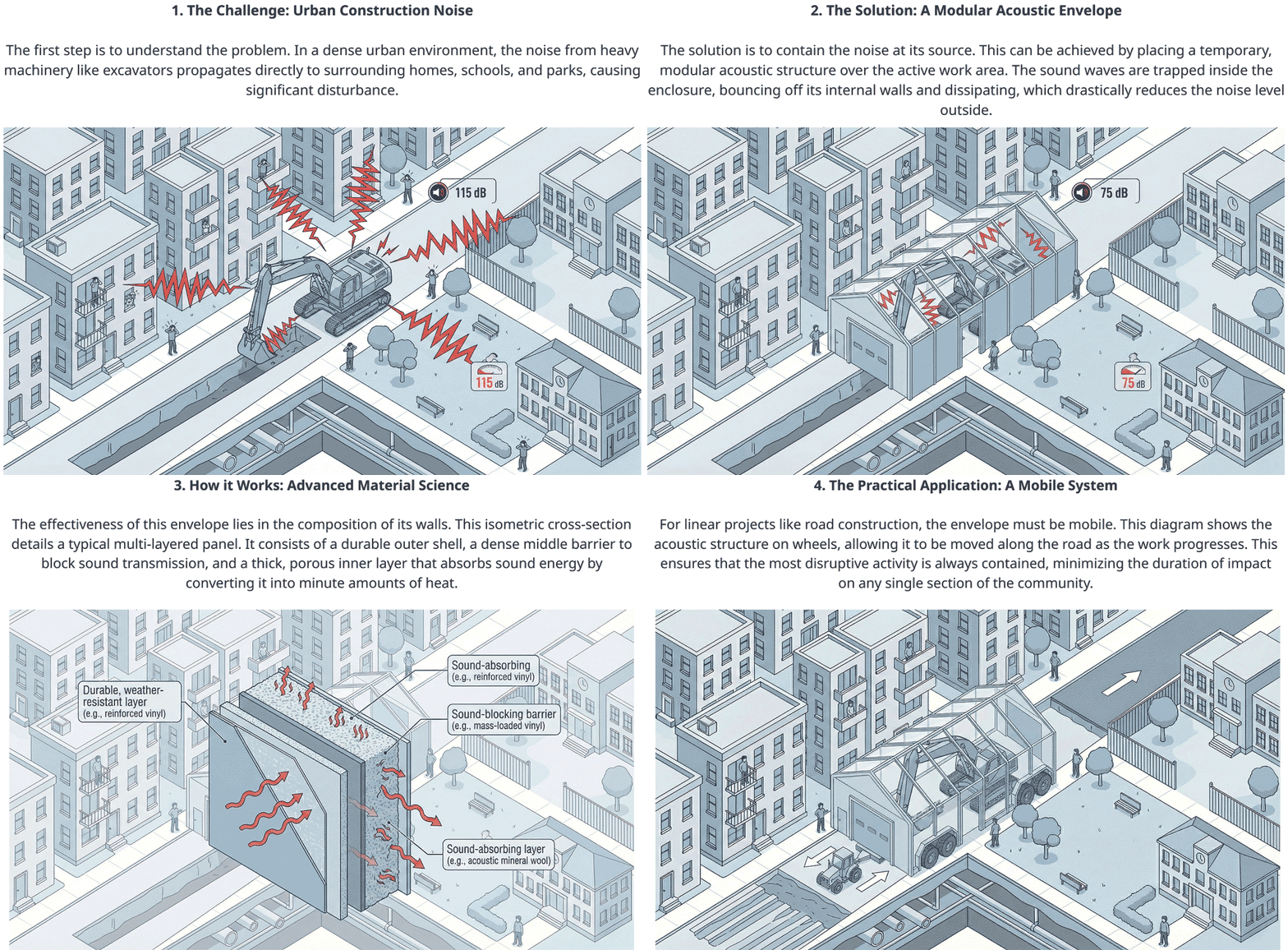
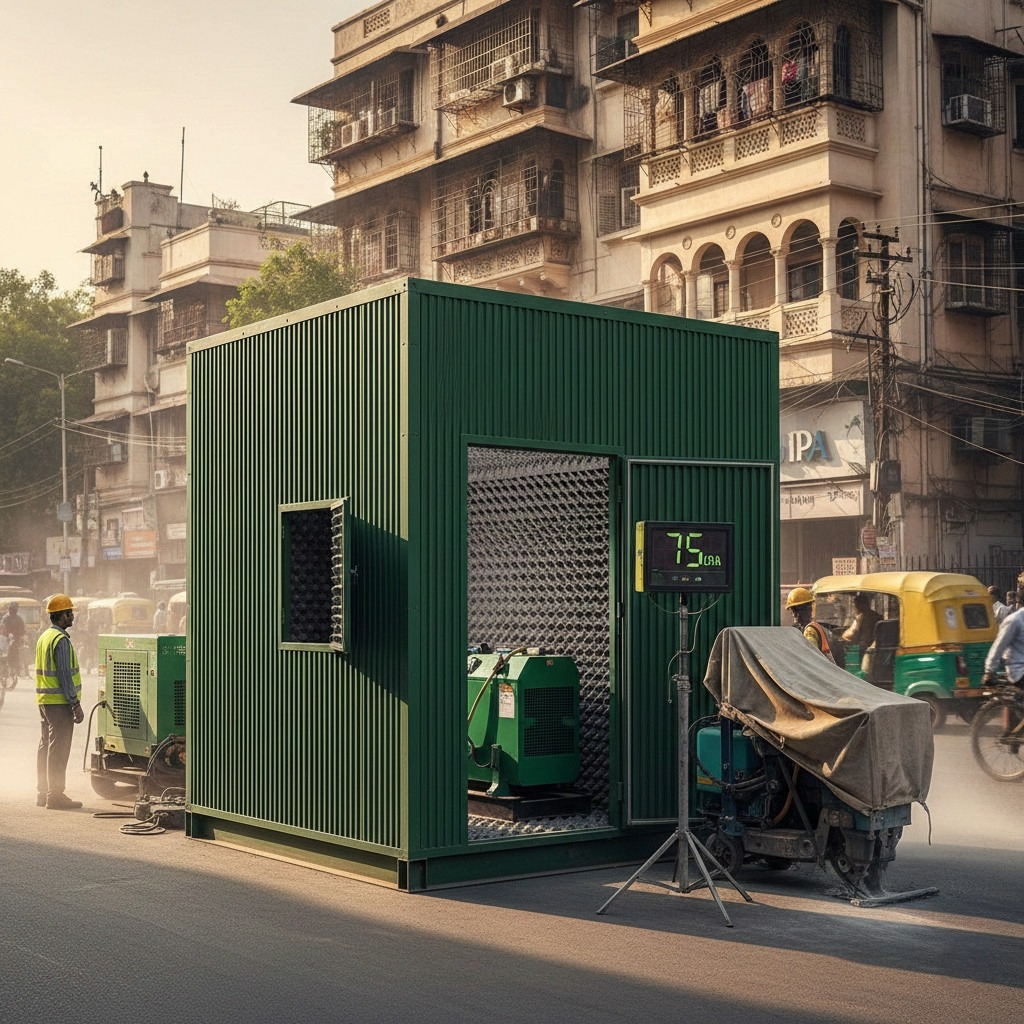
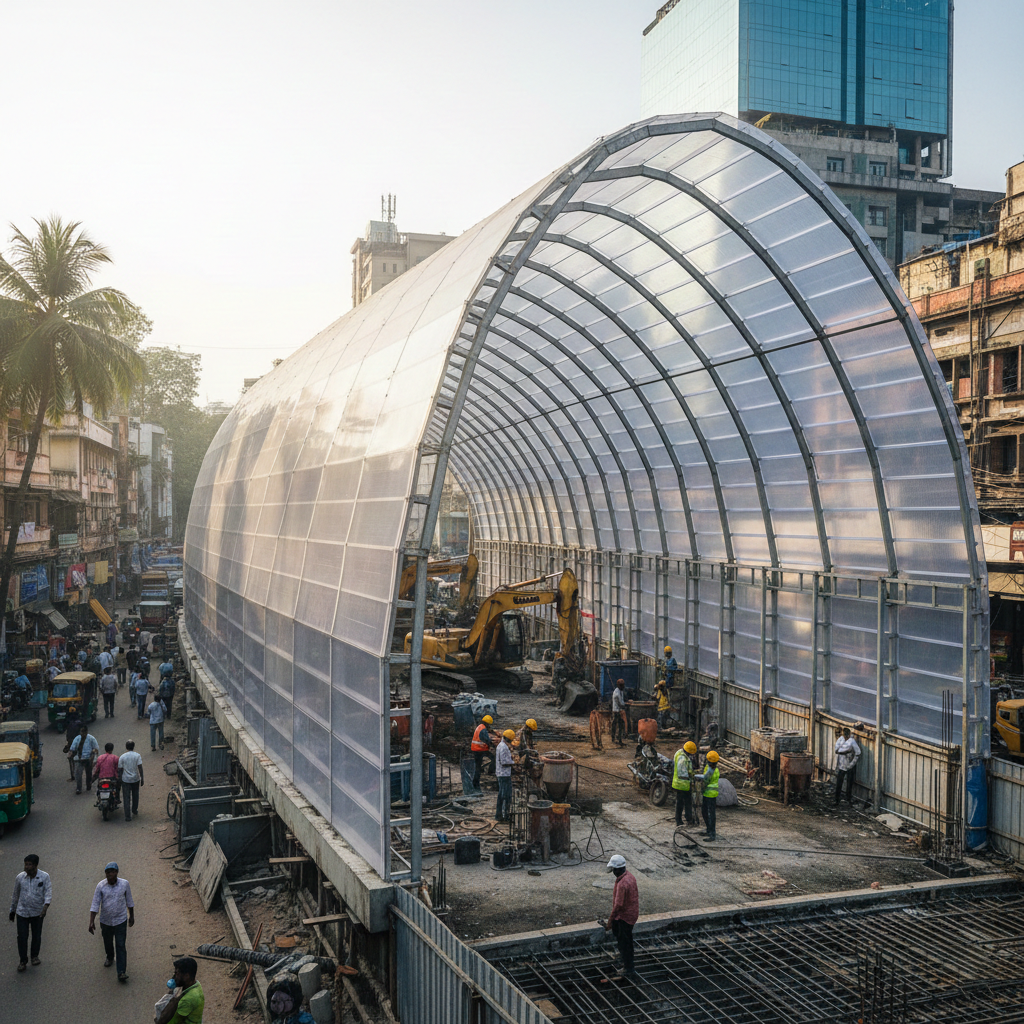
Depending on street width and task, the envelope scales from a 7 to 9 meter spanning full acoustic tunnel with translucent polycarbonate roofing and baffled ends, targeting 20 to 25 dB(A) reduction with around 22 dB average modeled reduction along a 400 meter corridor, to a 3 to 4 meter residential-side barrier with a cantilevered partial canopy for 15 to 20 dB(A) reduction and compact machine-level pods around generators or stationary breakers for 20 to 30 dB(A) reduction. It relies on bolted hot-rolled steel portals anchored on precast 1.2 meter concrete gravity blocks, mass-spring-mass wall assemblies targeting 15 to 25 kg/m² with acoustic mineral wool and vinyl layers, silica dust dampening or HEPA filtration, and wheeled mobility over roughly 10 to 14 days of phased deployment for a 50 meter stretch.

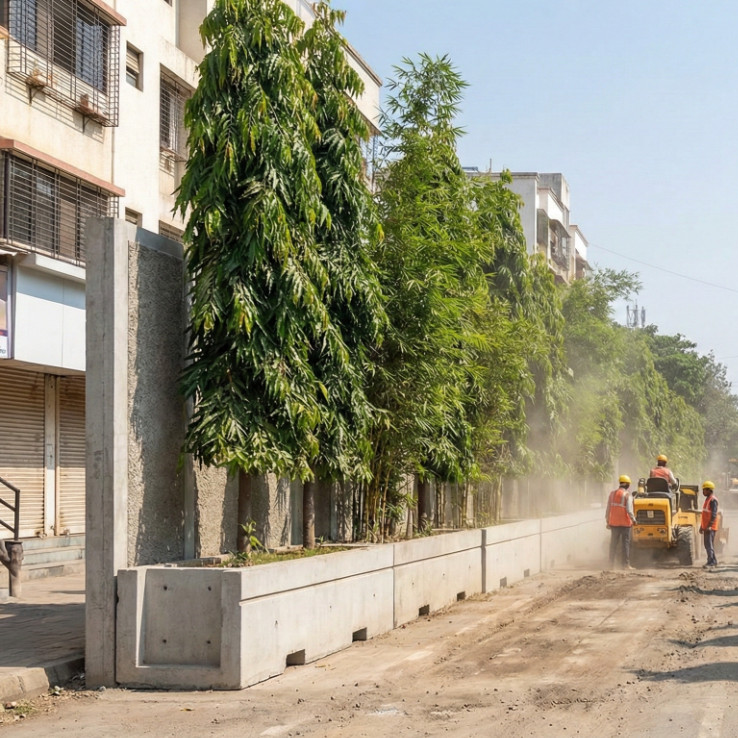
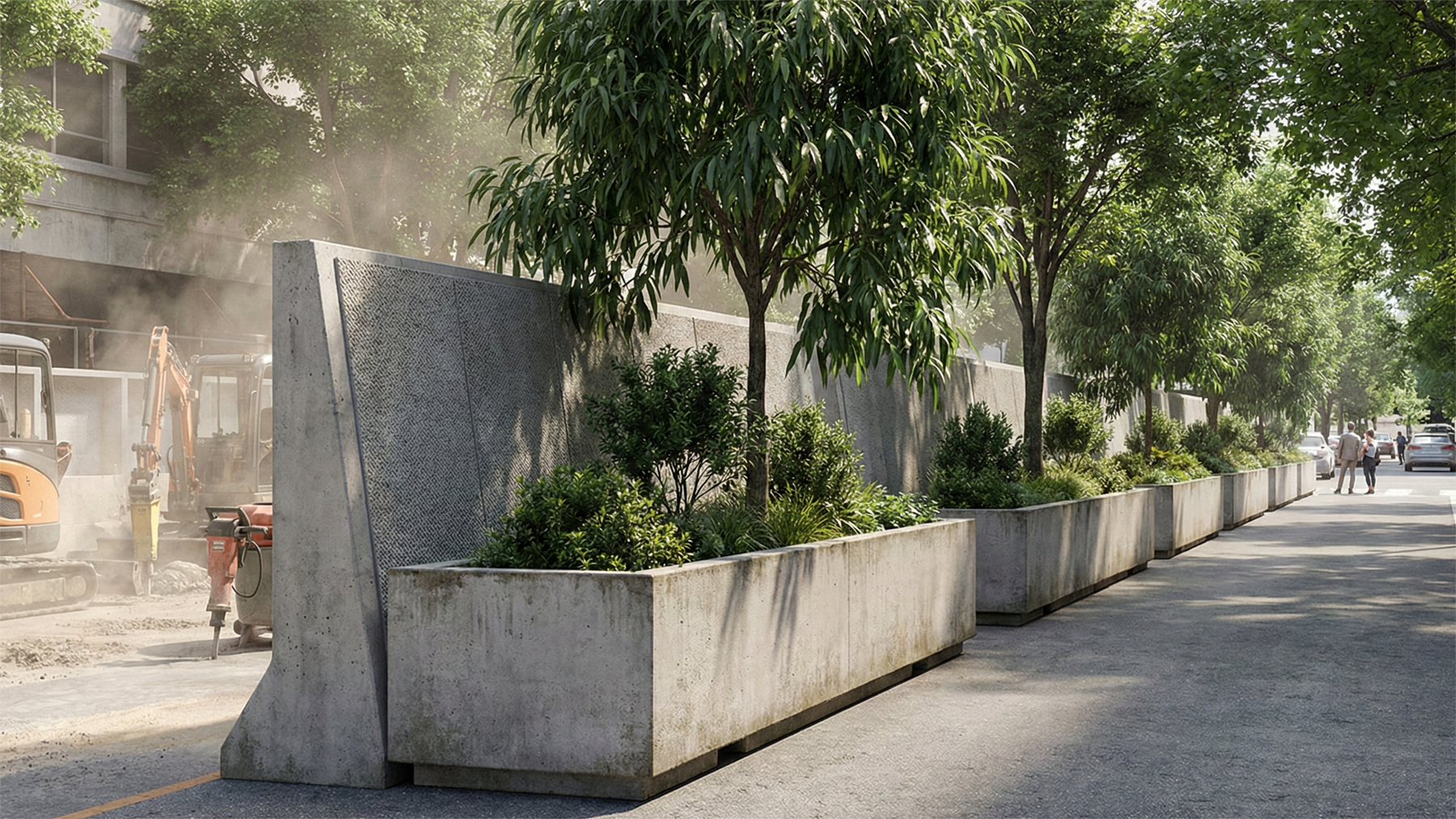
A second biogenic phase pairs this with 2.5 by 2.5 meter forklift-ready Bio-Acoustic Modular Pods holding 3 to 5 meter trees such as False Ashoka, Weeping Fig, and Buddha Bamboo over mineral-wool-lined bases and drainage. Selected for high leaf area index, rough or waxy surfaces, and stress tolerance, these living pods scatter high-frequency sound, trap PM2.5 and PM10 dust for wash-off during watering cycles, and provide a softer visual and psychological buffer along the street.
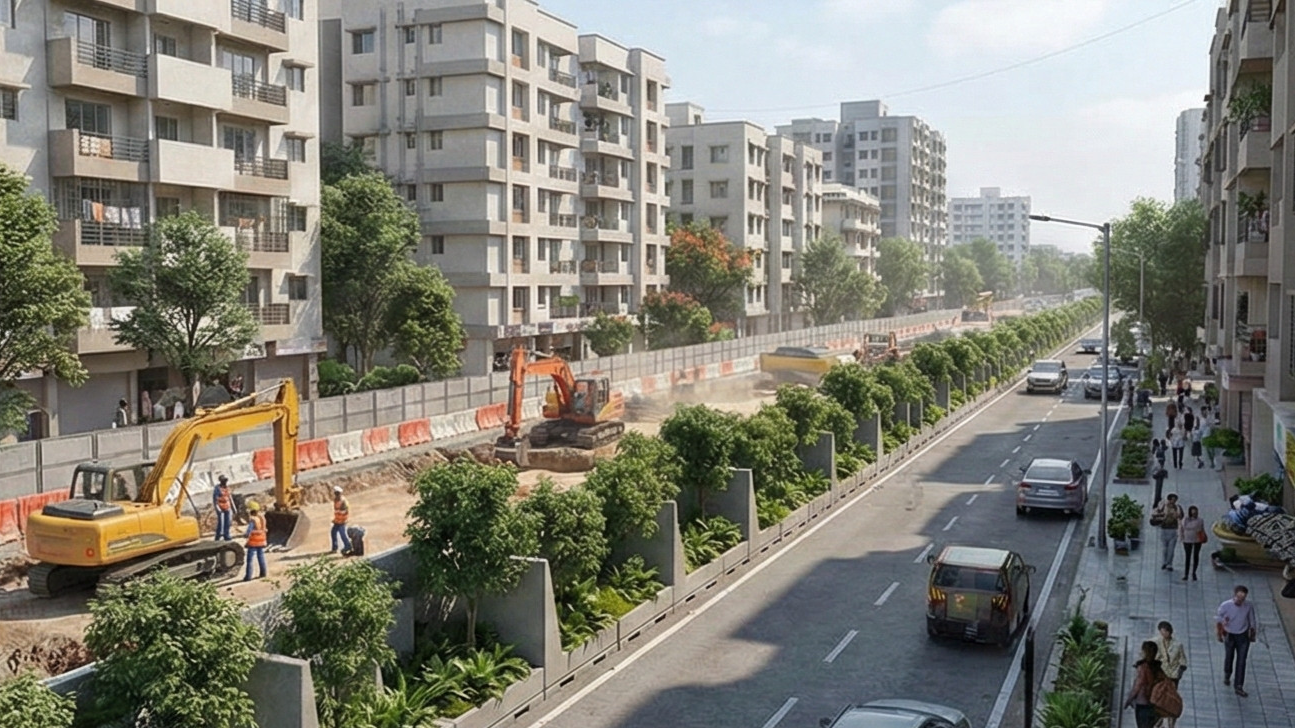
Together, these enclosures and living pods offer a practical way to align ongoing road infrastructure with Noise Pollution Rules, NBC 2016 fire safety, and IS 1641 structural norms without halting city growth. Looking ahead, pairing the system with IoT noise monitoring, lower-impact cores such as mycelium or recycled rubber, and standard municipal contractor guidelines can carry the concept from street trials into everyday urban practice.
Since 2019