
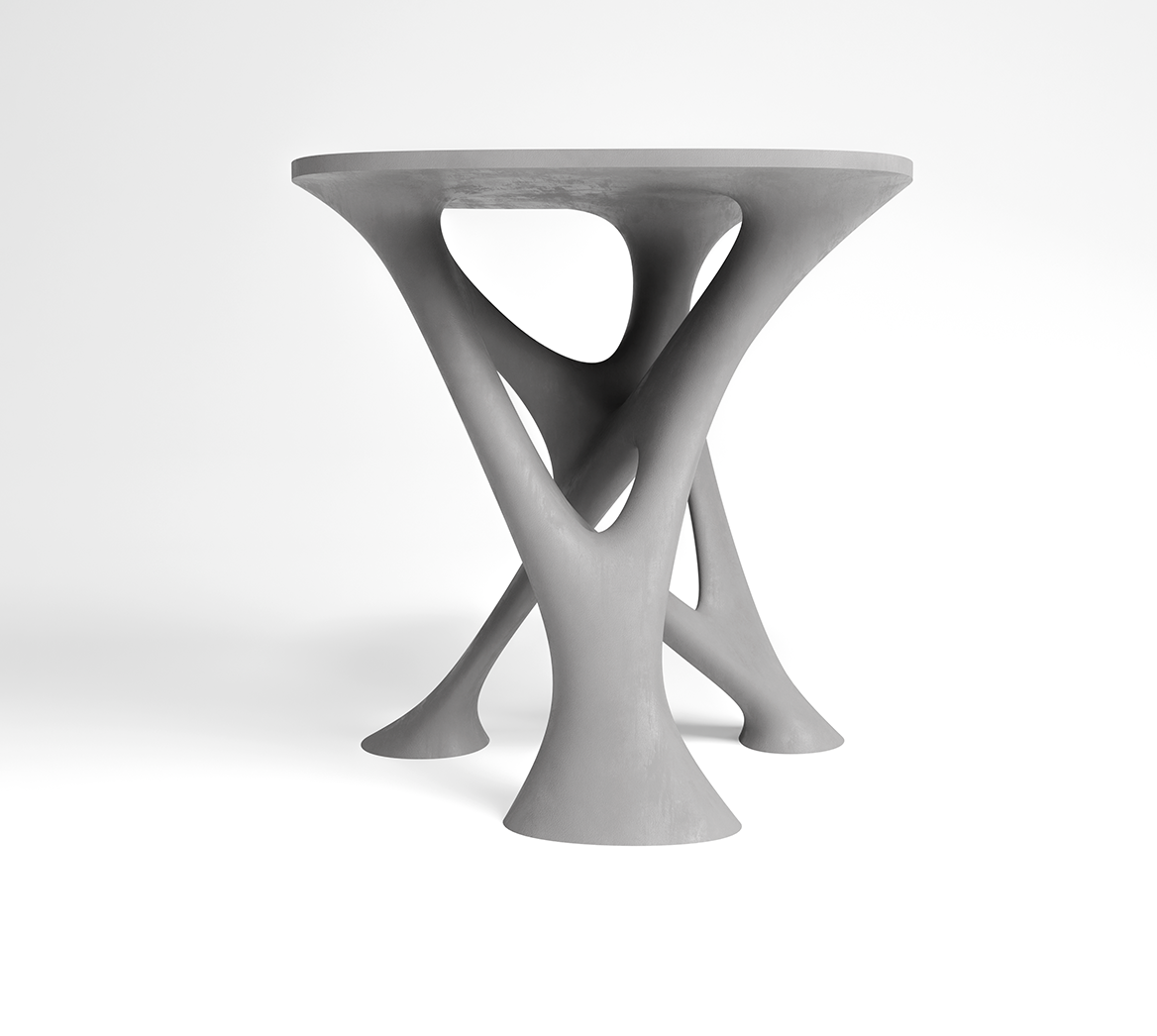
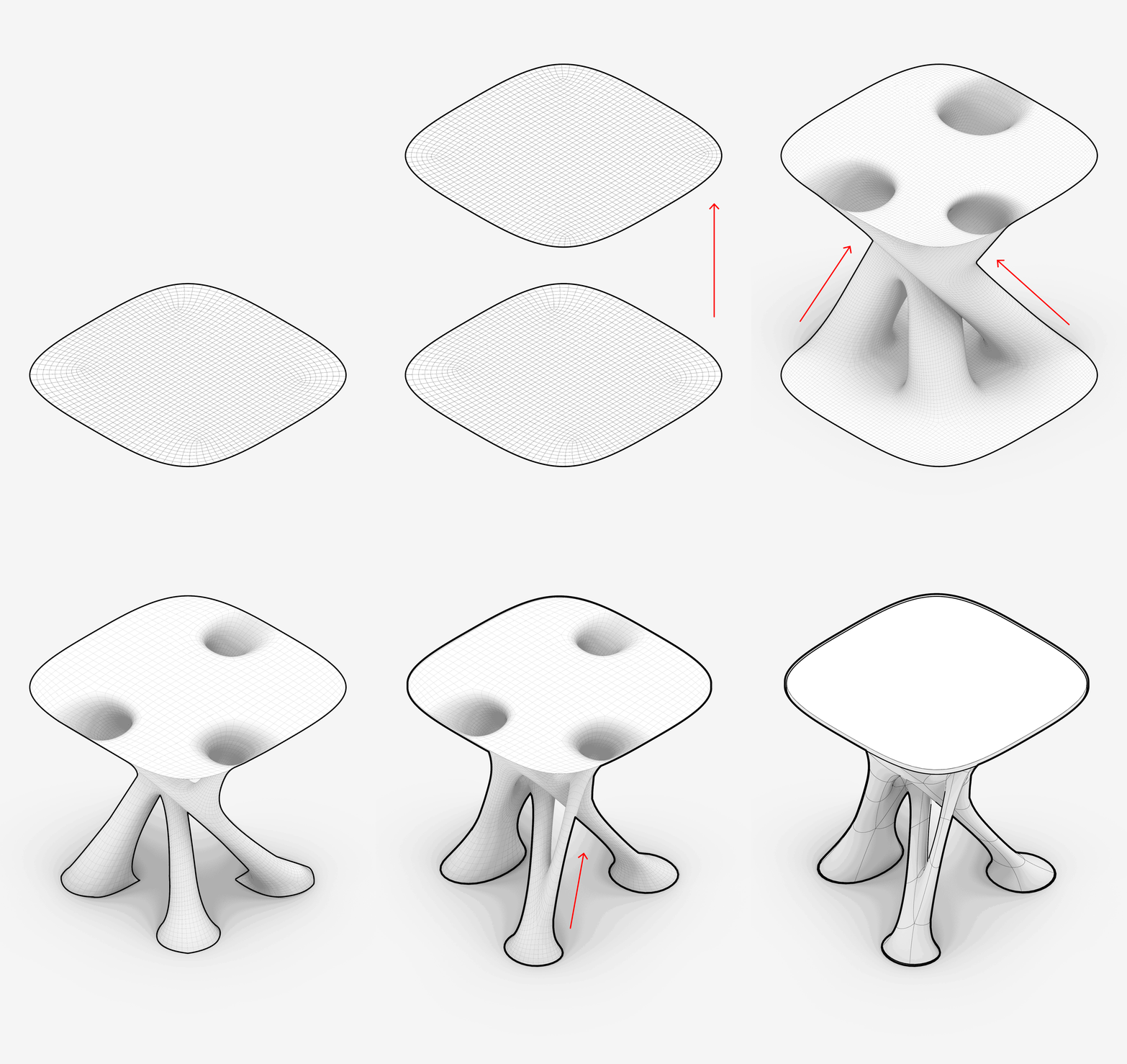
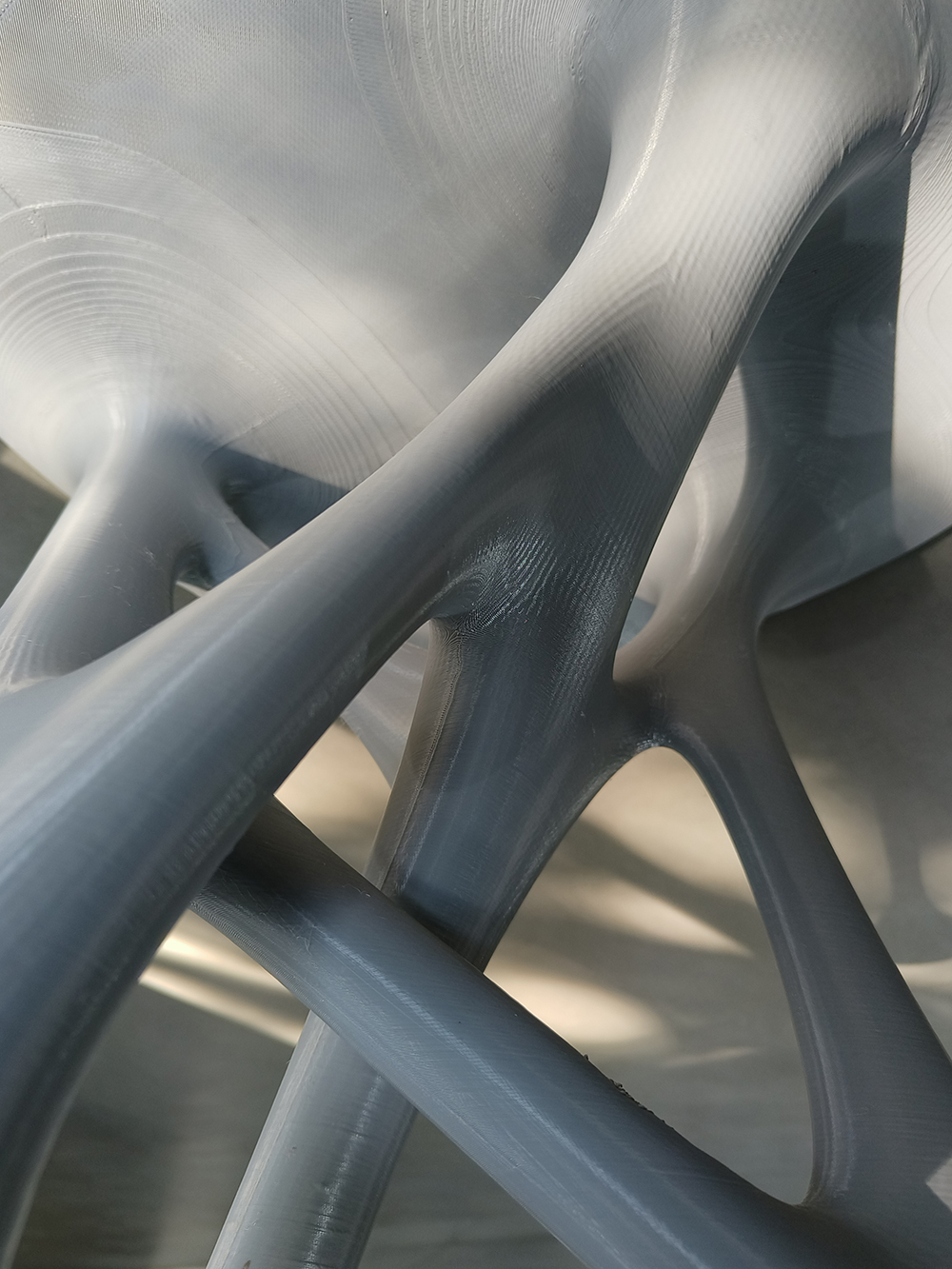
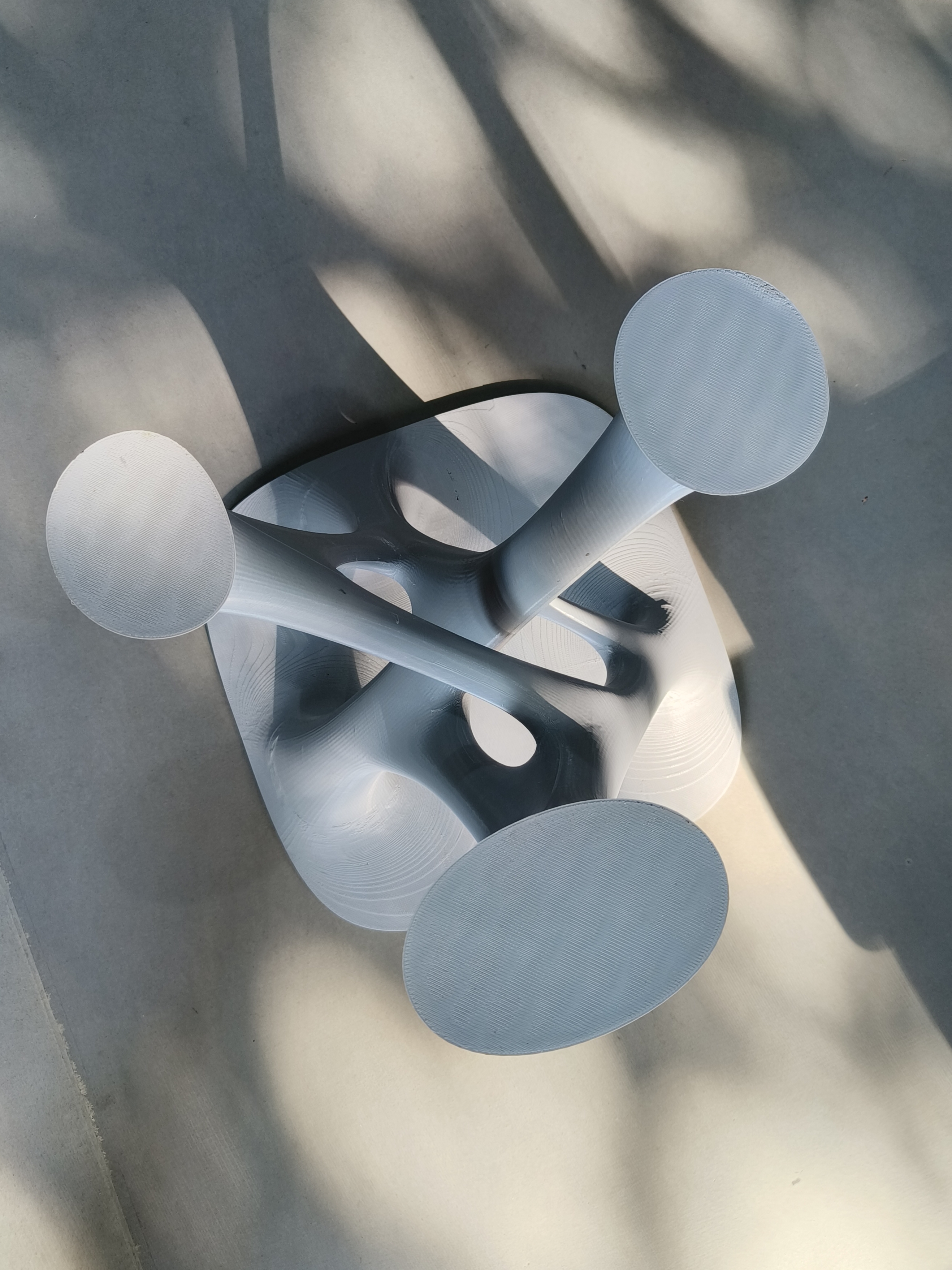
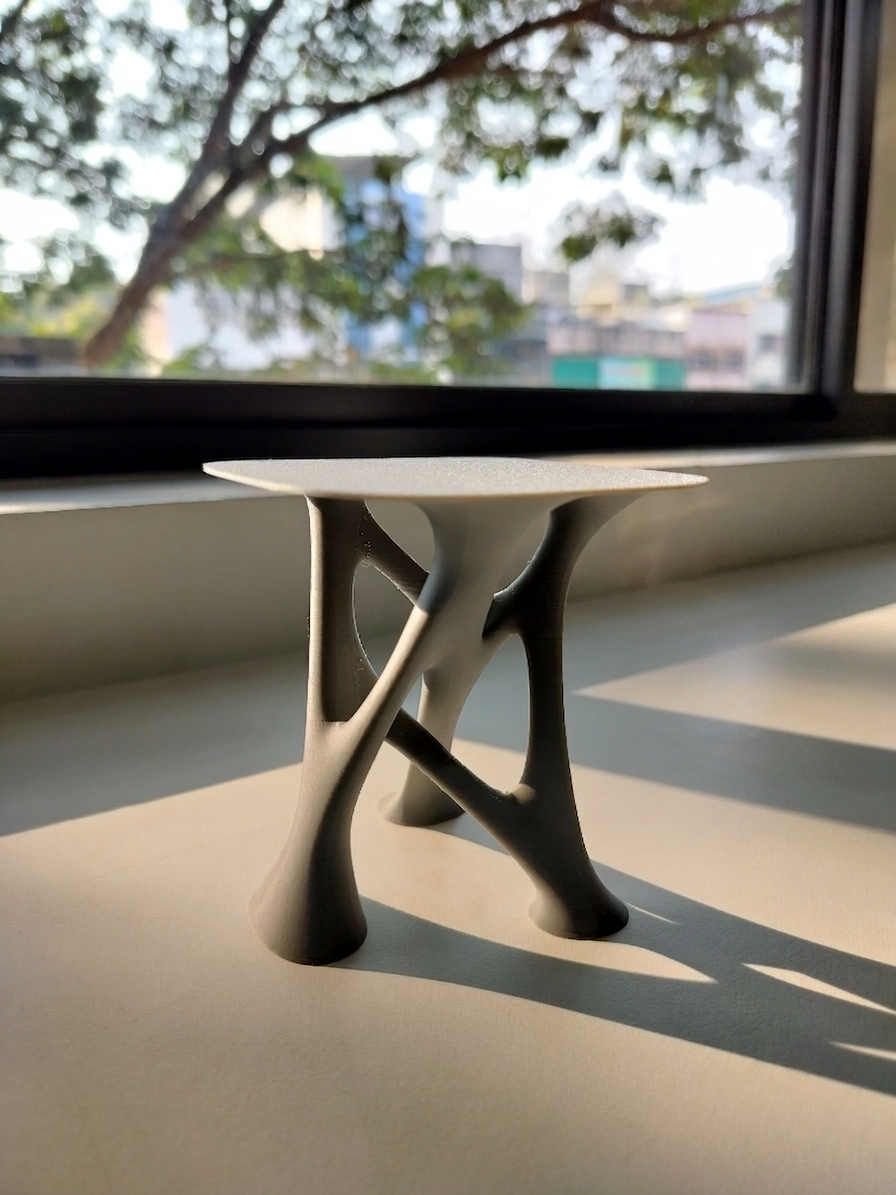
Instead of treating a table as a simple assembly of top and base, SubD reimagines it as a continuous object where structure, surface, and form are shaped through computational logic. The design is defined by smooth, flowing lines and an intricate interconnected base. Hollowed-out forms move through the structure, creating a balance between visual lightness and structural integrity. These voids reduce material use while giving the piece a distinctive architectural quality. The base appears almost carved, as though shaped by a continuous flow of forces, yet it remains stable enough to support the tabletop.
Name
SubD
Year
2024
Typology
Furniture Design
Location
Instead of treating a table as a simple assembly of top and base, SubD reimagines it as a continuous object where structure, surface, and form are shaped through computational logic. The design is defined by smooth, flowing lines and an intricate interconnected base. Hollowed-out forms move through the structure, creating a balance between visual lightness and structural integrity. These voids reduce material use while giving the piece a distinctive architectural quality. The base appears almost carved, as though shaped by a continuous flow of forces, yet it remains stable enough to support the tabletop.
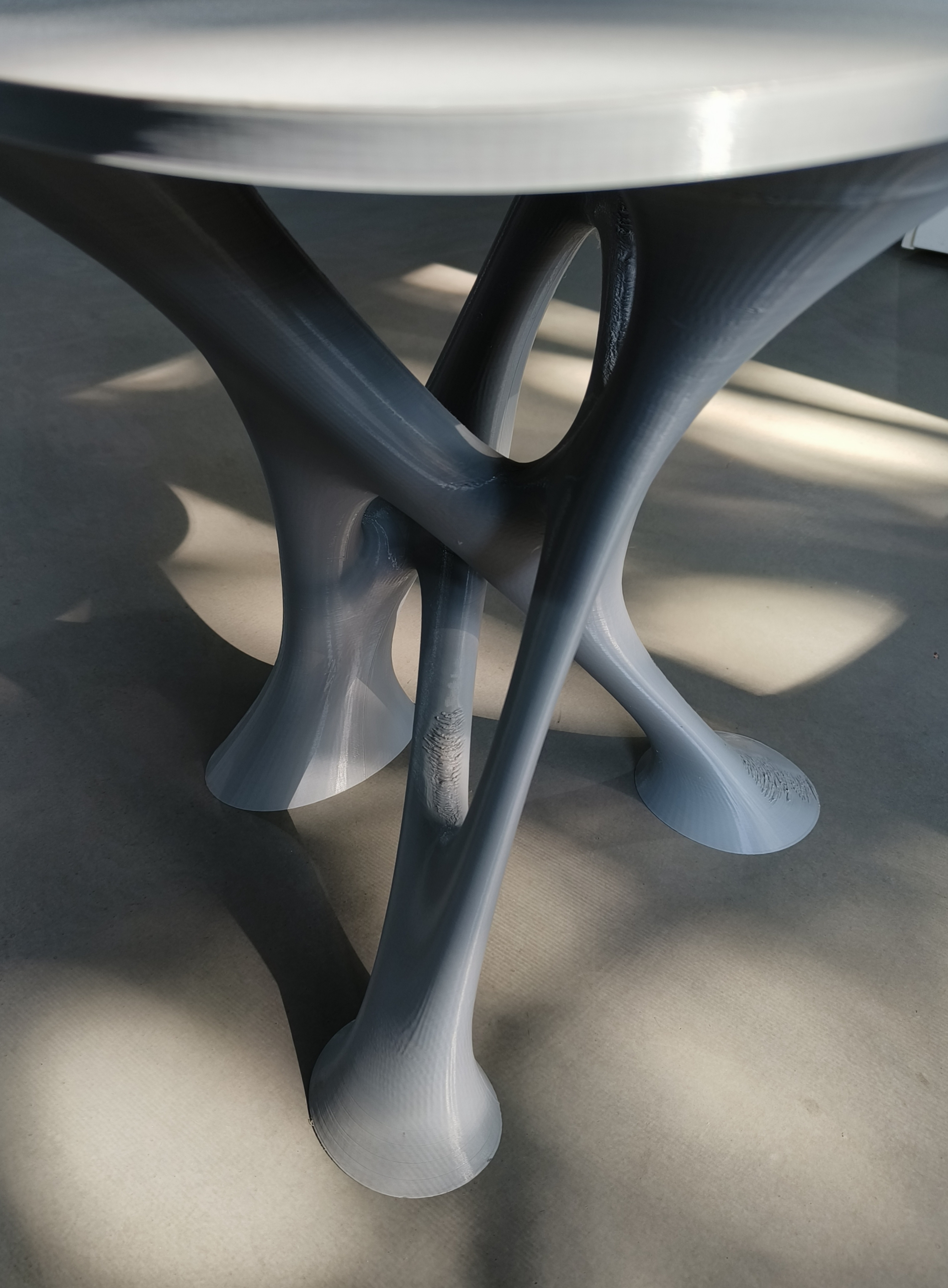
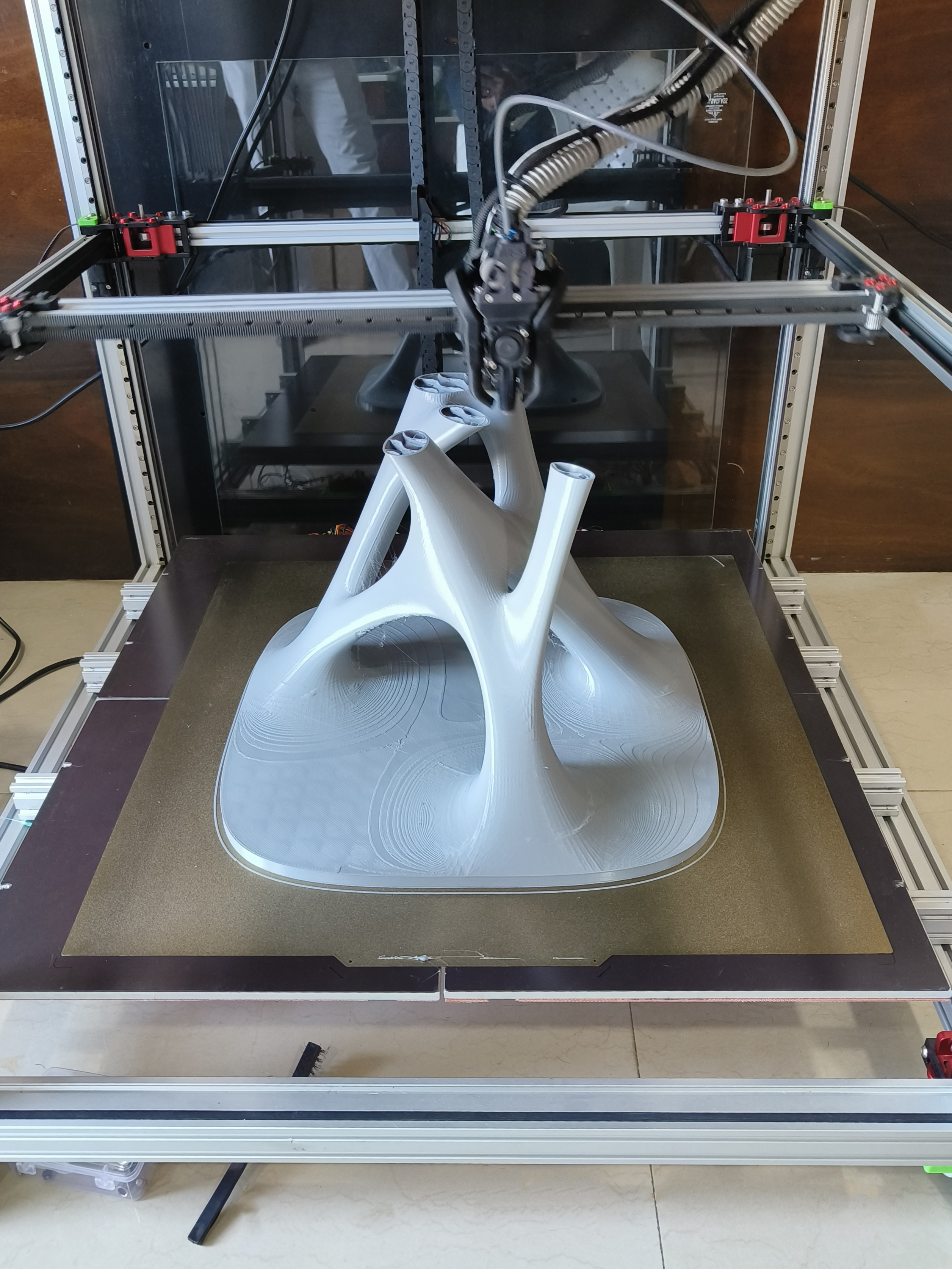
3D printing allows such intricate forms to be tested at full scale with greater precision. It supports experimentation with thickness, curvature, voids, and junctions, making it possible to prototype furniture that may be difficult to produce through traditional fabrication methods. Through this process, SubD becomes an exploration of both design and making — where the limits of the technology are tested through form, material behaviour, and usability.
Since 2019