
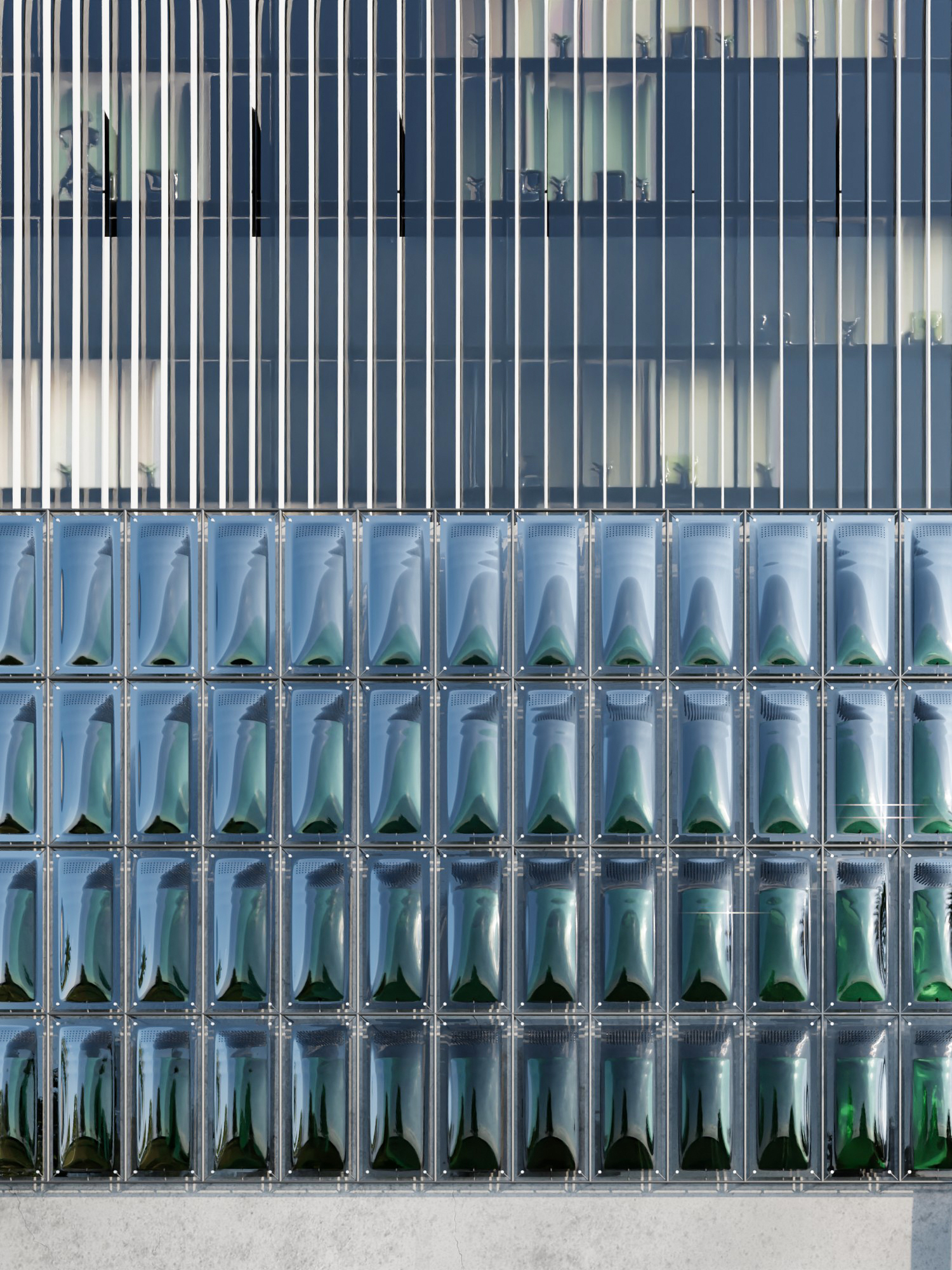
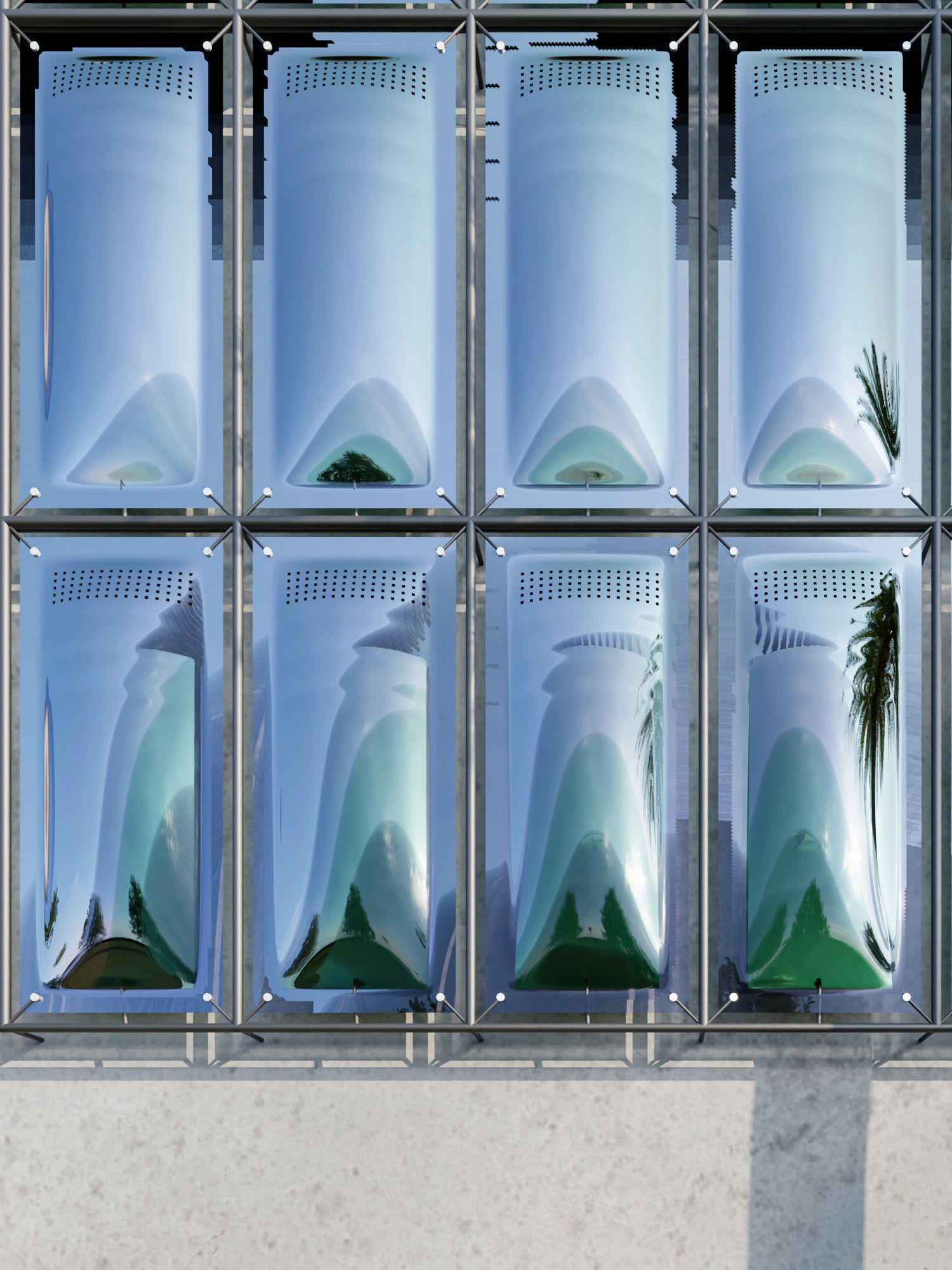
Microalgae are microscopic, photosynthetic organisms that absorb carbon dioxide and release oxygen. Their rapid growth, high productivity, and ability to thrive in varied environments make them a promising material for sustainable architectural innovation. Beyond improving air quality, microalgae can also be harvested for biofuel production, used to generate heat, and employed as a natural method for carbon capture. By actively reducing atmospheric CO₂, they offer a way to connect building design with larger climate-responsive systems. The Culture Cell concept integrates microalgae into building exteriors through transparent modular units. These units are imagined as polythene bags, similar to blood bags, filled with algae culture and attached to the façade. Each bag functions as a small bioreactor, allowing the algae to photosynthesise, absorb CO₂, and release oxygen. Perforations at the top of each bag allow oxygen to escape, turning the façade into a breathing surface.
Name
The Culture Cell
Year
2024
Typology
Location
Microalgae are microscopic, photosynthetic organisms that absorb carbon dioxide and release oxygen. Their rapid growth, high productivity, and ability to thrive in varied environments make them a promising material for sustainable architectural innovation. Beyond improving air quality, microalgae can also be harvested for biofuel production, used to generate heat, and employed as a natural method for carbon capture. By actively reducing atmospheric CO₂, they offer a way to connect building design with larger climate-responsive systems. The Culture Cell concept integrates microalgae into building exteriors through transparent modular units. These units are imagined as polythene bags, similar to blood bags, filled with algae culture and attached to the façade. Each bag functions as a small bioreactor, allowing the algae to photosynthesise, absorb CO₂, and release oxygen. Perforations at the top of each bag allow oxygen to escape, turning the façade into a breathing surface.
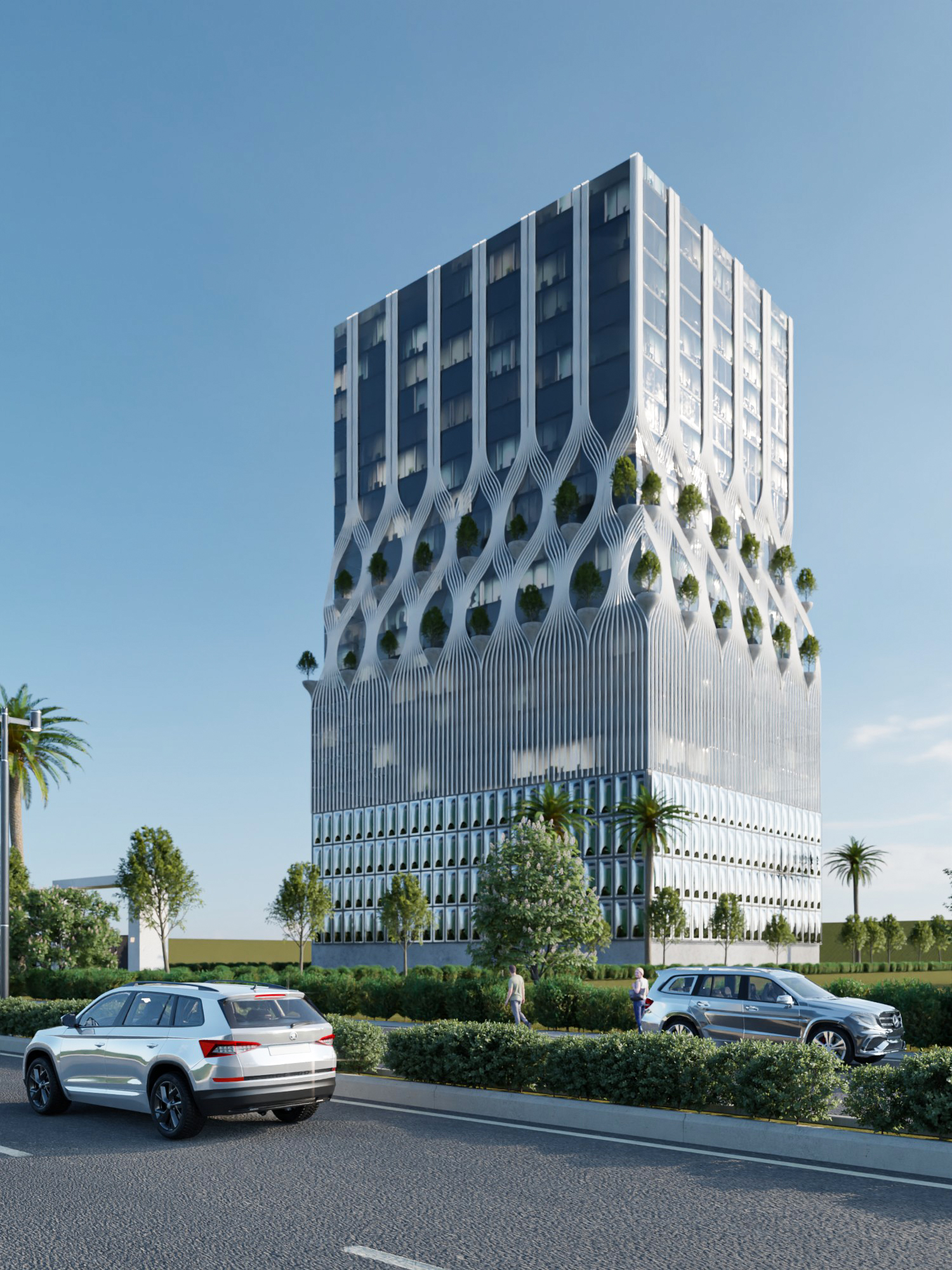
This modular system allows for easy replacement as the algae matures and reaches peak growth. Instead of a permanent, fixed façade material, The Culture Cell proposes a dynamic skin that can be renewed, maintained, and harvested over time. The algae can later be used for renewable energy production, supporting a closed-loop system that reduces carbon emissions and promotes circular design principles.
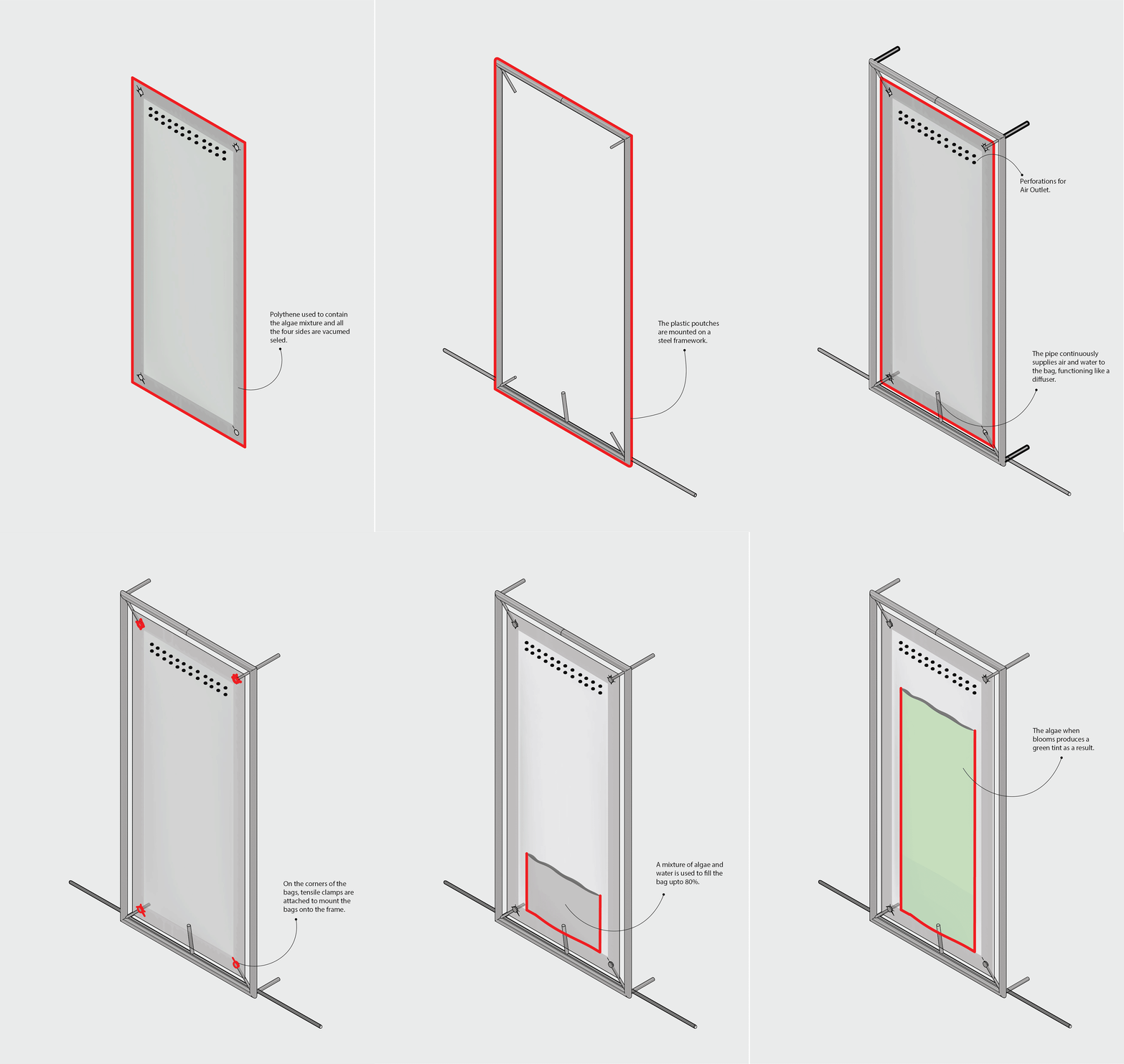
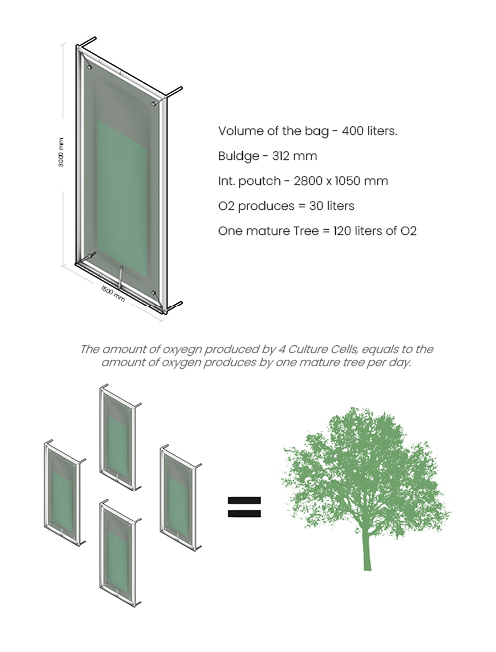
Visually, The Culture Cell creates a façade that is constantly changing. The algae-filled bags introduce colour, translucency, density, and movement into the building exterior. As the culture grows and matures, the façade shifts in appearance, making the building seem alive and responsive. This fusion of biology and architecture creates a new aesthetic — one shaped not by applied ornament, but by living processes.
Since 2019