
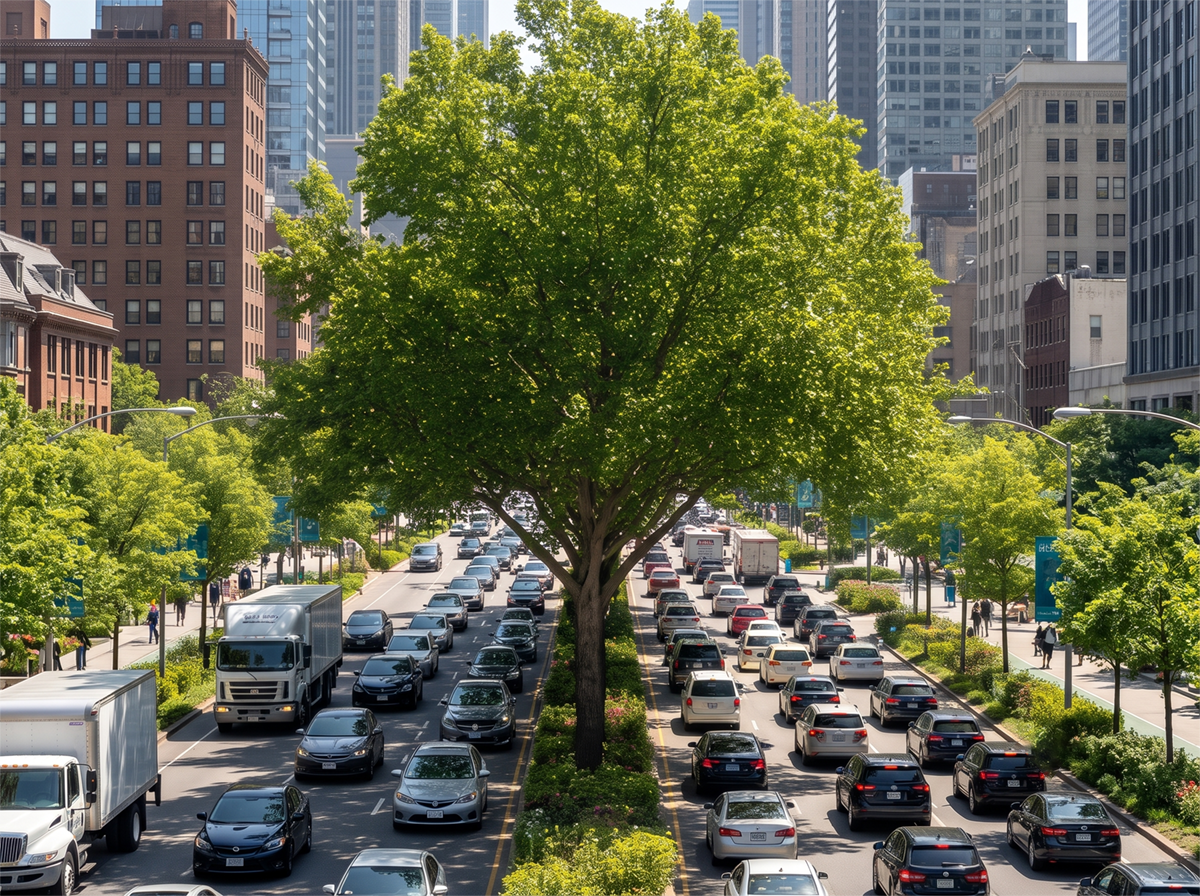
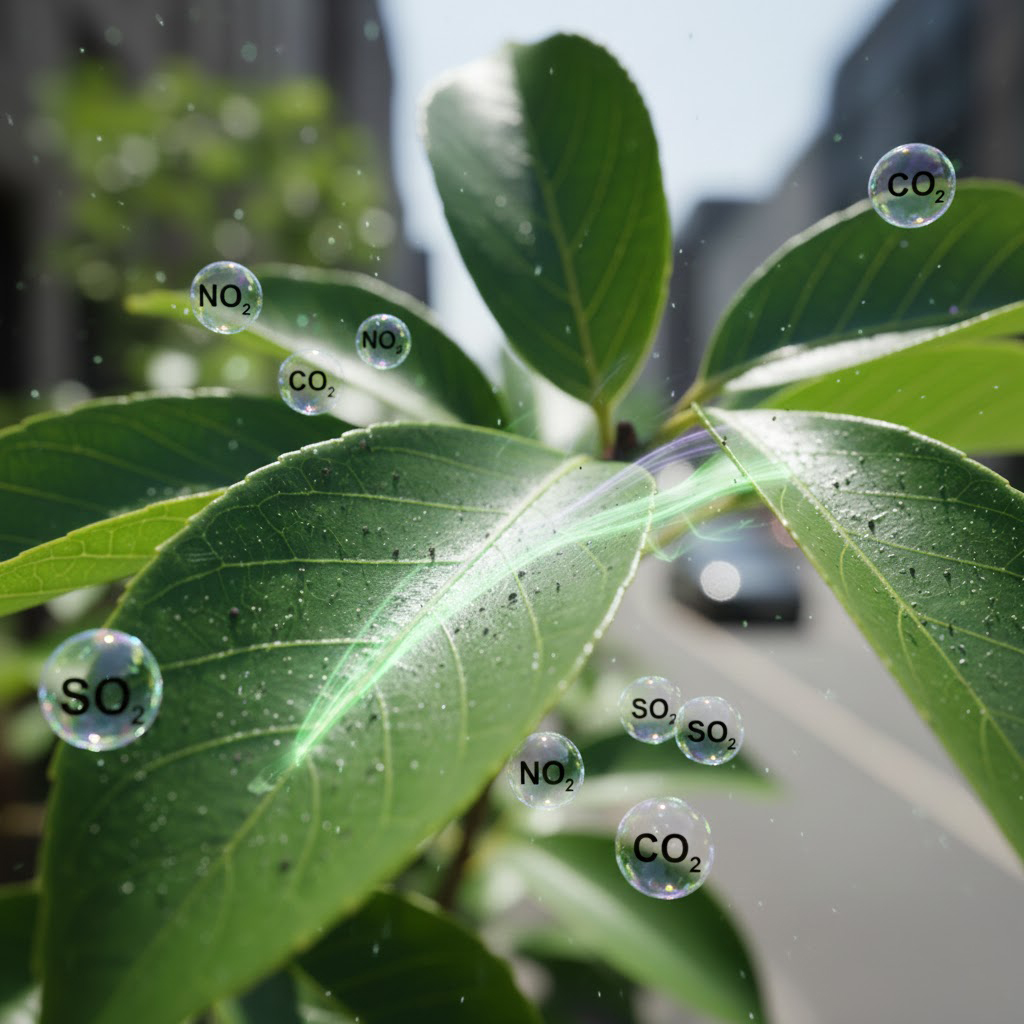
Urban greening is too often treated as an ornamental or shade-first exercise rather than a performance-based environmental system, leaving street canyons and busy corridors exposed to persistent PM_2.5, PM_10, PM_1, NO_2, SO_2, ground-level O_3, and CO. Different parts of a city carry distinct pollutant loads—from crustal and industrial elements (Al, Ca, Fe, K, Mg, Si, Ti) and heavy combustion emissions in industrial areas to NO_2 and carbon exhaust along heavy traffic routes, road dust and water-treatment chlorine in residential areas, and cooking-related iodine in commercial pockets. Because species differ in stomatal and cuticular gas uptake, surface particulate capture, canopy dispersion, and stress resilience, generic planting misses real mitigation potential and lacks long-term performance tracking across seasons. To build a rigorous selection framework, the study centers on the Air Pollution Tolerance Index (APTI=[A(T+P)+R]/10, combining ascorbic acid, total chlorophyll, leaf extract pH, and relative water content) alongside foliar traits like rough, waxy, or broad surfaces, carbon sequestration, and practical maintenance and safety factors such as root spread, wind resistance, leaf or fruit litter, toxicity, and time to functional maturity. Grounding its recommendations in Indian empirical studies, including Ahmedabad crossroads, Pune's Shivajinagar-Pashan corridors, Jaipur's industrial zone, Mettupalayam, and Bilaspur foliar characterization, it evaluates how biochemical and morphological traits perform under real urban stress.
Name
Trees as Urban Infrastructure
Year
2025
Typology
Location
Urban greening is too often treated as an ornamental or shade-first exercise rather than a performance-based environmental system, leaving street canyons and busy corridors exposed to persistent PM_2.5, PM_10, PM_1, NO_2, SO_2, ground-level O_3, and CO. Different parts of a city carry distinct pollutant loads—from crustal and industrial elements (Al, Ca, Fe, K, Mg, Si, Ti) and heavy combustion emissions in industrial areas to NO_2 and carbon exhaust along heavy traffic routes, road dust and water-treatment chlorine in residential areas, and cooking-related iodine in commercial pockets. Because species differ in stomatal and cuticular gas uptake, surface particulate capture, canopy dispersion, and stress resilience, generic planting misses real mitigation potential and lacks long-term performance tracking across seasons. To build a rigorous selection framework, the study centers on the Air Pollution Tolerance Index (APTI=[A(T+P)+R]/10, combining ascorbic acid, total chlorophyll, leaf extract pH, and relative water content) alongside foliar traits like rough, waxy, or broad surfaces, carbon sequestration, and practical maintenance and safety factors such as root spread, wind resistance, leaf or fruit litter, toxicity, and time to functional maturity. Grounding its recommendations in Indian empirical studies, including Ahmedabad crossroads, Pune's Shivajinagar-Pashan corridors, Jaipur's industrial zone, Mettupalayam, and Bilaspur foliar characterization, it evaluates how biochemical and morphological traits perform under real urban stress.
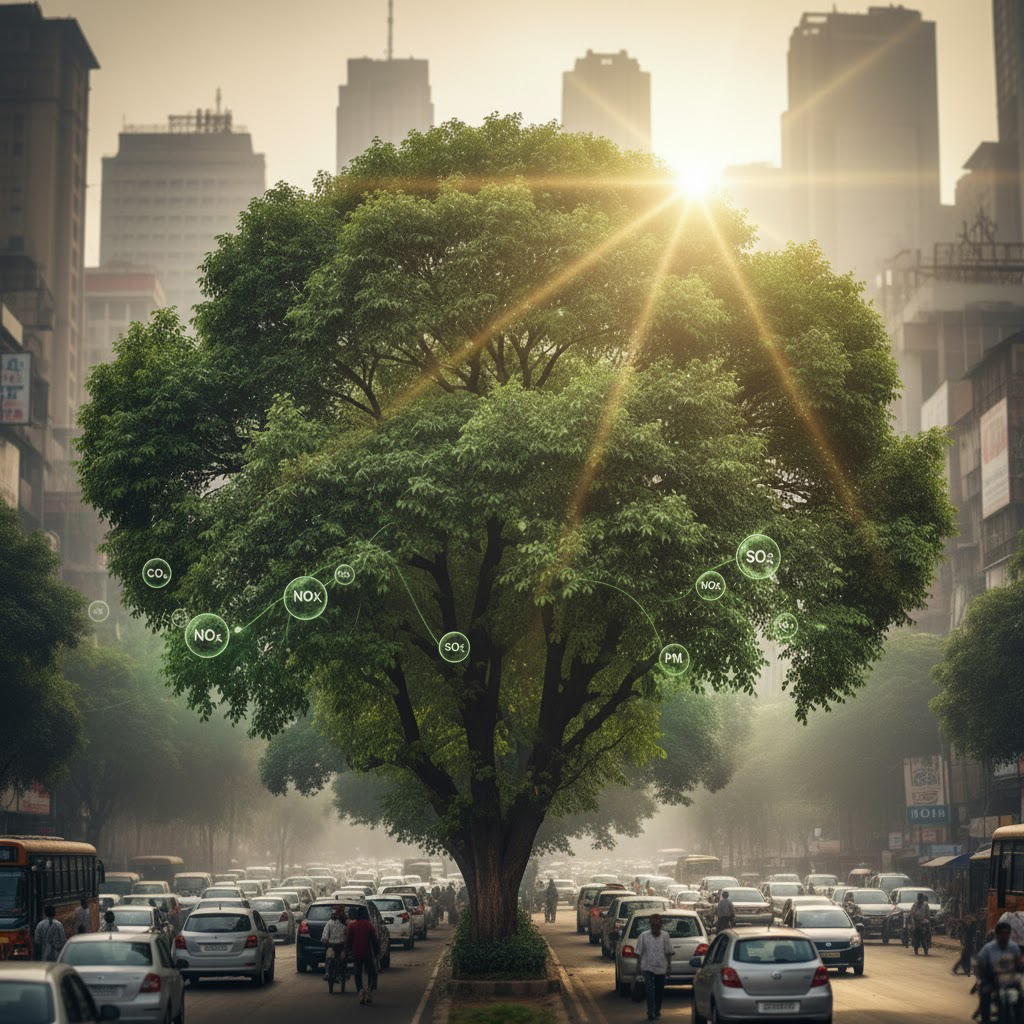
Those findings translate into zone-specific species palettes that balance ecological performance with everyday street realities: Neem, Ashoka, Kassod, Shisham, and Saptaparni for industrial filtration; Mango, Moringa, Ashoka, Jamun, and Saptaparni for safe, microclimate-improving residential spaces; Fig/Anjeer, Badam, and Bakul for shaded, pedestrian-friendly commercial zones; and Yellow Gulmohar, Ashoka, Peepal, and Umbar for compact, high-particulate traffic corridors. Together, these choices turn tree planting from guesswork into a measurable, long-term urban air-quality strategy.
Since 2019